-
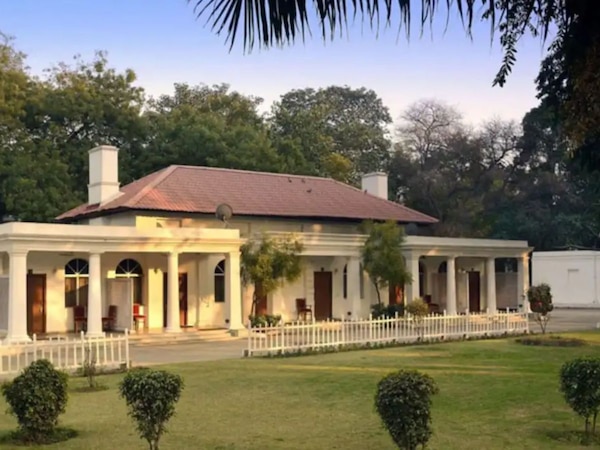
The central government has ended the lease of the Delhi Gymkhana Club and given a deadline to vacate it by June 5. Only 10 days remain until the deadline expires. Meanwhile, opposition to the government’s decision is intensifying. Members of this super-elite club have approached the court against the decision.
There are over one lakh clubs in the country. Delhi also has a large number of clubs, but compared to all those clubs, the Gymkhana Club is very special. So special that you cannot even think about entering that club. This is not just about ordinary people. Even those counted among the richest people in the country are not allowed inside that club. People who can spend crores of rupees staying in Delhi’s five-star hotels also cannot go to the Gymkhana Club.
Some properties are used exclusively for special people
It is worth noting that in Delhi, there are many government properties that are not used for the general public but only for a few very special people. One of these is the Delhi Gymkhana Club. The Gymkhana Club is located in the Lutyens’ area of Delhi. This club is right next to the residence of the country’s Prime Minister. The government has cited this as the basis for the order to cancel the lease.
What was said in the government order?
The government order stated that this sensitive land near the Prime Minister’s residence will now be used for national security, strategic defense requirements, and other public interest tasks. It will be used to strengthen defense-related infrastructure and public security arrangements. We tell you how important this club is from a security perspective.
The order issued today regarding the Gymkhana Club is not the first attempt of its kind. When Rajiv Gandhi became Prime Minister, he also tried to take control of the club citing security reasons, but that attempt was unsuccessful. At that time, the club managed to save its autonomy and lease.
Why are the club’s privileged members angry?
The club’s privileged members are angry. This anger is not without reason. This anger is because membership in this club is considered as prestigious as a very high government position. This club is dominated only by hereditary aristocrats and influential people. Think about it, this country belongs to everyone, Delhi’s India Gate belongs to everyone. But this club belongs only to the super-elite class. You can stroll through Delhi’s most expensive and posh areas. You can sit at India Gate for hours and have a free picnic. But you cannot go to the Delhi Gymkhana Club. People are ready to pay 20-20 lakh rupees for membership in this elite club, but it takes more than 35 years to become a member.
Its waiting period is more than 35 years. According to the constitution, you can become the President of the country in 35 years, but you cannot become a member of the Delhi Gymkhana Club. And even after years of waiting, not everyone can become its member. To understand how a club in Delhi is used as a status symbol for the super-elite class, let’s turn the pages of history a bit.
This club was built by the British
In 1913, when Indian farmers were groaning under British taxes, the British built this club on Safdarjung Road in Lutyens’ Delhi. It was named the Imperial Delhi Gymkhana Club. Its purpose was for British military officers and ICS officers to entertain themselves at the club. At the time of the club’s establishment, seven major royal families of the country were given lifelong membership. Outside the club, the British had placed their infamous board stating that entry for ordinary Indians was prohibited.
This became a hub for the elite class in Delhi, a symbol of power, wealth, and privilege. After the country gained independence, the word ‘Imperial’ was removed from the club’s name, but its DNA remained the same as before. That is, it continued to foster a sense of superiority among select classes. Even today, you can get membership in elite clubs in any country in the world, but for membership in Delhi’s Gymkhana Club, you might have to wait 35 to 40 years. Friends, first we tell you how membership in this club is obtained</p
Delhi Gymkhana Club
The Delhi Gymkhana Club is a prestigious social and sports club located in New Delhi, India, with origins dating back to 1913 during the British colonial era. Originally established as a club for British officers and elite Indian royalty, it became a symbol of exclusivity and leisure, offering facilities for sports like polo, tennis, and golf. After India’s independence, the club gradually opened its membership to a broader elite, retaining its historic charm and status as a landmark of Delhi’s colonial heritage.Lutyens’ area
Lutyens’ area is a prestigious residential and governmental neighborhood in New Delhi, India, named after the British architect Edwin Lutyens, who designed it as part of the new imperial capital in the early 20th century. Constructed between 1911 and the 1930s, it features grand bungalows, tree-lined avenues, and iconic landmarks like the Rashtrapati Bhavan and India Gate. Today, it remains one of the most exclusive areas in Delhi, housing high-ranking politicians and officials.India Gate
India Gate is a prominent war memorial in New Delhi, built in 1931 to honor the soldiers of the British Indian Army who died in World War I and the Third Anglo-Afghan War. Designed by Sir Edwin Lutyens, the 42-meter-tall archway bears the names of over 13,000 fallen soldiers and has become a symbol of national pride and remembrance. Today, it stands as a major landmark and gathering place, surrounded by lush lawns and often illuminated at night.Safdarjung Road
Safdarjung Road is a prominent street in New Delhi, India, named after Safdarjung, the 18th-century Nawab of Awadh. It is home to the Safdarjung Tomb, a sandstone and marble mausoleum built in 1754 that marks the last of the great Mughal-era garden tombs. Today, the road is a key location for government buildings and residences, including the official home of India’s Prime Minister.Lutyens’ Delhi
Lutyens’ Delhi refers to the central area of New Delhi, India, designed and built by British architect Edwin Lutyens in the early 20th century as the new imperial capital. Constructed between 1911 and 1931, it features grand boulevards, geometric layouts, and iconic buildings like the Rashtrapati Bhavan (Presidential Palace) and India Gate, blending neoclassical and Mughal architectural styles. Today, it stands as a symbol of India’s colonial past and its transition into a modern republic.Imperial Delhi Gymkhana Club
The Imperial Delhi Gymkhana Club, established in 1913 during the British Raj, was originally a prestigious social and sports club for British officials and Indian royalty. Located near the India Gate in New Delhi, it became a symbol of colonial-era leisure and elitism, offering facilities for cricket, polo, and other sports. After India’s independence, the club continued to operate as an exclusive private members’ club, retaining much of its colonial architecture and heritage.