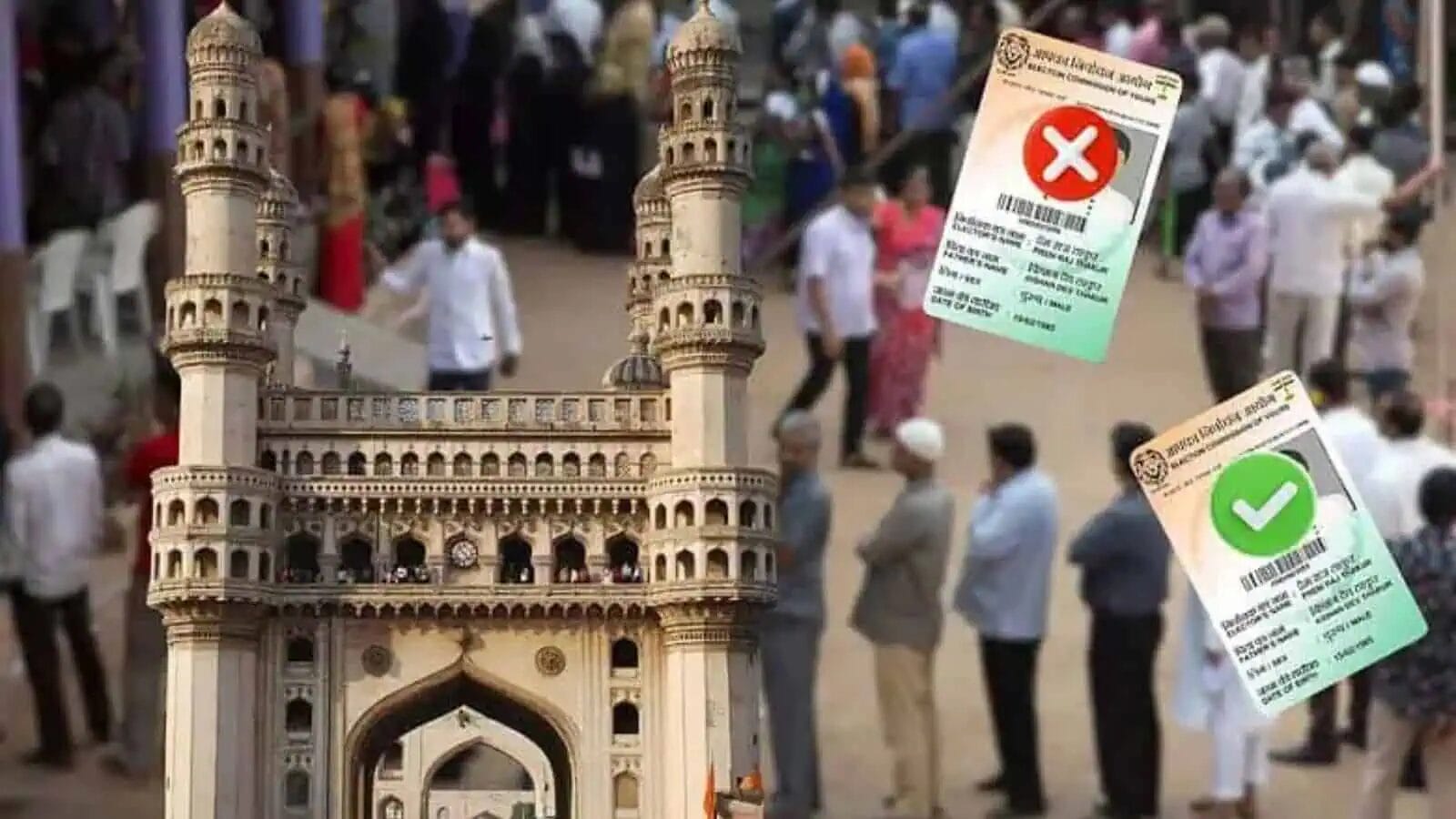
Suspense continues in Telangana over the SIR process.
Hyderabad, Odisha has adopted the ‘Panchanama’ model to resolve discrepancies emerging during the Special Intensive Revision (SIR) of voter lists. In this process, mapping errors in the voter list are being verified and corrected by obtaining signatures from local residents.
Under this model, collective verification is conducted at the local level to authentically correct errors in voter records. However, it is unclear whether Telangana will adopt the same model in the upcoming phase or use an alternative procedure.
Classification of Voters and Potential Procedure in Telangana
Under the proposed SIR process in Telangana, voters are likely to be divided into three categories:
Fully mapped voters
Voters mapped with discrepancies
Unmapped voters
Voters whose records correctly match their parents or close relatives (such as father, mother, grandparents) will not require additional documents. However, if any logical discrepancy is found after mapping, such voters will be placed in the ‘discrepancy category’ and may be asked for additional verification documents.
Meanwhile, voters with no mapping record will need to provide proof of identity and relationships based on documents listed by the Election Commission.
Telangana’s Process May Differ from Odisha and Other States’ Models
In Odisha, the discrepancies found primarily involve age-related errors, such as:
Age difference between parents and voter being less than 15 years or more than 50 years
Age difference with grandparents being less than 40 years
Multiple voters incorrectly mapped to the same old record
In such cases, Odisha is adopting the ‘Panchanama’ process, while some states, including Uttar Pradesh, have used a document-based verification method. In these procedures, voters were asked for documents clearly showing their names along with those of their parents or grandparents to confirm family relationships.
Preparation for SIR in Telangana Ongoing, Process Likely to Start from June 15
There is no final clarity yet regarding the SIR process in Telangana, but it is believed that the Odisha model may be used as a basis. Recently, a team from the Election Commission studied the procedure adopted in Odisha.
In a video conference organized by the Chief Electoral Officer, GHMC, district administration, EROs, and other officials participated to review preparations related to SIR. According to sources, the SIR process in the state may begin from June 15, after which Booth Level Officers (BLOs) will conduct door-to-door surveys and verification work starting June 25. However, the final method for resolving discrepancies is still unclear, and a final decision will be made by the Election Commission.
Odisha
Odisha, a state on India’s eastern coast, is renowned for its ancient temple architecture, particularly the Sun Temple at Konark and the Jagannath Temple in Puri. Its history stretches back to the Kalinga kingdom, which was famously conquered by the Mauryan emperor Ashoka in the 3rd century BCE, a battle that led him to embrace Buddhism. Today, Odisha is known for its vibrant cultural heritage, classical dance (Odissi), and unique tribal traditions.
Telangana
Telangana is a state in southern India, known for its rich history and cultural heritage, with its roots tracing back to ancient dynasties like the Kakatiya and the Qutb Shahi. It was formed on June 2, 2014, as the 29th state of India, after a long movement for separate statehood from Andhra Pradesh. The region is famous for landmarks like the Charminar and Golconda Fort, as well as its unique cuisine, festivals, and the Hyderabadi culture.
Uttar Pradesh
Uttar Pradesh is a culturally and historically rich state in northern India, often considered the heartland of ancient Indian civilization. It was home to major empires like the Maurya and Gupta dynasties, and the city of Varanasi, one of the world’s oldest continuously inhabited cities, is located there. The state also encompasses Agra, site of the iconic Taj Mahal, and played a pivotal role in the Indian independence movement, with Lucknow and Allahabad serving as key centers of resistance.
Hyderabad
Hyderabad, the capital of the Indian state of Telangana, is a historic city founded in 1591 by Muhammad Quli Qutb Shah of the Qutb Shahi dynasty. Known for its rich blend of Indo-Islamic and modern culture, it is famous for landmarks like the Charminar and Golconda Fort, as well as its role as a global hub for the pearl and information technology industries. The city’s history includes rule by the Mughals and the Nizams, who left a legacy of opulent architecture and a unique Hyderabadi cuisine.
Election Commission
The Election Commission is a vital institution in democratic countries, responsible for overseeing and administering free and fair elections. Its history dates back to the establishment of independent electoral bodies in the 20th century, such as India’s Election Commission founded in 1950, which set a global standard for impartial election management. Today, it ensures the integrity of the electoral process, from voter registration to vote counting, upholding democratic principles.
GHMC
GHMC stands for the Greater Hyderabad Municipal Corporation, the civic body responsible for the administration of Hyderabad, India. Established in 2007 through the merger of the Municipal Corporation of Hyderabad (MCH) with surrounding municipalities and panchayats, it manages urban planning, infrastructure, and public services for one of India’s largest metropolitan areas. Its formation aimed to streamline governance across the rapidly expanding city and its suburbs.
Panchanama model
The Panchanama model is a traditional Indian architectural and town-planning concept based on the division of land into five distinct zones or elements, often linked to ancient Vastu Shastra principles. Historically, it was used in the layout of temples, villages, and cities to harmonize human settlements with natural and cosmic forces. This model reflects a deep cultural emphasis on balance, spirituality, and functional organization in South Asian urban design.
Special Intensive Revision (SIR)
The Special Intensive Revision (SIR) is a targeted educational program designed to help students rapidly review and consolidate key concepts before major examinations. Originating in certain Asian education systems, particularly in Singapore, SIR sessions are often conducted during school breaks or examination periods to provide focused, high-pressure revision. The program emphasizes efficiency and mastery of core subjects, reflecting a cultural emphasis on academic achievement and structured learning.