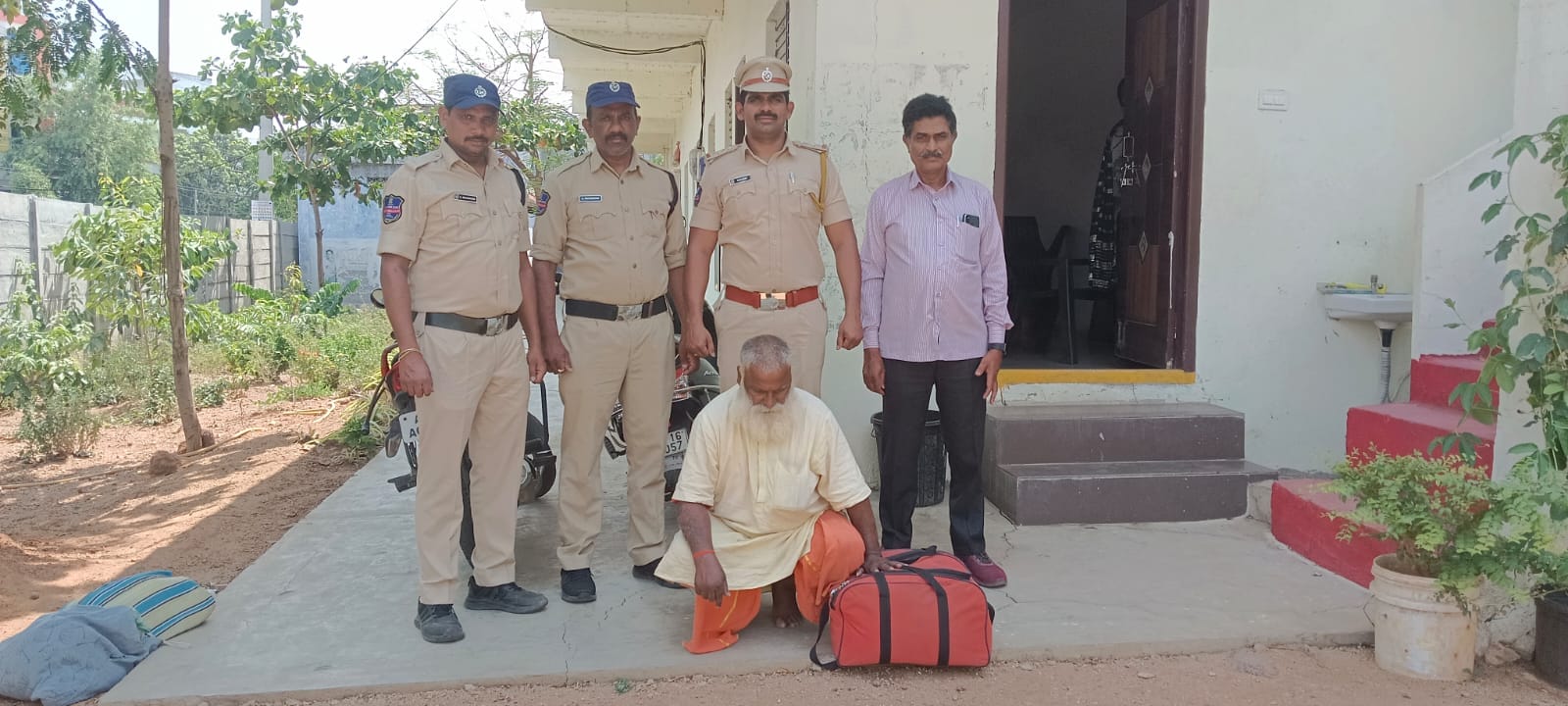
Hyderabad: The Excise Police State Task Force (STF) and Railway Police conducted an inspection drive at Nizamabad Railway Station and recovered 5.35 kilograms of dry cannabis. During the operation, a mobile phone was seized.
The Excise Police reported that during a check on the Nagavali Superfast Express (Sambalpur-Nanded), the accused, Vimal Kumar, was caught with 5.35 kg of cannabis. During interrogation, the accused revealed a plan to purchase cannabis at a low price from Bihar and then supply it in Hyderabad. A case has been registered against the accused under the NDPS Act, and further investigation is underway.
Also read…
Hyderabad
Hyderabad is a major city in southern India, known for its rich history as the capital of the Nizams, who ruled the princely state of Hyderabad from the 18th century until India’s independence. The city blends ancient heritage with modernity, featuring landmarks like the iconic Charminar and the historic Golconda Fort, while also thriving as a global hub for information technology and pharmaceuticals. Its unique culture reflects a fusion of Hindu and Muslim traditions, particularly evident in its cuisine and the local language, Hyderabadi Urdu.
Nizamabad Railway Station
Nizamabad Railway Station is a historic railway station located in the Indian state of Telangana. Built during the British colonial era, it was part of the Nizam’s Guaranteed State Railway, serving the princely state of Hyderabad. Today, it remains an important junction on the South Central Railway network, connecting the region to major cities across India.
Charminar
Charminar is a historic monument and mosque located in Hyderabad, India, built in 1591 by Sultan Muhammad Quli Qutb Shah. It was constructed to commemorate the founding of the city and the end of a devastating plague, with its four grand arches symbolizing the four caliphs of Islam. Today, it remains an iconic symbol of Hyderabad, surrounded by bustling markets and vibrant street life.
Golconda Fort
Golconda Fort is a historic fortress and ruined city located in Hyderabad, India, originally built by the Kakatiya dynasty in the 13th century. It later became the capital of the Qutb Shahi Sultanate in the 16th and 17th centuries, renowned for its impressive acoustic architecture, massive granite walls, and as a center of diamond trade, including the famous Koh-i-Noor diamond. The fort eventually fell to the Mughal emperor Aurangzeb in 1687, marking the end of its golden age.
Nizamabad Railway Station
Nizamabad Railway Station, located in Telangana, India, is a historic railway junction that was established during the British colonial era, originally part of the Nizam’s Guaranteed State Railway. It served as a key transportation hub connecting the princely state of Hyderabad to major Indian cities, facilitating trade and travel. Today, the station remains an important stop on the South Central Railway network, reflecting its enduring role in regional connectivity.
Nagavali Superfast Express
The Nagavali Superfast Express is a daily train service in India that connects Visakhapatnam in Andhra Pradesh with Arrah in Bihar, named after the Nagavali River. Introduced to improve rail connectivity between the southern and eastern regions, it operates as a superfast service, reducing travel time for passengers. The train reflects India’s extensive railway network, which has historically linked diverse cultural and economic centers across the country.