Employment in villages essential to stop migration: Gadkari
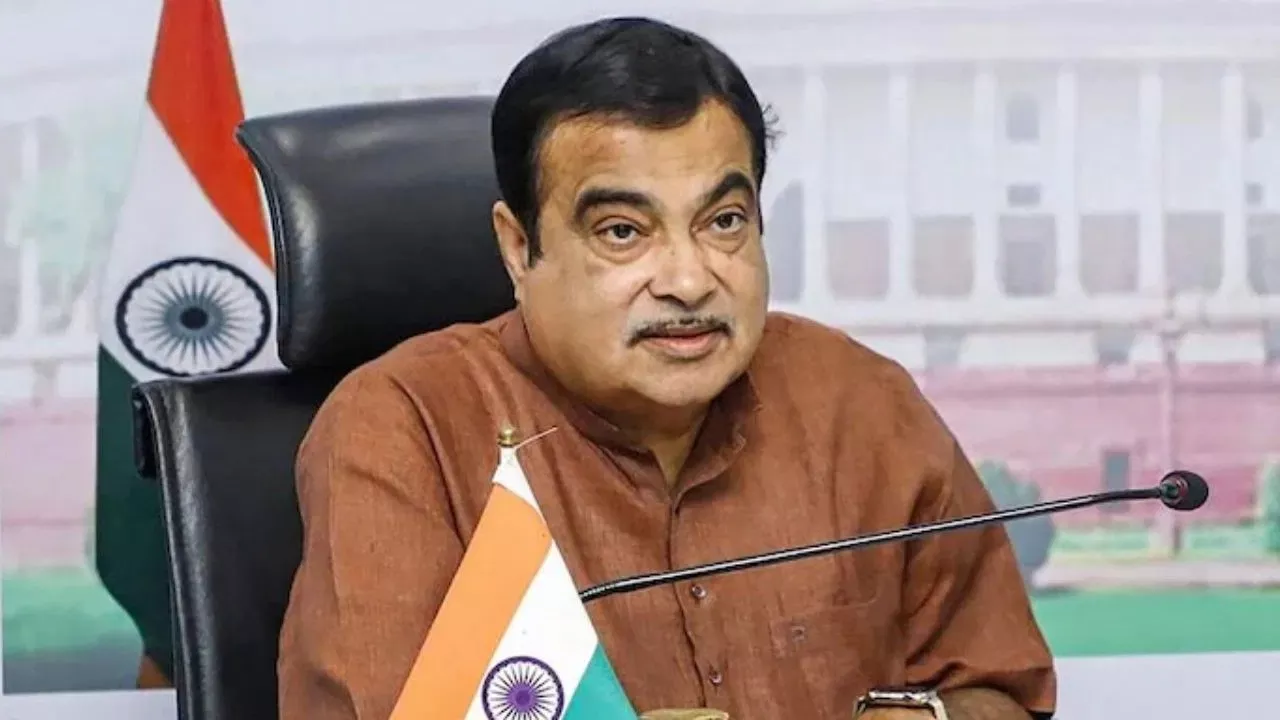
New Delhi, Union Minister Nitin Gadkari said on Wednesday that it is necessary to create employment opportunities in rural and tribal areas to stop migration towards metropolitan cities.
Addressing the second edition of the ‘Save Earth Conclave’, Gadkari stated that the economic condition of farmers and laborers in villages remains serious. He said, “Due to lack of employment opportunities, youth, farmers, and laborers from villages are migrating to cities like Delhi, Mumbai, Kolkata, Bengaluru, and Pune. We must generate employment opportunities in villages and tribal areas.”
Also mentioned 10,000 farmer suicides
The Minister of Road Transport and Highways said that young people and farmers are leaving villages out of compulsion. He also mentioned 10,000 farmer suicides in the Vidarbha region of Maharashtra. Emphasizing the need for change in the agricultural sector, Gadkari said that farmers should move beyond being food providers to becoming energy providers.
The minister also advocated for increasing the production of alternative fuels and biofuels. He said, “We import fossil fuels worth 22 lakh crore rupees, which also causes pollution. Therefore, we should work on increasing the production of alternative fuels and biofuels.”
The minister said that the price of sugar is influenced by Brazil, the price of oil by Malaysia, the price of corn by the United States, and the price of soybeans by Argentina. “Our Minimum Support Price (MSP) is higher than the market price.” The minister also said that bamboo cultivation can create five crore employment opportunities in India.
Delhi
Delhi, the capital of India, is a historic city that has been continuously inhabited for over two millennia, serving as the seat of power for numerous empires, including the Mughals and the British Raj. Its rich history is reflected in landmarks like the Red Fort, Qutub Minar, and Humayun’s Tomb, which showcase a blend of ancient and medieval architecture. Today, Delhi is a bustling metropolis that seamlessly merges its storied past with modern urban life.
Mumbai
Mumbai, formerly known as Bombay, is a major port city on India’s west coast and the capital of Maharashtra. Historically a collection of seven islands, it was ceded to the British in 1661 as part of Catherine of Braganza’s dowry and later developed into a key trading hub under the East India Company. Today, it is India’s financial and entertainment capital, home to Bollywood and a vibrant, multicultural population.
Kolkata
Kolkata, formerly known as Calcutta, is a major cultural and commercial hub in eastern India, founded in 1690 by the British East India Company. It served as the capital of British India until 1911 and was a center of the Indian independence movement, fostering intellectual and artistic renaissance. Today, it is renowned for its colonial architecture, vibrant festivals like Durga Puja, and rich literary and cinematic traditions.
Bengaluru
Bengaluru, also known as Bangalore, is the capital of India’s Karnataka state and a major hub for technology and innovation, earning it the nickname “Silicon Valley of India.” Founded in 1537 by local chieftain Kempe Gowda I, the city grew from a fortified settlement into a bustling urban center under the Vijayanagara Empire and later British colonial rule. Today, it blends a rich cultural heritage—visible in its palaces, gardens, and traditional festivals—with a dynamic modern economy driven by IT and startups.
Pune
Pune, located in the Indian state of Maharashtra, is a city with a rich history dating back to the 8th century, when it was known as Punaka. It rose to prominence as the seat of the Maratha Empire under the Peshwas in the 18th century, becoming a center of political and cultural power. Today, Pune is a major educational and industrial hub, blending its historical heritage with modern growth.
Vidarbha
Vidarbha is a region in the eastern part of the Indian state of Maharashtra, historically known as the ancient kingdom of Vidarbha mentioned in the Mahabharata. It was later ruled by various dynasties, including the Satavahanas, Vakatakas, and the Bhonsles of Nagpur. Today, Vidarbha is known for its cultural heritage, including the city of Nagpur, and faces significant economic challenges, particularly in agriculture.
Maharashtra
Maharashtra is a state in western India known for its rich history and cultural significance. It was home to the powerful Maratha Empire under leaders like Shivaji Maharaj, and later became a key region in India’s struggle for independence. Today, it is famous for its vibrant cities like Mumbai (the financial capital of India), ancient cave temples such as Ajanta and Ellora, and traditional arts like Lavani dance.
India
India is a vast and diverse country in South Asia with a rich history spanning over 5,000 years, home to the ancient Indus Valley Civilization and the birthplace of major religions like Hinduism, Buddhism, Jainism, and Sikhism. It has been shaped by powerful empires such as the Maurya, Gupta, and Mughal dynasties, followed by British colonial rule that lasted nearly 200 years. Today, India is the world’s largest democracy, celebrated for its cultural heritage, including iconic sites like the Taj Mahal, vibrant festivals, and a blend of traditions.