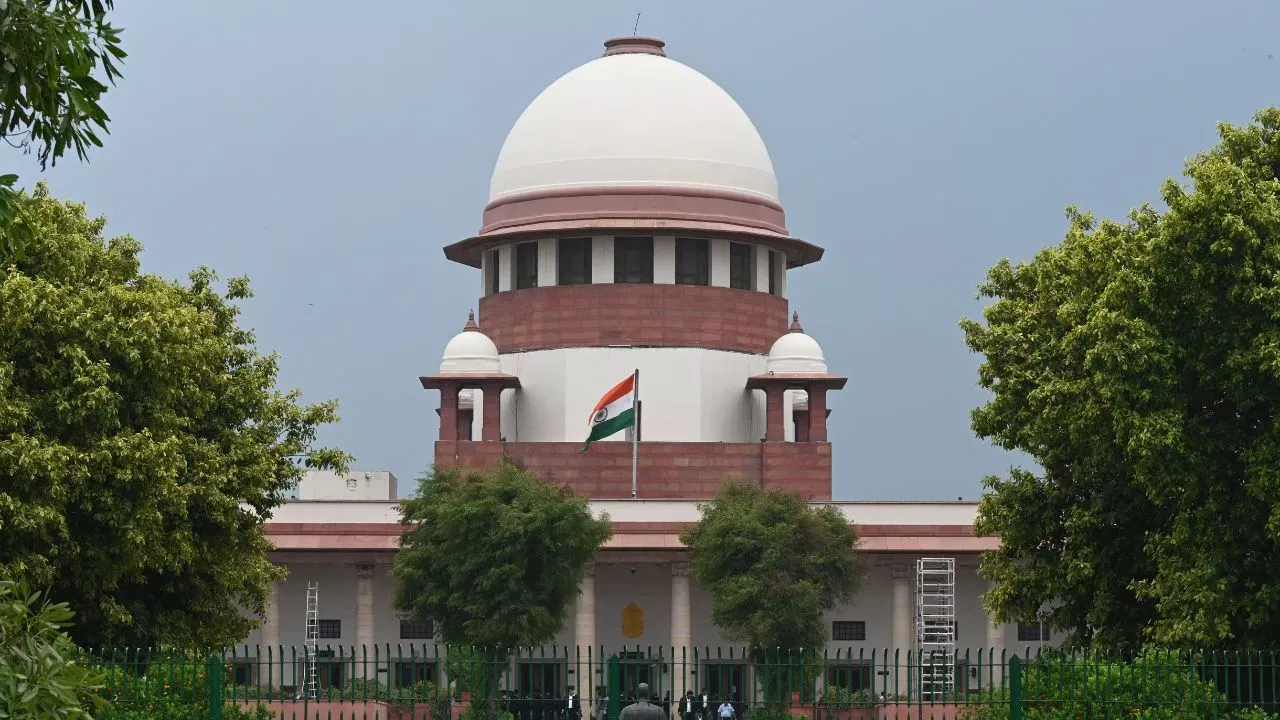
New Delhi: The Supreme Court on Wednesday told the central government to file its affidavit within two weeks on a petition by Balwant Singh Rajoana, convicted in the 1995 murder of then Punjab Chief Minister Beant Singh, seeking commutation of his death sentence to life imprisonment on grounds of delay in deciding his mercy petition.
Rajoana has been in jail for over 29 years, more than 15 of which he has spent as a death row prisoner. A bench of Justices Vikram Nath, Sandeep Mehta, and Vijay Bishnoi asked the lawyer representing the Centre, “Why haven’t you filed a counter-affidavit yet?” The Centre’s lawyer said they wanted to place some documents before the court in a sealed cover. The bench responded, “File your counter-affidavit; otherwise, his (Rajoana’s) allegations cannot be challenged. State whatever you want to say in your affidavit.”
SGPC’s mercy petition pending since 2012
Senior advocate Mukul Rohatgi, representing Rajoana, said the mercy petition filed by the Shiromani Gurdwara Parbandhak Committee (SGPC) in March 2012 is still pending. He noted that the top court had said in 2023 that the concerned authority should decide on the mercy petition. Rohatgi also cited the Supreme Court’s order of September 24, 2024, which stated that no further adjournments would be granted at the behest of the respondents.
The bench gave the central government two weeks to file its affidavit and made it clear that no further extensions would be granted. The Supreme Court has previously asked the central government to decide on Rajoana’s mercy petition. At that time, the Centre cited the sensitivity of the case and said the mercy petition was under consideration. In September 2024, the Supreme Court sought responses from the Centre, the Punjab government, and the Chandigarh administration on Rajoana’s petition.
Demand for decision on mercy petition after 28 years in jail
Former Punjab Chief Minister Beant Singh and 16 others were killed in a bomb blast at the entrance of the Chandigarh Secretariat on August 31, 1995. A special court sentenced Rajoana to death in July 2007. Rajoana’s petition also seeks directions for his release. On May 3, 2023, the Supreme Court refused to commute his death sentence to life imprisonment and said the competent authority could consider his mercy petition.
In his new petition filed in 2024, Rajoana said he has spent 28 years and eight months in jail, more than 15 of which as a death row prisoner. He stated that the SGPC filed a mercy petition on his behalf in March 2012 under Article 72 of the Constitution.
Also read:
The petition states that over a year has passed since the court directed the competent authority to decide on the mercy petition in a timely manner. It also references another Supreme Court order from April 2023, which directed all states and relevant authorities to dispose of pending mercy petitions quickly and without unnecessary delay.