New Delhi:
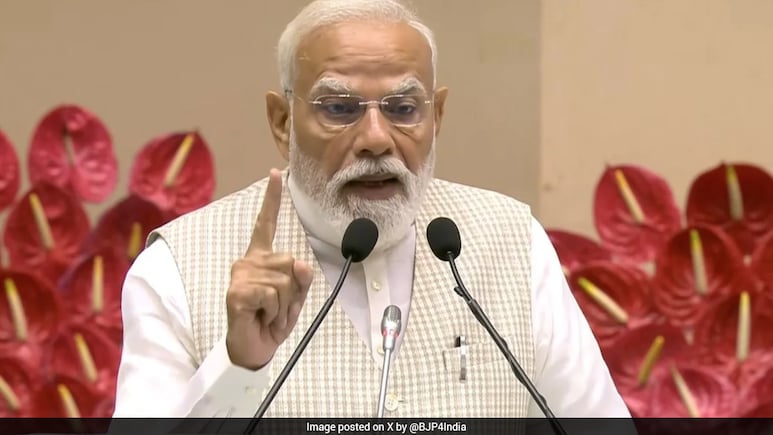
The opposition has committed a mistake by not supporting the Women’s Reservation Bill and will face consequences. This criticism comes a day after the crucial legislation failed the parliament test amid opposition backlash over the government’s approach.
The Constitution (131st Amendment) Bill aimed to reserve 33% of seats for women in the Lok Sabha and state assemblies. But it failed to secure a two-thirds majority to pass the Lok Sabha. The Bill received only 298 votes in its favour, while 230 MPs opposed it, after a heated debate that began on Thursday and went past midnight into Friday.
Opposition must face the consequences and answer to women, according to sources. “They have let down the women of the country. This message must be taken to every single person, to every single village,” it was further stated.
Opposition parties had earlier said they supported women’s reservation in parliament but found the government’s approach to be politically motivated. There were also opposition concerns that once delimitation occurs, the southern states might see a drop in their representation in parliament.
However, such concerns were sought to be allayed while speaking in parliament during the three-day session that ended.
A personal guarantee was given that no injustice would be done to any southern state once the seats in Lok Sabha go up to 816 from 543. “Let all of us not miss this important opportunity to give reservations to women. I have come to appeal to you – do not see this from a political lens, this is in national interest,” it was stated.
The southern states’ current representation would be preserved or even increase slightly, it was also assured in parliament. Accusations were made that certain opposition parties were manufacturing issues to oppose the Bill and deprive women of reservations.
Leading the Opposition charge, a senior opposition leader had claimed that the government was using the issue of women’s reservation as a smokescreen in an attempt to redraw the country’s electoral map in its favour.
A senior Congress MP dubbed the Bill’s defeat as a victory of opposition unity.
Slamming the opposition, a Union Minister said that the Congress and its allies will face the anger of women across the country for blocking the Bill. Speaking to reporters in parliament complex, it was said this is a “black stain on the Congress and its allies – one that they will never be able to erase.”
“This Bill was about giving historic representation to women. What objection could there have been?” it was stated.
Parliament
Lok Sabha
Constitution (131st Amendment) Bill
Parliament
Lok Sabha
Palace of Westminster
Westminster Hall
Parliament House
New Delhi
Related news
Hyundai India appointed Tarun Garg as new MD and CEO — a new chapter in leadership begins.
Siddaramaiah resigns at breakfast meeting; DK Shivakumar’s time has come.

Trump gives strict orders to his navy: “Shoot and kill”—destroy any boat laying mines in the Strait of Hormuz on sight.

Nepal’s Prime Minister Balen Shah faces setback as customs duty collection on items over ₹100 is halted.