News
After the defeat in the West Bengal assembly elections, resignations continue in the Trinamool Congress. Mamata Banerjee’s long-time associate Sukhendu Shekhar Ray has resigned from the Rajya Sabha… read more
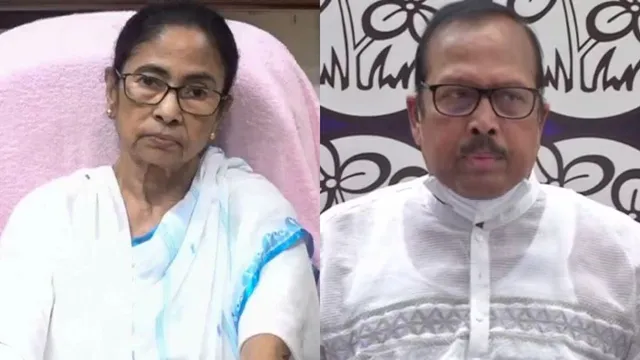
After the defeat in the West Bengal assembly elections, the Trinamool Congress appears to be falling apart. Party leaders are resigning in droves. Meanwhile, Mamata Banerjee’s long-time associate Sukhendu Shekhar Ray has left the Trinamool and resigned as a Rajya Sabha MP.
This development comes at a time when the Trinamool Congress Party is facing a massive rebellion within after losing power to the BJP in West Bengal, creating a risk of the party splitting.
Mamata Banerjee present in Delhi
Ray arrived at Parliament this morning to submit his resignation. He has also left the membership of the Trinamool. However, it is not yet clear whether he plans to join another party. This happened while his party chief Banerjee is in the national capital for a meeting of allies of the opposition alliance INDIA. Ray had stood by Banerjee in every difficult moment since her party came to power in Bengal in 2011.
Meanwhile, senior Trinamool MP Saugata Roy claimed he received an offer to join the BJP but declined it. He said, “I will remain in the party on whose election symbol I won the election.”
MPs begin resigning after MLAs
After murmurs of rebellion arose within the party in West Bengal, there were constant speculations that this fire could now damage the party within Parliament as well. This is the first time after the MLAs that an MP has broken ties with the party.
Notably, this development is taking place while Mamata Banerjee is in Delhi to attend the INDIA alliance meeting. In such a time, the strength of her party appears to be steadily declining.
West Bengal
West Bengal, located in eastern India, is a state rich in cultural heritage and history, once the center of British colonial power under the Bengal Presidency. It played a pivotal role in India’s independence movement and the Bengal Renaissance, fostering literature, art, and social reform in the 19th and early 20th centuries. Today, its capital Kolkata is known for its colonial architecture, vibrant festivals, and as the cultural hub of the region.
Rajya Sabha
The Rajya Sabha, also known as the Council of States, is the upper house of India’s bicameral Parliament, established in 1952. It represents the states and union territories, with members elected indirectly by state legislatures, and plays a key role in reviewing and amending legislation. Unlike the Lok Sabha, the Rajya Sabha is a permanent body not subject to dissolution, with one-third of its members retiring every two years.
Parliament
Parliament is the legislative body of a government, typically consisting of elected representatives who debate and pass laws. Its modern form originated in England with the Magna Carta in 1215 and evolved through events like the English Civil War and the Glorious Revolution, establishing it as a central institution in many democracies worldwide. Today, parliaments exist in various forms, such as the UK’s Houses of Parliament in London or the Parliament of India in New Delhi, symbolizing democratic governance and public representation.
<div class="my
West Bengal
West Bengal is a culturally rich state in eastern India, known for its history as the center of British colonial power in Calcutta (now Kolkata) and its role in the Indian independence movement. The region was once part of the ancient kingdom of Bengal, later came under Mughal rule, and was a key site of the Bengal Renaissance in the 19th century. Today, it is famous for its literary heritage, artistic traditions, and iconic landmarks like the Sundarbans mangrove forest and the Victoria Memorial.
Delhi
Delhi, the capital of India, is a historic city that has been continuously inhabited for over two millennia, serving as the capital for several ancient and medieval empires, including the Delhi Sultanate and the Mughal Empire. It is home to iconic landmarks like the Red Fort, Qutub Minar, and Humayun’s Tomb, which reflect its rich architectural and cultural heritage. Today, Delhi is a vibrant metropolis blending ancient traditions with modern urban life, making it a key political and cultural hub.
Rajya Sabha
The Rajya Sabha, or the Council of States, is the upper house of India’s bicameral Parliament, established in 1952 following the adoption of the Indian Constitution. Unlike the Lok Sabha, its members are not directly elected by the public but are chosen by state legislatures and the President, representing India’s states and union territories. It serves as a revising chamber, providing a platform for experienced individuals and ensuring federal representation in the legislative process.
Parliament
Parliament refers to the legislative body of a government, with its modern origins tracing back to medieval England, such as the Parliament of England established in the 13th century. The term also commonly denotes iconic buildings like the Houses of Parliament in London, which were rebuilt after a fire in 1834 and feature the famous Big Ben clock tower. Today, parliaments worldwide serve as democratic institutions where elected representatives debate and pass laws.
Kolkata
Kolkata, formerly known as Calcutta, is a major cultural and commercial hub in eastern India, established as a trading post by the British East India Company in 1690. It served as the capital of British India from 1772 to 1911, playing a pivotal role in the country’s independence movement and the Bengal Renaissance. Today, the city is renowned for its colonial architecture, vibrant arts scene, and iconic landmarks like the Victoria Memorial and Howrah Bridge.
London
London, the capital of England and the United Kingdom, has a history stretching back nearly two millennia, originating as a Roman settlement called Londinium. It has since grown into a global hub for finance, culture, and politics, surviving events like the Great Fire of 1666 and the Blitz of World War II. Today, it is renowned for landmarks such as the Tower of London, Buckingham Palace, and the Houses of Parliament.
New Delhi
New Delhi, the capital of India, was designed by British architects Edwin Lutyens and Herbert Baker and officially inaugurated in 1931, replacing Calcutta as the seat of British colonial power. The city is built around the grand Central Vista, featuring landmarks like India Gate and the Rashtrapati Bhavan, symbolizing both imperial ambition and India’s subsequent independence in 1947. Today, it stands as a vibrant metropolis blending historic colonial architecture with modern government institutions and diverse cultural heritage.
England
England is a country within the United Kingdom, known for its rich history dating back to ancient times, including Roman occupation and the medieval era. It was unified in the 10th century and later became a major global power through the British Empire, influencing language, law, and culture worldwide. Today, England is celebrated for landmarks like Stonehenge, the Tower of London, and its contributions to literature and industry.