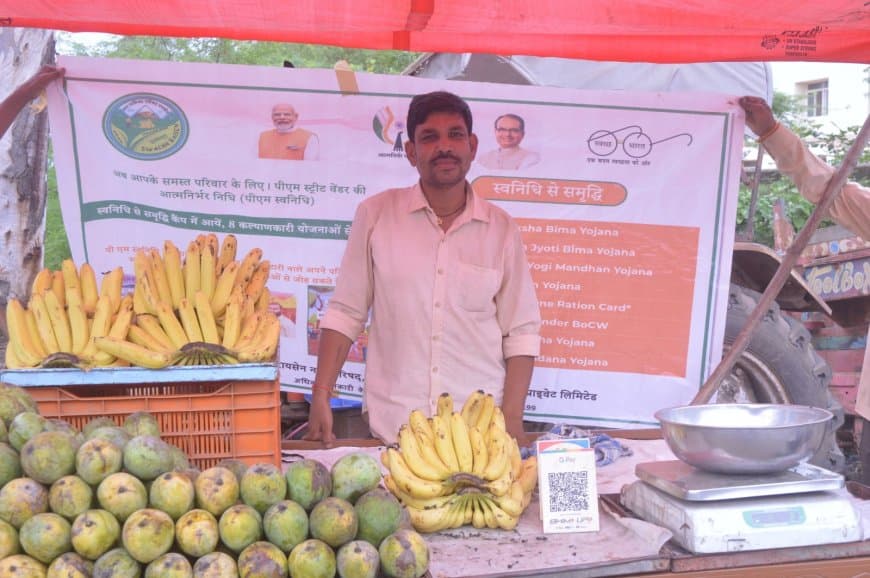
Madhya Pradesh tops PM Swanidhi scheme: Indore first, Bhopal and Jabalpur also make history.
The Chief Minister of Madhya Pradesh, Dr. Mohan Yadav, has expressed pride in the state’s outstanding achievement in implementing the ‘Pradhan Mantri Swanidhi Yojana’. He stated that by realizing Prime Minister Narendra Modi’s vision of a ‘Self-Reliant India’, street vendors in the state are becoming economically empowered. According to the Chief Minister, Madhya Pradesh has presented a new model of inclusive development through this scheme.
Excellent Performance of Major Cities: Indore Ranked No.1 in the Country
Cities in Madhya Pradesh have achieved historic success in the national ranking of urban bodies. Under the new PM Swanidhi Yojana, with the distribution of 33,332 loan cases, the Indore Municipal Corporation secured the first position in the entire country. In the category of population between 10 to 40 lakh, Bhopal achieved the second position and Jabalpur secured the third position, proving their excellence.
Scheme Becomes a Boon for Street Vendors
Highlighting the scheme’s broad impact, Dr. Yadav informed that approximately 9.92 lakh street vendors in the state have benefited so far. Through a total of 15.69 lakh loan cases, an amount of Rs. 2,632 crore has been directly transferred to the beneficiaries’ bank accounts. Additionally, under this scheme, along with loans ranging from Rs. 15,000 to Rs. 50,000, a UPI-linked credit card with a limit of Rs. 30,000 is also being provided.
Digital Revolution: Small Cities Also Show Their Strength
Accelerating the Digital India campaign, over 7 lakh vendors in the state have adopted digital payments, receiving cashback of more than Rs. 47 crore in return. Mentioning the achievement of smaller bodies, the Chief Minister said that the Sarni Municipal Council secured the first position in the country among bodies with a population of less than 1 lakh. In the same category, Balaghat (5th), Tikamgarh (7th), and Harda (9th) secured their positions.
The Chief Minister expressed confidence that this scheme, extended until March 2030, will prove to be a milestone in strengthening the state’s urban economy and empowering the person at the last line.
Indore
Indore, the largest city in Madhya Pradesh, India, has a rich history as the capital of the Holkar dynasty, founded by Malhar Rao Holkar in the 18th century. The city is known for its royal heritage, including landmarks like the Rajwada Palace and Lal Bagh Palace, and played a key role in the Maratha Empire. Today, Indore is a bustling commercial hub and famous for its vibrant street food culture.
Bhopal
Bhopal, the capital of the Indian state of Madhya Pradesh, is known as the “City of Lakes” for its numerous natural and artificial water bodies. Its history dates back to the 11th century, but it flourished under the rule of the Afghan noble Dost Mohammad Khan in the early 18th century, who founded the modern city. Today, it is a blend of old-world charm and modern development, though it is also internationally known for the tragic 1984 Bhopal gas leak disaster.
Jabalpur
Jabalpur is a historic city in the Indian state of Madhya Pradesh, known for its strategic location along the Narmada River and its role as a major administrative and cultural center. It was once the capital of the Gond kingdom and later developed under the Maratha Empire and British rule, with the famous marble rocks at Bhedaghat and the Dhuandhar Falls being key natural landmarks. Today, it remains a significant hub for education, trade, and tourism, blending ancient heritage with modern growth.
Sarni
Sarni is a town in the Betul district of Madhya Pradesh, India, known for its large coal-fired thermal power plant, the Sarni Thermal Power Station, which has been a key part of the region’s industrial development since the 1970s. Historically, the area was part of the Central Provinces and Berar during British rule and has since grown into an important energy hub. The town also serves as a gateway to the nearby Satpura Tiger Reserve, blending industrial activity with natural surroundings.
Balaghat
Balaghat is a town and district in the Indian state of Madhya Pradesh, known for its rich history and natural resources. Historically, it was part of the Gond kingdom and later came under Maratha and British rule, becoming a major center for mining, particularly of manganese and bauxite. Today, Balaghat is also recognized for its lush landscapes, wildlife sanctuaries, and cultural heritage, including ancient temples and tribal traditions.
Tikamgarh
Tikamgarh is a historic town in the Madhya Pradesh region of central India, known for its rich cultural heritage and the majestic Tikamgarh Fort. Originally part of the Orchha kingdom, it later became the capital of the princely state of Tikamgarh under the Bundela Rajputs in the 18th century. The town features several ancient temples, palaces, and a scenic lake, reflecting its royal past and architectural significance.
Harda
Harda is a city in the Indian state of Madhya Pradesh, located on the banks of the Narmada River. Historically, it was part of the Maratha Empire and later came under British rule; the town is known for its temples and as a gateway to the nearby Omkareshwar Jyotirlinga, a major Hindu pilgrimage site. Today, it serves as an administrative and commercial center for the surrounding agricultural region.