Vadodara Student’s IIT Dream, A New Example of Success Built on Braille and Technology
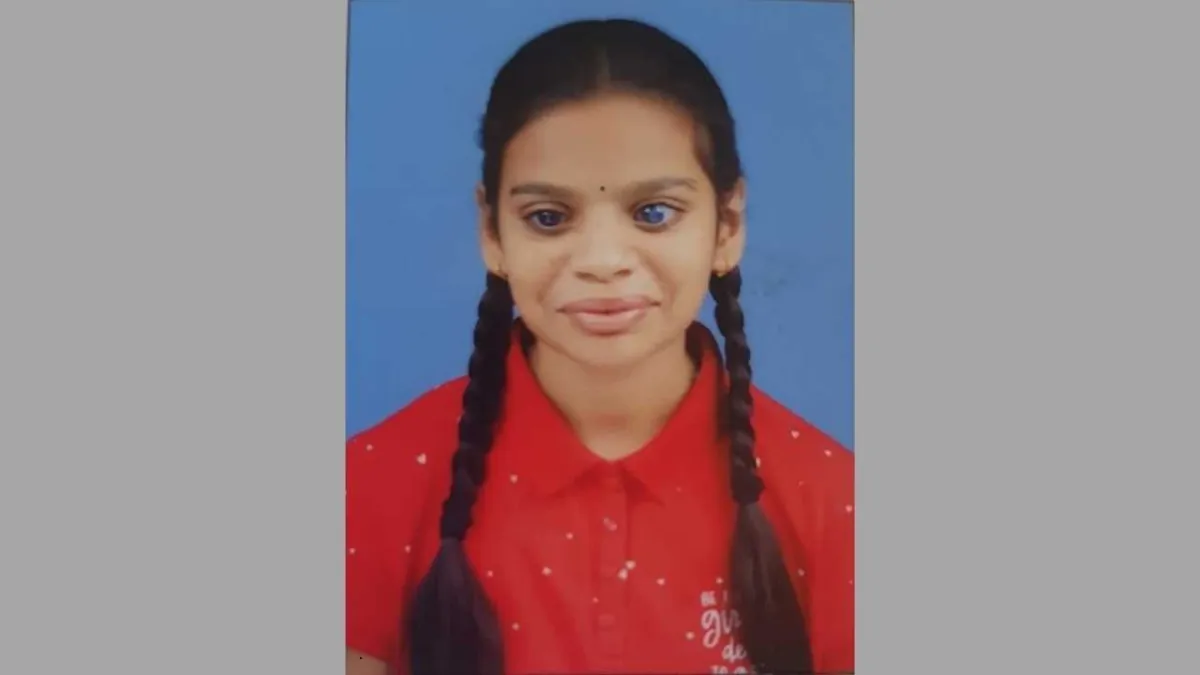
A student from Vadodara has proven with her indomitable courage and firm resolve that success requires not vision, but strong determination. Student Gauri Yogiraj Shardul from Sankul School, despite being blind from birth, has presented an inspiring example by scoring 93.3 percent in the CBSE Class 10 board exams.
Gauri’s goal is to gain admission to the prestigious Indian Institutes of Technology (IIT), and she is moving forward in this direction with full confidence and dedication. Her achievement is not just an academic success, but also delivers the message that limits exist only where our dreams are limited.
Gauri’s struggle and journey to success began from around the age of two and a half, when she enrolled in the Sankul center run by the Deepak Foundation. Here, her talent was recognized from the very beginning and given the right direction.
Under the guidance of the school principal and dedicated teachers, Gauri mastered Braille script and assistive technologies from a young age. She consistently performed excellently, turning her challenges into her strengths.
Known for her curiosity and deep attachment to learning, Gauri credits her success to the constant support of her teachers and mentors. The school administration says, “Gauri never let her limitation come in the way of her dreams.” Gauri’s achievement is not only an inspiration for other students, but also demonstrates that with true effort and a positive attitude, any obstacle can be overcome.
Vadodara
Vadodara, also known as Baroda, is a major city in Gujarat, India, historically renowned as the capital of the Gaekwad dynasty’s princely state. Its cultural significance is epitomized by the lavish Laxmi Vilas Palace, built in the late 19th century, which reflects the city’s legacy of art, education, and architectural patronage. Today, it remains a vibrant center for industry and education while preserving its rich historical heritage.
Indian Institutes of Technology (IIT)
The Indian Institutes of Technology (IITs) are a prestigious network of autonomous public engineering and technology institutes in India, first established in 1951 with IIT Kharagpur. They were founded with the vision of developing a skilled scientific workforce to support the nation’s post-independence industrial and economic growth. Today, the IITs are globally renowned for their rigorous academic programs and are considered among the most selective and influential engineering schools in the world.
CBSE
“CBSE” is not a physical place or cultural site, but an acronym for the **Central Board of Secondary Education**, which is India’s national-level educational board. Established in 1929, it was originally called the “Board of High School and Intermediate Education, Rajputana” to standardize and regulate secondary education. Today, it is one of the largest and most prominent school education boards in India, overseeing thousands of affiliated schools both within the country and abroad.
Sankul School
Sankul School is a historic educational institution located in the village of Sankul in Gujarat, India. It was founded in 1914 by the visionary social reformer and educator, Shri Nanjibhai Kalidas Mehta, to provide modern education and vocational training to the local community. The school played a significant role in the region’s social and educational development during the early 20th century.
Deepak Foundation
The Deepak Foundation is a non-governmental organization based in India, established in 1979 by the late Shri Deepak Nitin Parekh. It is not a physical cultural site but a charitable trust focused on social development, particularly in the areas of healthcare, education, and rural empowerment, especially for women and children. Its history is rooted in philanthropic efforts to address poverty and improve quality of life in underserved communities across several Indian states.
Braille
Braille is a tactile writing system, not a physical place, developed in 1824 by Louis Braille in France. It revolutionized communication and literacy for blind and visually impaired people by using a code of raised dots to represent letters and numbers. Today, it remains an essential tool for independence and education worldwide.