47 artworks by 24 artists showcased at Nehru Centre Art Gallery; live painting sale boosted artists’ morale
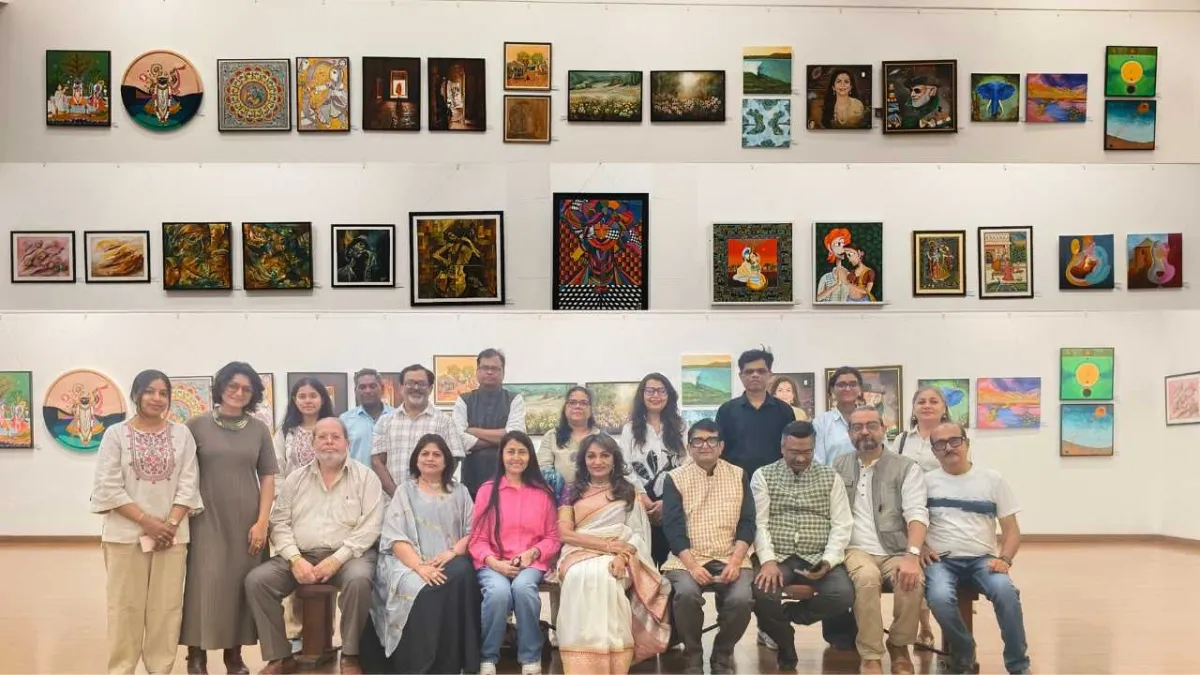
Surat. The grand art exhibition organized by the Art, Culture and Handicraft Committee of the Southern Gujarat Chamber of Commerce and Industry (SGCCI) at the Nehru Centre Art Gallery in Worli, Mumbai, has concluded successfully.
Held from May 5 to May 11, 2026, the week-long exhibition provided a national platform for artworks by talented artists from across the country. The exhibition aimed to give artists national recognition while directly connecting them with art lovers, collectors, and curators. The President of the IMC Ladies Wing inaugurated the event.
The exhibition was inaugurated by Rajya Lakshmi Rao as the chief guest. On this occasion, prominent business consultant Neville Mehta, along with many art enthusiasts, industrialists, and dignitaries from Mumbai and Surat, were present.
The President of the Chamber, Nikhil Madrasi, said that organizing this exhibition in a major art and culture hub like Mumbai, after Surat and Ahmedabad, is an important initiative of the Chamber. He stated that this platform gave artists the opportunity to directly interact with the country’s prestigious art collectors and curators.
The exhibition displayed a total of 47 artworks by 24 selected artists from across the country. All paintings were curated based on professional standards set by the committee.
During the exhibition, a painting by Surat artist Tejalben Modi was sold on the spot, further boosting the morale of other artists. According to the organizers, this exhibition proved to be not just a display platform for artists but also an opportunity for corporate networking and connecting with the global market.
The Chairperson of the Chamber’s Art, Culture and Handicraft Committee, Swati Shethwala, said that SGCCI will continue to organize such national-level events in the future to promote art and culture.
Many dignitaries, including committee member Mansi Virani, Chamber’s Honorary Minister Bijal Jariwala, and former Honorary Minister Deepak Shethwala, were present at the inauguration ceremony.
Nehru Centre Art Gallery
The Nehru Centre Art Gallery, located in Mumbai, India, is a prominent cultural venue named after Jawaharlal Nehru, India’s first Prime Minister. Established in 1972 as part of the Nehru Centre cultural complex, it was founded to promote art and culture in the spirit of Nehru’s vision. The gallery hosts a wide range of contemporary and traditional Indian art exhibitions, as well as cultural events and educational programs.
Worli
Worli is a prominent coastal neighborhood in Mumbai, India, known for its historic Worli Fort, built by the British in 1675 on a hill overlooking the Arabian Sea. Originally a fishing village inhabited by the Koli community, it has transformed into a bustling commercial and residential hub, home to landmarks like the Bandra-Worli Sea Link and the Worli Seaface promenade. The area blends modern skyscrapers with traditional fishing villages, reflecting Mumbai’s rapid urbanization while preserving its cultural roots.
Mumbai
Mumbai, formerly known as Bombay, is India’s largest city and its financial and entertainment capital. Originally a group of seven islands, it was ceded to the British East India Company in the 17th century, who developed it into a major port and trading hub. Today, it is a vibrant, densely populated metropolis known for its colonial architecture, Bollywood film industry, and stark contrasts between wealth and poverty.
Surat
Surat, a major port city in the Indian state of Gujarat, has a rich history as a thriving commercial hub during the Mughal era, particularly known for its textile and diamond industries. It was a key center for trade with Europe and Southeast Asia, and its port was famously used by the British East India Company to export goods. Today, Surat remains a global leader in diamond cutting and polishing, blending its historical significance with modern economic vitality.
Ahmedabad
Ahmedabad, located in western India, is a historic city founded in 1411 by Sultan Ahmed Shah on the banks of the Sabarmati River. It served as the capital of the Gujarat Sultanate and later became a key center of India’s independence movement, notably hosting Mahatma Gandhi’s Sabarmati Ashram. In 2017, the city’s historic walled area was designated a UNESCO World Heritage Site, recognized for its blend of Hindu, Islamic, and Jain architectural traditions.