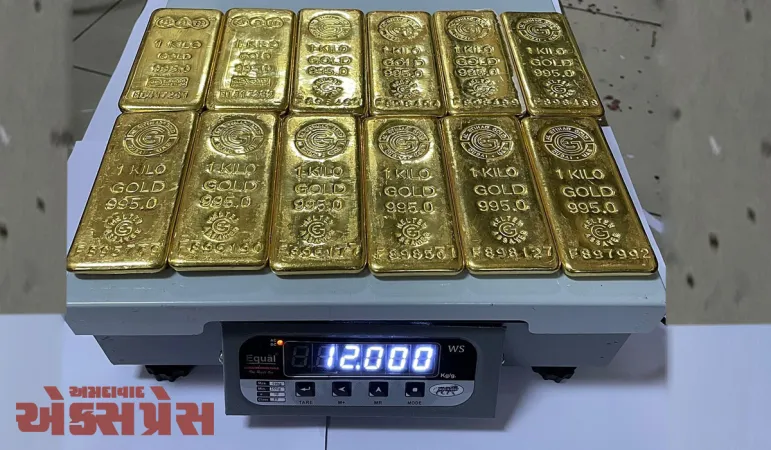
DGFT tightens gold import rules: cap on advance authorization
The Directorate General of Foreign Trade (DGFT) of the Government of India has tightened oversight on duty-free gold imports under the Advance Authorization (AA) scheme. According to a notification from the Ministry of Commerce issued on Thursday, a cap of 100 kilograms per authorization has now been imposed on gold imports. Additionally, stricter rules for compliance and verification have been introduced. This significant decision comes a few days after Prime Minister Narendra Modi appealed to citizens to reduce gold purchases and redirect savings toward productive investments.
According to sources, rising gold imports were increasing pressure on India’s trade balance.
It is noteworthy that in a notice published on May 14, DGFT added five new entries under the Standard Input Output Norms (SIONs) for gems and jewelry exports. These changes have taken effect immediately. Under the Advance Authorization scheme, exporters are allowed to import gold without paying customs duty, but the condition is that the gold must only be used for manufacturing export products.
New rules and physical inspection of production units
This development comes at a time when the government wants to control the outflow of foreign currency through restrictions on gold imports. DGFT has stated that for first-time applicant exporters, a mandatory physical inspection will now be conducted. The regional authority will verify the existence, capacity, and operational status of the production facility. This step has been taken to prevent gold smuggling by fake companies.
According to sources, new approvals are also being linked to export performance.
It is noteworthy that any future Advance Authorization will only be issued once at least 50% of the export obligation under the previous authorization has been fulfilled. That is, exporters must complete half of their export target before ordering new stock. This rule will curb the tendency to hoard gold and benefit genuine exporters.
Reporting system and centralized monitoring
DGFT has also made reporting rules extremely strict for companies importing gold. The Advance Authorization holder must now submit a performance report every fortnight. This report must be certified by an independent Chartered Accountant (CA) and must contain accurate details of gold imported and exported.
It has been learned that regional authorities have also been instructed to send consolidated reports to DGFT headquarters every month.
Furthermore, this centralized oversight and policy monitoring aims to strengthen the gold import ecosystem. India is one of the largest importers of gold in the world, and gold imports directly impact the country’s current account deficit and foreign exchange outflow. These new conditions have been added under SIONs M-1 to M-8 of the Handbook of Procedures 2023.
Economic stability and future strategy
Behind these DGFT decisions lies the government’s long-term economic strategy. According to PM Modi’s vision, if money spent on gold is invested in other productive sectors, the country’s growth rate could increase. Restrictions on gold imports will also strengthen the rupee and reduce the trade deficit.
Government sources say that leaders in the gems and jewelry sector have also welcomed this transparent system.
In particular, the 100 kg limit for exporters could be a major challenge, but it will eliminate loopholes in the system. Like IPL or other major business transactions, gold transactions will now become digital and traceable. It will be interesting to see how this policy affects gold prices and import figures in the coming days. Traders in Surat and Ahmedabad, considered jewelry hubs of Gujarat, will also have to change their operating methods according to these new changes.
Nevertheless, genuine exporters will not face major problems from these rules, as the government only wants to prevent irregularities. This exercise by DGFT is a commendable step toward making the Indian economy more secure and responsible. It is the duty of every citizen and trader to ensure that the country’s wealth is not wasted on the allure of gold.
Thus, the impact of these rules on gold imports will become clear in the statistics in the coming months. This strictness by the government is likely to increase the country’s foreign exchange reserves in the long term.
DGFT has imposed a 100 kg cap on duty-free gold imports under the Advance Authorization scheme. Under the five new rules, exporters will now have to fulfill 50% of their export target and submit fortnightly reports. This important decision was taken after PM Modi’s appeal to reduce gold imports.