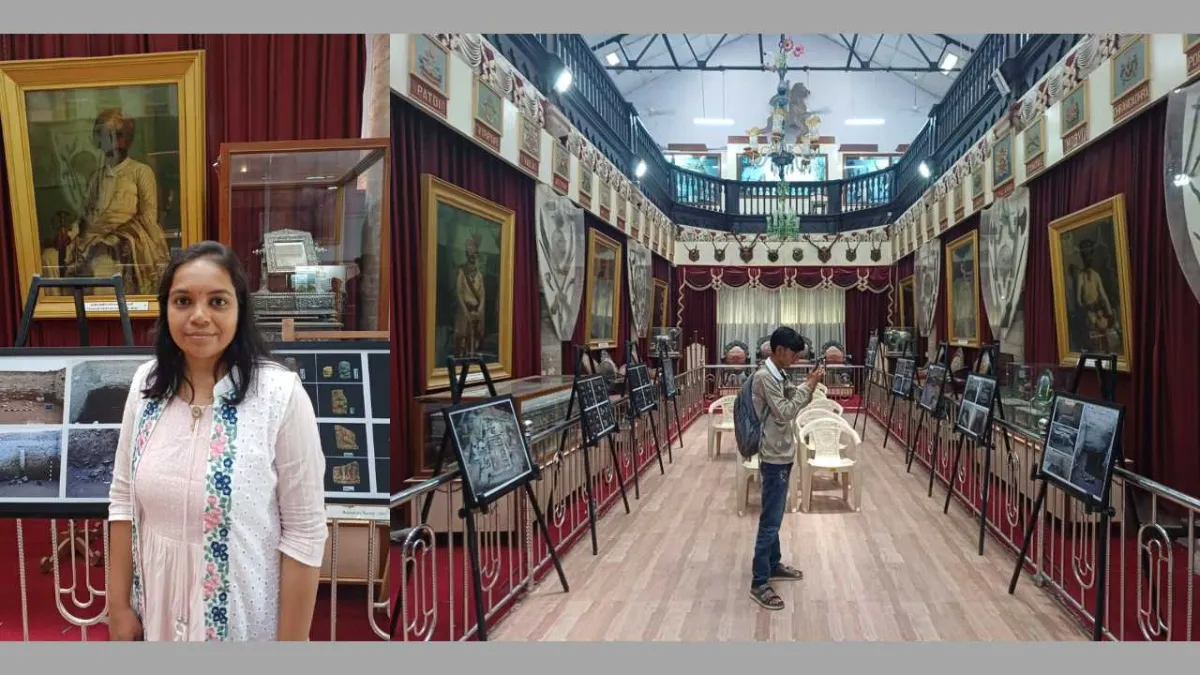
Photo Exhibition of Ancient Coins, Seals, and Conch Bangles Draws Crowds; 3-D Tactile Model of Sun God Statue and Braille Descriptions Also Available
On the occasion of International Museum Day 2026, a special photo exhibition based on ancient relics and significant archaeological discoveries from excavations at Vallabhipur was inaugurated at Watson Museum in Rajkot. This exhibition aims to showcase India’s rich historical and cultural heritage.
The exhibition features photographs of copper coins, ancient seals, conch bangles, and other rare artifacts obtained from the Vallabhipur excavations. These displays provide an opportunity to understand the structure, development, and lifestyle of ancient cities. A dedicated research team has been deployed to provide detailed information to visitors.
On this occasion, a special tactile prototype has been developed for visually impaired individuals, allowing them to experience the museum’s heritage through touch.
The 3-D tactile model of the ancient Sun God statue installed in the museum is a major attraction of the exhibition. This model has been specifically designed for those with low vision and blindness, enabling them to understand the artistry and craftsmanship of the statue through touch. Information is also provided in Braille script. Additionally, a QR code feature is available; by scanning it, visitors can learn about the history of the related object through audio-visual means.
A visitor named Preranaba said that seeing the preserved heritage up close and learning about it is a very interesting experience. She mentioned that she came to see the exhibition with her son, who is in 10th grade, and that every student should visit such museums to better understand the country’s history and culture.
Appreciation was expressed for the ongoing archaeological excavation work across the country to bring India’s historical heritage to light. Thanks were also given to those who supported the organization of this exhibition.