India’s Active Diplomacy Sends Strong Message Amid Rising Tensions in West Asia
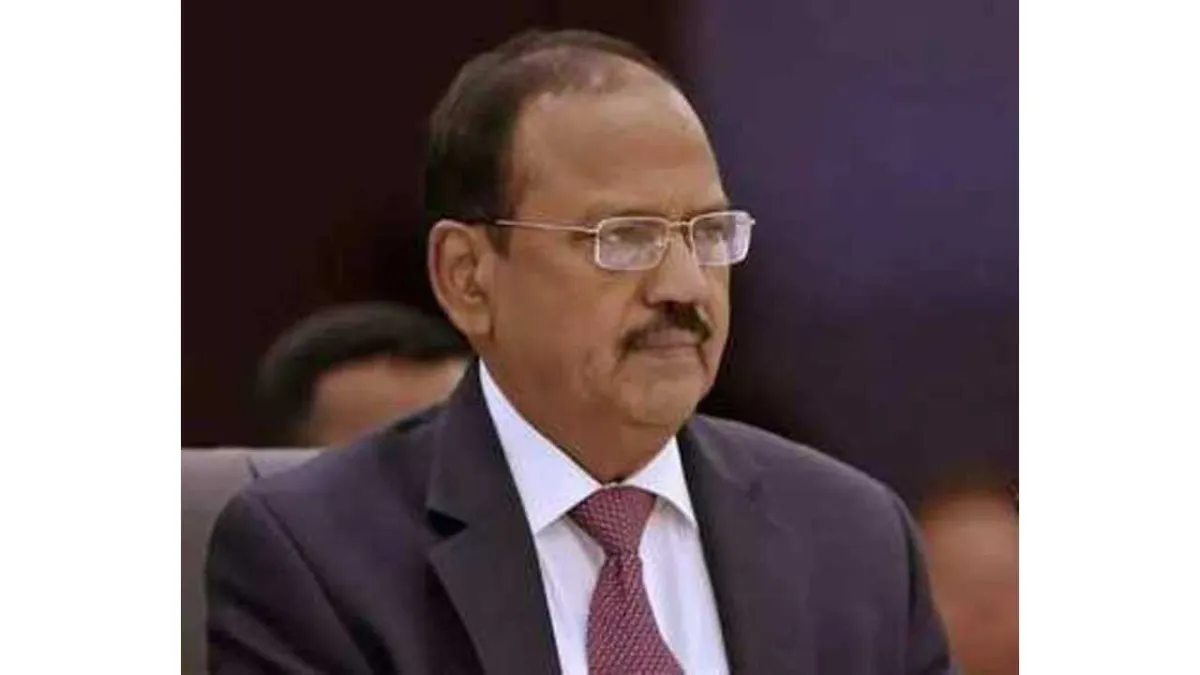
Riyadh, April 20. India’s National Security Advisor (NSA) Ajit Doval made a significant visit to the Saudi capital Riyadh on Sunday. During this visit, he held detailed discussions with senior Saudi leadership on bilateral relations and the regional security situation.
Doval was welcomed by Indian Ambassador Dr. Suhel Khan and Saudi Deputy Minister for Political Affairs Saud Al-Sati. The high-level meeting particularly emphasized strengthening security coordination and protecting mutual interests amid ongoing instability in West Asia.
This growing strategic closeness between India and Saudi Arabia is considered highly significant from the perspective of global diplomacy.
Doval held separate meetings with Saudi Energy Minister Prince Abdulaziz bin Salman, Foreign Minister Prince Faisal bin Farhan, and National Security Advisor Dr. Musaed Al-Aiban.
The main focus of these talks was energy security and the stability of global oil supply. In light of rising tensions between the US and Iran in recent days and threats looming over maritime trade routes, India, together with Saudi Arabia, discussed strategies to maintain smooth oil flow.
Both countries also reaffirmed their shared commitment to cooperation against terrorism and addressing cross-border security challenges.
This visit comes at a time when uncertainty surrounds the US-Iran peace talks scheduled in Islamabad, and regional tensions have peaked due to a naval blockade.
India has always advocated for peaceful solutions and diplomacy. According to experts, Doval’s Riyadh mission is not only aimed at ensuring India’s energy security but is also a major step toward protecting the safety of millions of Indian expatriates living in Gulf countries and maintaining regional balance.
Through this active diplomacy, India is making it clear that it stands as a responsible global power in establishing stability in the Middle East.
Riyadh
Riyadh is the capital and largest city of Saudi Arabia, evolving from a small, fortified desert settlement into a major global metropolis. Its modern history began in 1902 when Abdulaziz Ibn Saud recaptured the city, which later became the political and financial heart of the unified Kingdom of Saudi Arabia. Today, Riyadh blends its historical roots, visible in sites like the Masmak Fortress, with futuristic developments under the Vision 2030 initiative.
Saudi Arabia
Saudi Arabia is a country in the Middle East that is the birthplace of Islam and home to its two holiest cities, Mecca and Medina. Historically, it was unified in 1932 by King Abdulaziz Al Saud, and its modern history has been shaped by the discovery of vast oil reserves in the 1930s, transforming it into a major global economic power. Today, the kingdom is undergoing significant social and economic changes under its Vision 2030 reform plan, aiming to diversify its economy beyond oil.
West Asia
West Asia is a historically rich region that served as the cradle of some of the world’s earliest civilizations, including Mesopotamia and the ancient Persian Empire. It has been a crossroads for trade, culture, and religion, with significant developments in writing, law, and monotheistic faiths such as Judaism, Christianity, and Islam. Today, the area is known for its diverse cultures and geopolitical importance, shaped by centuries of conquest, empire, and modern nation-building.
Iran
Iran is a country in Western Asia with a rich history dating back thousands of years, once the center of the ancient Persian Empire. It is home to numerous cultural sites, including the ruins of Persepolis, the magnificent mosques of Isfahan, and the historic city of Shiraz. Modern Iran is known for its deep cultural traditions in poetry, art, and architecture, though its political history has been marked by revolution and international tensions.
Islamabad
Islamabad, the capital of Pakistan, was purpose-built in the 1960s to replace Karachi as the country’s seat of government, with its construction beginning in 1961. Designed by Greek architect Constantinos Apostolou Doxiadis, the city is known for its modern, planned layout and lush greenery, nestled at the foot of the Margalla Hills. Today, it serves as a political and cultural hub, featuring landmarks like the Faisal Mosque, one of the largest mosques in the world, and the Pakistan Monument.
Gulf countries
The Gulf countries, also known as the Gulf Cooperation Council (GCC) states, include Bahrain, Kuwait, Oman, Qatar, Saudi Arabia, and the United Arab Emirates. Historically, these nations were largely dependent on pearl diving, fishing, and trade, but their economies transformed dramatically after the discovery of oil in the 20th century. Today, they are known for their vast oil reserves, rapid modernization, and cultural landmarks such as traditional souks and futuristic skyscrapers.
Middle East
The Middle East is a historically and culturally rich region spanning parts of Western Asia and North Africa, often considered the cradle of civilization where ancient Mesopotamia and the earliest cities emerged. It is the birthplace of three major world religions—Judaism, Christianity, and Islam—and has been a crossroads for trade, conquest, and cultural exchange for millennia. Today, the region is known for its diverse societies, significant oil reserves, and ongoing political and social transformations shaped by its complex history.
India
India is a vast and diverse country in South Asia, known for its rich cultural heritage and ancient history dating back to the Indus Valley Civilization (c. 3300 BCE). It has been home to major religions such as Hinduism, Buddhism, Jainism, and Sikhism, and was shaped by empires like the Maurya, Gupta, and Mughal, before becoming a British colony. India gained independence in 1947 and is now the world’s largest democracy, celebrated for its vibrant traditions, languages, and landmarks like the Taj Mahal.