Rwanda integrates African and Arab refugees into the job market, using camps without tents.
Over 120,000 refugees are hosted, according to official authorities, the majority from the Republic due to renewed conflicts in border areas, in addition to thousands of Sudanese who fled there to benefit from the “open door” policy.
The ambition to integrate refugees into society and transition half of them into the labor market intersects with complex field challenges posed by the crisis of declining international humanitarian aid.
Kigali: A Safe Haven
In the suburbs of the capital Kigali, a different lifestyle is evident, with no tents or camps. Rila Saeed, a Sudanese assistant doctor who fled the hardships of war after two harsh weeks of water and electricity outages and a lack of basic food supplies, lives there.
Rila arrived in Rwanda after a strenuous overland journey from Al Qadarif State (southeast of Khartoum) to Ethiopia, then Dar es Salaam, where she completed her last academic year. She later settled into a job as a teaching assistant at the University of Medical Sciences and Technology’s branch in Kigali. Summarizing her experience, she affirmed, “The best thing about Rwanda is the safety… the safety.”
Rwanda facilitates tourist visas, investment residencies, student and work residencies for all nationalities. For those without opportunities or means, the country welcomes them with refugee status in one of its five camps spread across its territory.
Mahama Camp
In the south of the country lies Mahama Camp, the largest camp in Rwanda, housing 72,000 refugees, representing two-thirds of the total refugee population.
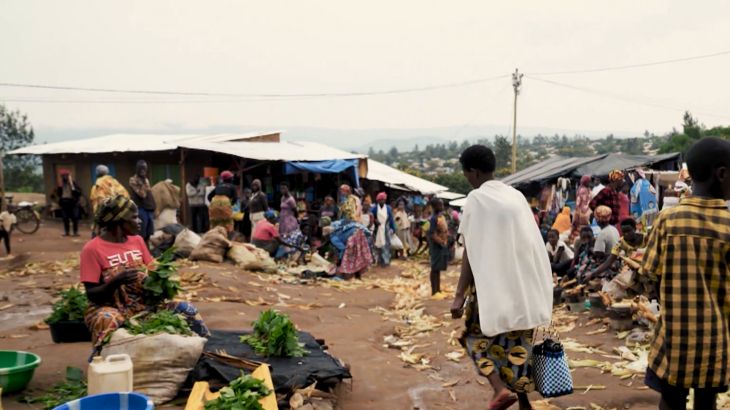
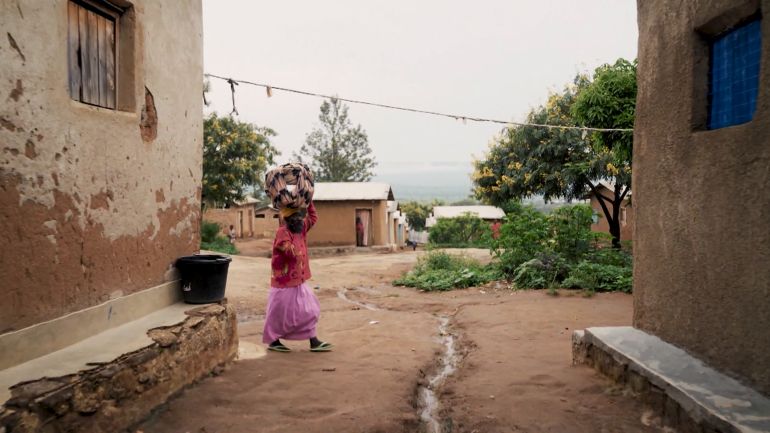
The camp resembles a city, devoid of tents, with stone-built houses, schools, a market, and commercial activities. Refugees enjoy freedom of movement outside the camp and the ability to seek job opportunities.
Despite this scene, the aid reduction crisis has had a severe impact. Sudanese refugee in the camp, Ahmed Al-Tayeb, confirms that the decline in support has led to cases of “extreme poverty” among Sudanese.
Refugees in Rwandan camps enjoy freedom of movement outside the camp and the ability to seek job opportunities.
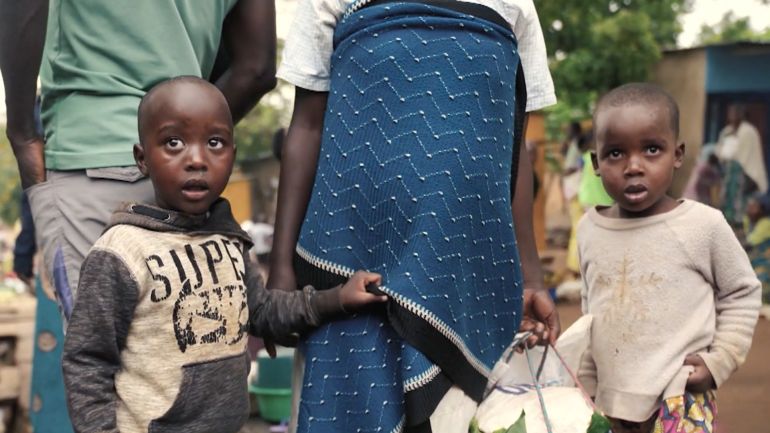
Sudanese there face real problems in education and health, as the language barrier is a major obstacle for children required to learn the host country’s language, negatively impacting education, trade, and the labor market.
This is because Sudanese represent a minority of barely 400 families, while Burundians and Congolese form the vast majority who share the same language as Rwandans.
2030 Strategy and Funding Burdens
Mahama Camp includes 5 schools hosting 26,000 students, with one school alone accommodating 10,000 students in secondary education.
Due to the decline in international aid, Rwanda reviewed its policy and approved a strategy aiming to integrate 50% of refugees by 2030 and transition them into the labor market within 5 years.
The director of Mahama Camp explains that some refugees receive educational grants abroad or in the country’s universities, while others are encouraged to start independent small businesses. However, funding remains limited, and available jobs are distributed among education, nursing, and e-marketing, while the majority resort to small businesses.
Mahama Camp resembles a city, devoid of tents.
From the official side, the director of the Refugee Management Program at the Ministry of Emergency Management affirms Rwanda’s commitment to securing protection and a dignified life for refugees, justifying this by noting that most Rwandans were refugees in the past.
Faced with the open door policy and African solidarity, a fundamental question arises: at a time when Africa receives refugees and does not export them, does Rwanda have the capacity to bear the financial burdens of this policy alone, or might countries keen on closing their doors to asylum help it?
Kigali
Kigali is the capital and largest city of Rwanda, known for its clean, safe streets and hilly landscape. Historically, it was a small administrative center during the colonial era but grew rapidly after independence, becoming the site of pivotal events during the 1994 genocide against the Tutsi. Today, Kigali has transformed into a vibrant, modern city and a symbol of Rwanda’s recovery and development, home to the Kigali Genocide Memorial.
Mahama Camp
Mahama Camp is a refugee camp located in Rwanda, established in 2015 to host people fleeing violence and instability in neighboring Burundi. It was created in response to the political crisis and civil unrest that erupted in Burundi that year. The camp has since become one of the largest refugee settlements in Rwanda, providing shelter, education, and basic services to tens of thousands of displaced individuals.
Al Qadarif State
Al Qadarif State is a region in eastern Sudan, known for its agricultural significance and strategic location near the Ethiopian border. Historically, it served as a key area during the Mahdist War and later became an administrative center under Anglo-Egyptian rule. Today, it is recognized for its production of sorghum, sesame, and gum arabic.
Khartoum
Khartoum is the capital of Sudan, located at the confluence of the Blue and White Nile rivers. Its modern history began in the 1820s when it was established as an Egyptian military outpost, and it later became a major administrative center under Anglo-Egyptian rule. The city endured a famous siege and destruction by Mahdist forces in 1885, and it was rebuilt by the British in the early 20th century.
Ethiopia
Ethiopia is one of the world’s oldest nations, with a rich history dating back to the ancient Kingdom of Aksum, a major trading empire from the 1st to 7th centuries. It is famously the only African country to successfully resist European colonization during the Scramble for Africa, maintaining its independence except for a brief Italian occupation in the 1930s-40s. Today, Ethiopia is renowned for its unique cultural heritage, including the rock-hewn churches of Lalibela and its status as the origin of the coffee plant.
Dar es Salaam
Dar es Salaam is the largest city and former capital of Tanzania, located on the country’s eastern coast along the Indian Ocean. Originally a small fishing village, it was developed as a port and trading hub by the Sultan of Zanzibar in the mid-19th century, and later expanded under German and British colonial rule. Today, it remains Tanzania’s primary economic and cultural center, known for its vibrant markets, diverse population, and historical architecture.
University of Medical Sciences and Technology
The University of Medical Sciences and Technology (UMST) is a private university located in Khartoum, Sudan, established in 1995. It was founded with the aim of providing high-quality education in medical and health sciences, and has since grown into a leading institution in the region. The university plays a key role in training healthcare professionals and advancing medical research in Sudan.
Ministry of Emergency Management
The Ministry of Emergency Management (MEM) is a key government body in China established in March 2018 to integrate and coordinate disaster response, emergency rescue, and safety management functions. It was formed by merging responsibilities from multiple agencies, including firefighting, earthquake relief, and flood control, in order to create a unified and efficient emergency system. The MEM plays a crucial role in managing natural disasters, industrial accidents, and public safety incidents across the country.