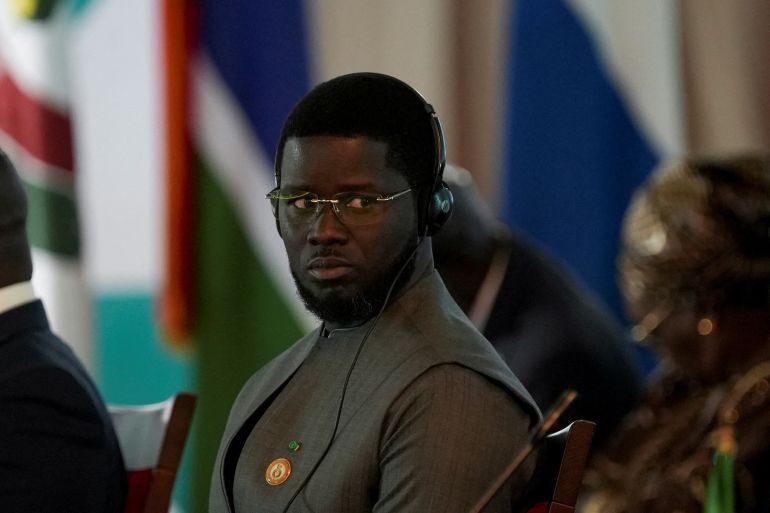
In the midst of a rapidly unfolding political crisis, Senegal’s National Guard summoned two prominent deputies from the ruling party for questioning on Monday, just days after President Bassirou Diomaye Faye dismissed his Prime Minister Ousmane Sonko and dissolved the government. The summons has reignited a broad debate on parliamentary freedom of speech and the use of the judiciary in political conflicts.
The two summoned deputies, Cheikh Bara Ndaye and Guy Marius Sanya, belong to “Bastif,” the same party that leads the parliament and the state. According to Senegalese media outlets, Cheikh Bara Ndaye had publicly accused former Finance Minister Cheikh Diba of holding a personal bank account with “hundreds of billions of CFA francs (hundreds of millions of dollars).”
Guy Marius Sanya went further, describing President Faye as a dissident in response to the appointment of the new Prime Minister Ahmed Amine Mohamed Lou, and calling the events an “electoral hold-up.” Sanya declared he would not appear before the investigation, denouncing what he called judicial practices inconsistent with a deputy’s right to free expression, according to French media “La Nouvelle Tribune.”
From Dismissal to Confrontation Within the Same House
These summons came in an exceptionally tense context. On the 20th of last month, Faye issued a presidential decree dismissing Sonko and dissolving his government, following months of escalating disagreements between the two men over sensitive economic files, notably dealing with international financial institutions and a debt crisis that reached 132% of GDP, according to the Associated Press.
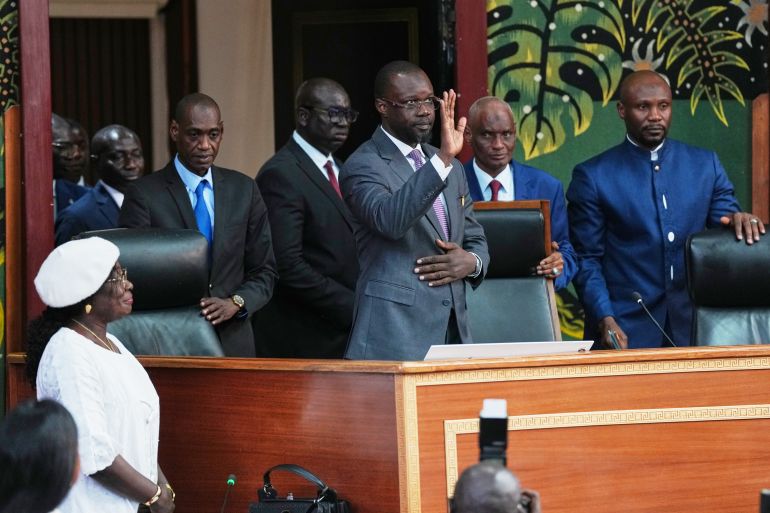
However, the dismissal did not silence Sonko; instead, it opened a different arena for him. Six days after his dismissal, the parliament elected Sonko as President of the National Assembly with a majority of 132 votes out of 165, a move the opposition described as an “institutional coup,” according to “La Nouvelle Tribune.” This made Sonko the head of parliament facing a president who, under the constitution, cannot dissolve it before next November.
The ruling party itself did not remain silent over the summons of its two deputies. In a statement issued Sunday evening, “Bastif” expressed its “deep displeasure,” warning against “any use of the judiciary for political intimidation purposes,” and demanding respect for the parliamentary immunity of the summoned deputies, according to “Senego” and “Riyami” agencies.
Human Rights Concerns Echo the Past
The repercussions of this movement were not limited to politicians. Human rights groups expressed concern over “alleged violations related to freedom of expression,” noting that these practices evoke methods from past eras. This is a notable reference, especially since the “Bastif” party itself had partly built its popularity on defending freedom of expression and opposition during a time when Sonko and Faye faced judicial prosecution under the rule of former President Macky Sall.
Worsening Crisis and Formation of New Government
The crisis entered a more complex phase after President Faye announced his new government, composed of 30 ministers led by economist Ahmed Amine Mohamed Lou. Although the lineup included some party allies, it notably lacked several key figures from the previous government. This announcement followed a lengthy conversation between President Faye and Ousmane Sonko, after which Sonko confirmed the emergence of major points of disagreement over the party’s future role, officially declaring “Bastif’s” boycott of the new government and its lack of representation by any ministers.</