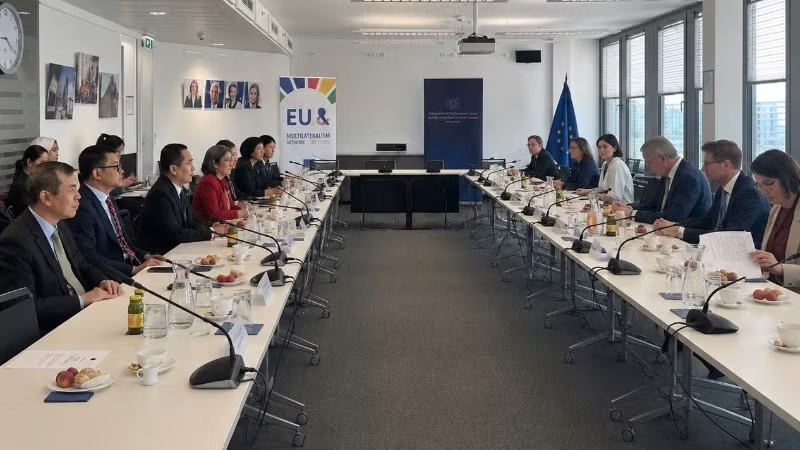
During the reception, the EU Ambassador recalled the positive outcomes of the recent meeting on April 28; praised ASEAN’s increasingly proactive role in multilateral mechanisms, especially at international organizations and the United Nations in Vienna; affirmed that the EU continues to regard ASEAN as an important partner in promoting multilateralism, maintaining peace, stability, and sustainable development.
The two sides discussed in depth the «UN80» initiative of UN Secretary-General Antonio Guterres, aimed at enhancing the effectiveness of UN operations, addressing current financial difficulties, and ensuring that multilateral mechanisms continue to function efficiently; emphasized the need for comprehensive UN reform towards a leaner, more effective structure, ensuring inclusivity and the interests of developing countries.
The two sides also stressed the need to focus on the specific nature of Vienna-based organizations, which involve technical and specialized cooperation that brings direct and practical benefits to the people of member states, and therefore require appropriate investment and budget allocation.
The two sides shared views on issues currently under discussion at the IAEA, emphasizing the importance of maintaining unity and consensus within the IAEA Board of Governors (BOG); affirmed the need to ensure that the IAEA General Conference and BOG continue to serve as forums for promoting dialogue, cooperation, and consensus-building, while avoiding confrontation and the politicization of technical issues; highlighted the need to enhance technical support, capacity building, and ensure equitable access for developing countries to peaceful nuclear applications, in line with the pillars of the Nuclear Non-Proliferation Treaty (NPT).
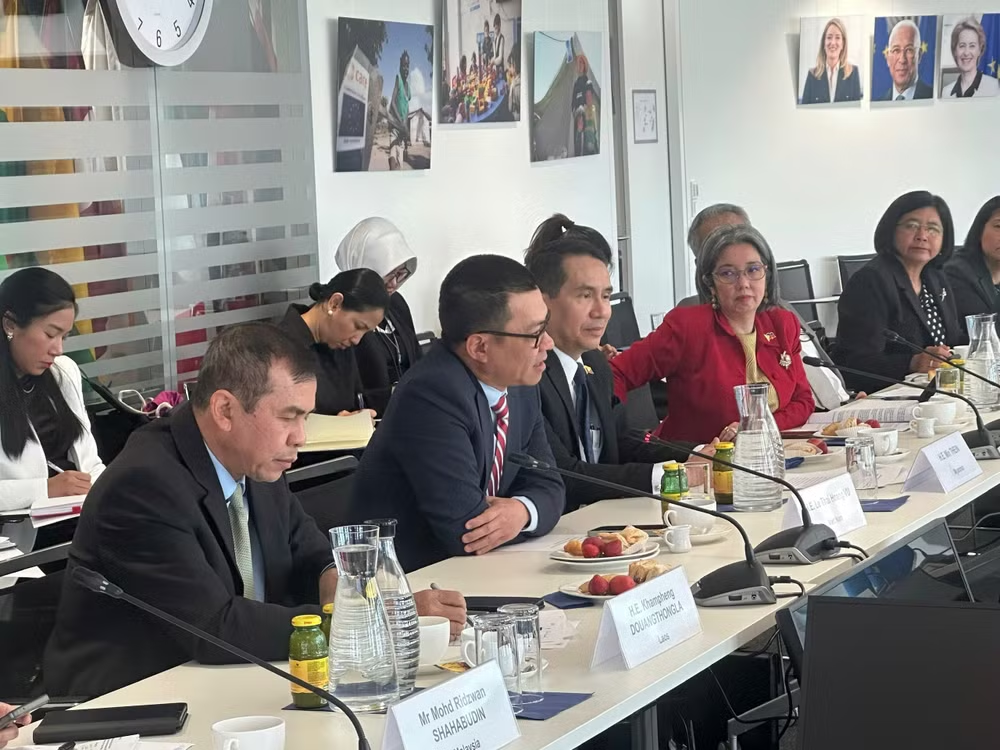
The Ambassador stated that amid increasing strategic competition among major powers, ASEAN and the EU share many common values and interests in promoting multilateralism, international law, and the central role of the United Nations, and need to leverage «collective strategic autonomy» to protect the interests of member states and enhance the voice of both regions in global governance.
The Ambassador noted that the United Nations is at a turning point, requiring comprehensive reforms ranging from reviewing functions, prioritizing activities, and operational processes to the institutional structure of international organizations to adapt to the new situation.
At the same time, he shared Vietnam’s proactive and positive contributions to multilateral processes, including chairing the signing ceremony of the UN Convention against Cybercrime, and currently serving as the President of the 11th Review Conference of the Nuclear Non-Proliferation Treaty (NPT) in New York.
The Ambassador emphasized the important role of the IAEA in promoting the application of nuclear energy for peaceful purposes in service of sustainable development; stated that Vietnam is closely cooperating with the IAEA to build its first two nuclear power plants and highly appreciates the IAEA’s practical support, especially through the Technical Cooperation Fund (TCF), in capacity building, human resource training, completing legal and technical infrastructure, and promoting nuclear applications in socio-economic development.
In the field of cybersecurity, the Ambassador thanked the EU Ambassador for sharing information about the EU’s upcoming ratification of the UN Convention against Cybercrime (Hanoi Convention), considering this an important step to strengthen international cooperation in responding to non-traditional security challenges; stated that Vietnam plans to establish a regional training center on cybercrime prevention for developing countries, to support capacity building, share experiences, and promote international cooperation in implementing the Convention.