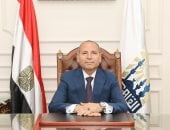
Cairo Governor

The Egyptian state places the file of providing goods and alleviating burdens on citizens at the top of its priorities.

The controversy surrounding the Al-Hamam market in the Sayyida Aisha area has been settled, confirming it will not be removed as it is one of the most important historical and heritage markets in the capital.

An inspection visit will take place tomorrow, Sunday, accompanied by the governors of New Valley, Matrouh, Giza, and Cairo.

District heads have been instructed to fully coordinate with the General Authority for Cleaning, Beautification, and Lighting of Cairo to intensify field campaigns.

Cairo Governorate has raised the level of maximum preparedness in the health sector to receive the holy month of Ramadan through an emergency system.

Cairo Governorate has raised the level of maximum preparedness in the health sector to receive the holy month of Ramadan through an integrated emergency system and expanded monitoring.

The integrated operational plan for the Public Transport Authority to receive the holy month of Ramadan has been approved. The plan aims to provide a safe means of transportation.

A meeting was held with representatives of the youth of Al-Mataria district who are organizing the annual grand Iftar table.

Through a specialized company, the devices of Cairo Governorate continue the work of removing the Sayyida Aisha bridge, as part of a development plan.

The Directorate of Health Affairs has been instructed to raise the level of maximum preparedness coinciding with the arrival of the month of Ramadan, directing the implementation of extensive inspection campaigns.

It has been announced that the Public Transport Authority in Cairo has completed all its preparations to receive the holy month of Ramadan by developing an integrated operational plan that suits the needs and flow of citizens during the holy month.

It has been announced that the Public Transport Authority has completed its integrated operational plan to receive the holy month of Ramadan, in line with the needs of citizens.

The grand celebration organized by the Ministry of Endowments on the occasion of the mid-Sha’ban night was attended.

A major campaign was led to restore discipline to the public street, based on citizen complaints and directives.

Field tours continued today to follow up on the dismantling and removal work of the Sayyida Aisha bridge, which effectively began last Thursday evening.

An extensive field tour was conducted to follow up on the actual start of the dismantling and removal work of the metal Sayyida Aisha bridge, which began yesterday evening, Thursday.

The removal work of the Sayyida Aisha bridge was monitored, as part of a plan to develop the square and transform it into a global open-air museum collecting Islamic antiquities.

The devices of Cairo Governorate have effectively begun the work of removing and dismantling the metal Sayyida Aisha bridge, following the successful operation of the alternative route for the Salah Salem axis away from the square area.

The devices of Cairo Governorate began closing the Sayyida Aisha bridge in preparation for its removal, after diverting the route of the Salah Salem axis away from Sayyida Aisha Square.

The Al-Zarayeb area in Manshiyat Nasser district in Cairo witnessed, today Thursday, a massive fire that started in a solid waste storage facility. The flames quickly spread to engulf 3 adjacent buildings.
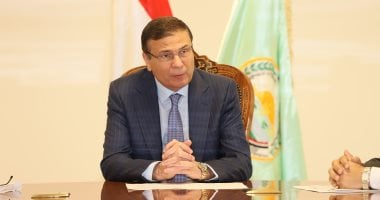

Minister of Agriculture and Land Reclamation

Al-Hamam market

Al-Hamam market is a historic covered bazaar located in the heart of the old city of Aleppo, Syria. It dates back to the Mamluk era (13th-16th centuries) and was traditionally known as a center for trading textiles and soap. The market, whose name means “The Bath” market, suffered significant damage during the Syrian civil war but remains an important symbol of the city’s commercial heritage.

Sayyida Aisha area

The Sayyida Aisha area is a historic neighborhood in Cairo, Egypt, named after a revered 8th-century female saint and scholar, Sayyida Aisha bint Ja’far al-Sadiq. It is centered around her mosque and mausoleum, which have been a significant pilgrimage site for centuries, particularly for women seeking blessings. The area remains a vibrant hub of Islamic devotion and local culture within the old city.

Sayyida Aisha bridge

The Sayyida Aisha bridge is a modern suspension bridge in Cairo, Egypt, that spans the Nile River. It was inaugurated in 1995 and is named after Sayyida Aisha, a prominent female figure in Islamic history and the sister of the revered Imam Hussein. The bridge serves as a vital transportation link and offers scenic views of the Cairo skyline and the historic Citadel.

Sayyida Aisha Square

Sayyida Aisha Square is a major public plaza in the historic heart of Cairo, Egypt, located just outside the southern gates of the medieval city walls. It is named after the nearby mosque and shrine of Sayyida Aisha, daughter of a revered 9th-century Islamic scholar, which has been a pilgrimage site for centuries. The square serves as a bustling transportation hub and gateway to the historic cemeteries known as the City of the Dead.

Al-Mataria district

Al-Mataria is a historic district in northeastern Cairo, Egypt, best known as the traditional site of the Virgin Mary’s Tree. According to Christian tradition, this is where the Holy Family rested during their flight into Egypt. The area also contains ancient ruins, including remnants of the Roman city of Heliopolis and an obelisk from the reign of Senusret I.

Manshiyat Nasser district

Manshiyat Nasser is a large, densely populated informal settlement (often called a “garbage city”) on the eastern outskirts of Cairo, Egypt. Historically, it became home primarily to the Zabbaleen community, Coptic Christians who migrated from rural Egypt in the mid-20th century and developed a renowned waste management and recycling system. The district is also notable for the Cave Church, a massive underground church complex carved into the Mokattam cliffs.

Al-Zarayeb area

“Al-Zarayeb area” is not a widely recognized historical or cultural site in major references. The name itself translates from Arabic as “The Pens” or “The Enclosures,” which often refers to a local area used for animal husbandry or agriculture. Without more specific context, it is likely a local geographical area rather than a site of broader historical significance.

Salah Salem axis

The Salah Salem axis is a major multi-lane highway and urban corridor in Cairo, Egypt, named after the Egyptian military officer Salah Salem. It was developed in the mid-20th century as part of the city’s modernization efforts, cutting through historic districts to improve east-west traffic flow. The road is notable for passing by several significant landmarks, including the Cairo Citadel and the Al-Azhar Park.