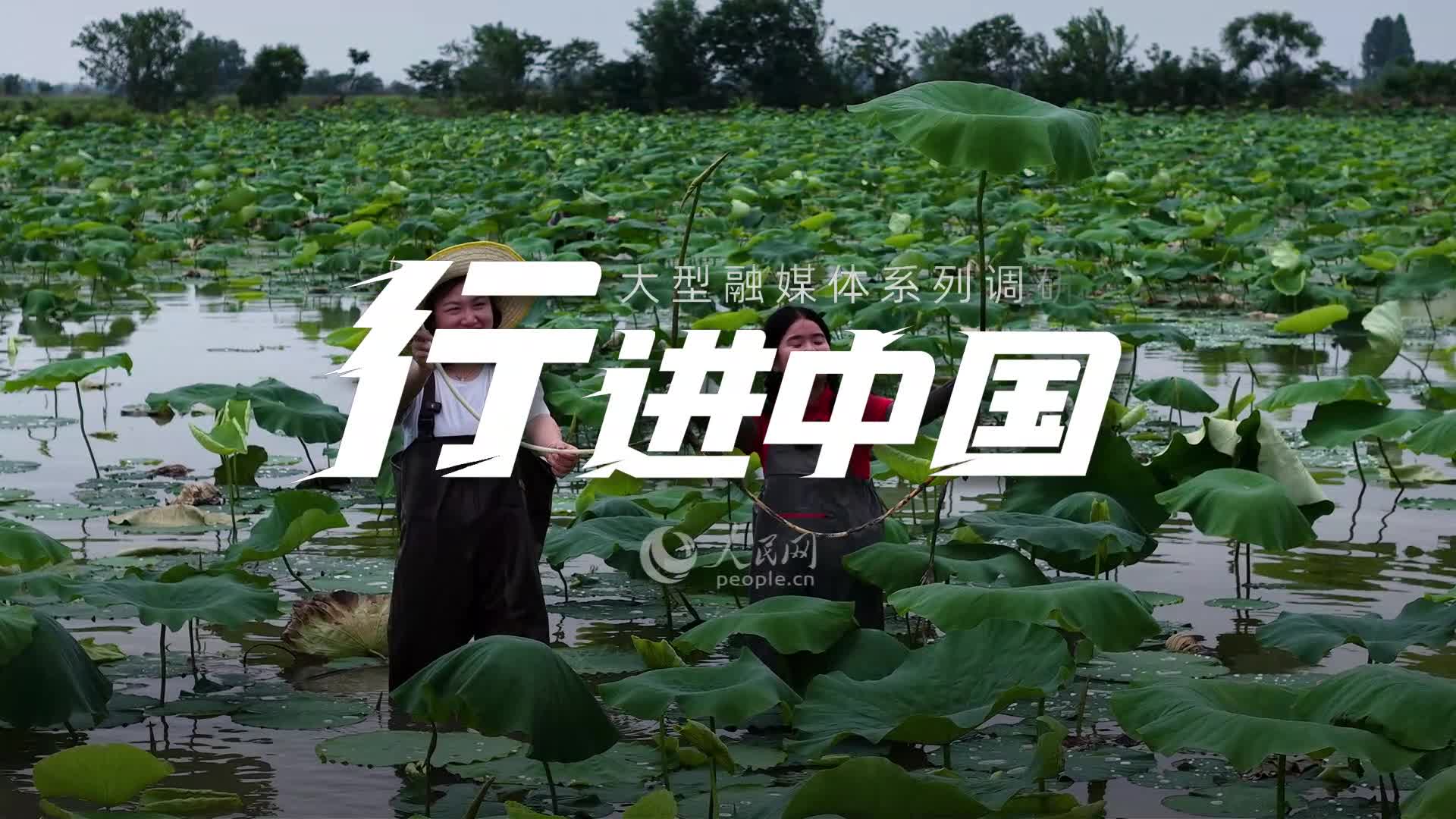
In the early summer of Honghu, Hubei, rice paddies stretch across the land, with a gentle breeze carrying the scent of lotus flowers. It is currently the peak season for lotus root shoots. As dawn breaks, lotus farmers step into the fields to harvest the shoots.
At the Qingniba Lotus Root Planting Base, a woman holding mud-covered lotus root shoots promotes them in front of her phone’s live stream: “Fresh lotus root shoots just pulled from the pond, crisp and sweet. Order now, and we’ll pack them immediately for cold-chain direct shipping.” Before her voice fades, the sound of order notifications rings out one after another in the background.
Honghu
Honghu is a county-level city in Hubei Province, China, renowned for its vast Honghu Lake, a major wetland and freshwater lake in the Yangtze River floodplain. The area is historically significant as a key base for the Chinese Communist Red Army during the 1920s-30s, particularly remembered for the “Honghu Revolutionary Base” and its role in the Chinese Civil War and the Second Sino-Japanese War. Today, it is celebrated for its natural beauty, lotus flowers, and cultural heritage, including the famous folk song “The Red Guards of Honghu Lake.”
Hubei
Hubei is a central Chinese province known for its rich history and cultural significance, particularly as the site of the ancient Chu civilization. Its capital, Wuhan, is a major industrial and transportation hub, famously home to the Yellow Crane Tower, a historic pavilion with over 1,700 years of literary and architectural heritage. The province also played a key role in modern Chinese history, including the 1911 Wuchang Uprising that helped end imperial rule.
Honghu Lake
Honghu Lake, located in Hubei Province, China, is a vast freshwater lake known for its natural beauty and rich biodiversity. Historically, it served as a strategic base for the Communist forces during the Chinese Civil War, particularly in the 1920s and 1930s, and is often celebrated in Chinese revolutionary songs and stories. Today, it remains a popular destination for tourism and wetland conservation.
Honghu Revolutionary Base
The Honghu Revolutionary Base, located in Hubei Province, China, was a key stronghold for the Chinese Communist Party during the late 1920s and early 1930s. It played a significant role in the early stages of the Chinese Civil War, serving as a center for guerrilla warfare and agrarian reform led by figures like He Long. Today, the site is preserved as a memorial and museum, commemorating the revolutionary spirit and sacrifices of the region’s people.
Honghu
Honghu is a county-level city in Hubei Province, China, known for its vast lake, Honghu Lake, which is a key wetland and a historic site of the Chinese Communist Revolution. During the 1920s and 1930s, the region was a base for the Red Army, and its revolutionary legacy is commemorated in local museums and monuments. Today, it is also celebrated for its natural beauty, lotus flowers, and traditional fishing culture.
<h3 class="text-lg font-semibold mb-2 text-blue-800
Honghu
Honghu is a city in Hubei Province, China, known for its vast lake, Honghu Lake, which played a significant role in the region’s history as a base for the Chinese Communist Revolution during the 1920s and 1930s. The area is celebrated in Chinese culture through the famous revolutionary song “The Honghu Lake,” which commemorates the guerrilla warfare and local resistance against Nationalist forces. Today, Honghu is a popular tourist destination, offering natural scenery and historical sites that reflect its revolutionary heritage.
Hubei
Hubei is a central Chinese province known for its rich history and cultural significance, particularly as the location of the ancient state of Chu during the Zhou dynasty. Its capital, Wuhan, played a pivotal role in modern Chinese history as the site of the 1911 Wuchang Uprising, which led to the fall of the Qing dynasty. The province is also famous for the Three Gorges region along the Yangtze River, combining natural beauty with monumental engineering projects.
Honghu Lake
Honghu Lake, located in Hubei Province, China, is a large freshwater lake historically known for its role as a revolutionary base during the Chinese Communist Revolution. It was a key stronghold for the Red Army in the 1920s and 1930s, with local fishermen and farmers supporting guerrilla warfare against nationalist forces. Today, it is a protected wetland and a popular tourist destination, celebrated for its scenic lotus flowers and cultural heritage linked to revolutionary songs and stories.
Honghu Revolutionary Base
The Honghu Revolutionary Base, located in Hubei Province, China, was a key stronghold for the Chinese Communist Party during the late 1920s and early 1930s. It served as a center for the Hunan-Hubei-Jiangxi Soviet, where local peasants and Red Army forces resisted the Nationalist government under the leadership of figures like He Long. Today, the site is preserved as a memorial and museum, commemorating the revolutionary history and sacrifices made during the Chinese Civil War.