Heavy rain level IV warning: On the first day of the college entrance exam, heavy to torrential rain will hit central, western, and southeastern Chongqing, with a significant drop in temperature.
On June 5, the Chongqing Meteorological Observatory issued a Level IV rainstorm disaster warning. Due to the combined influence of a low vortex and cold air, it is expected that during the college entrance examination period (from the night of the 6th to the daytime of the 9th), Chongqing will experience frequent rainy weather with a significant drop in temperature.
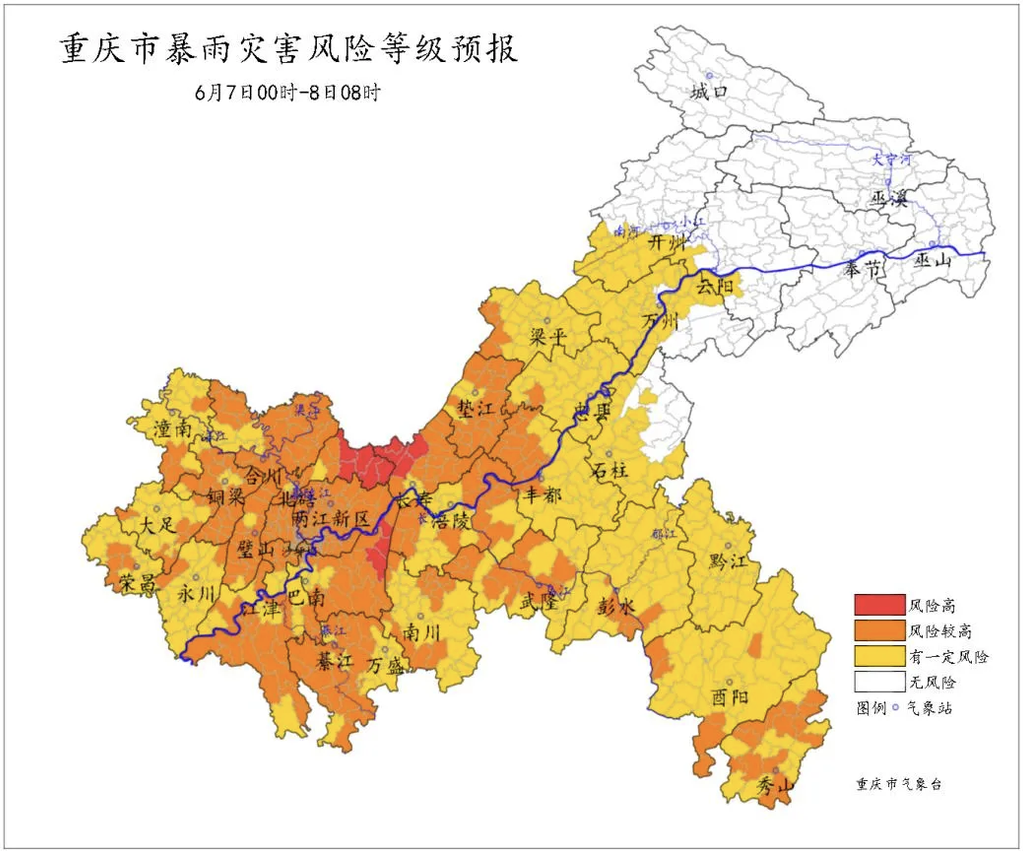
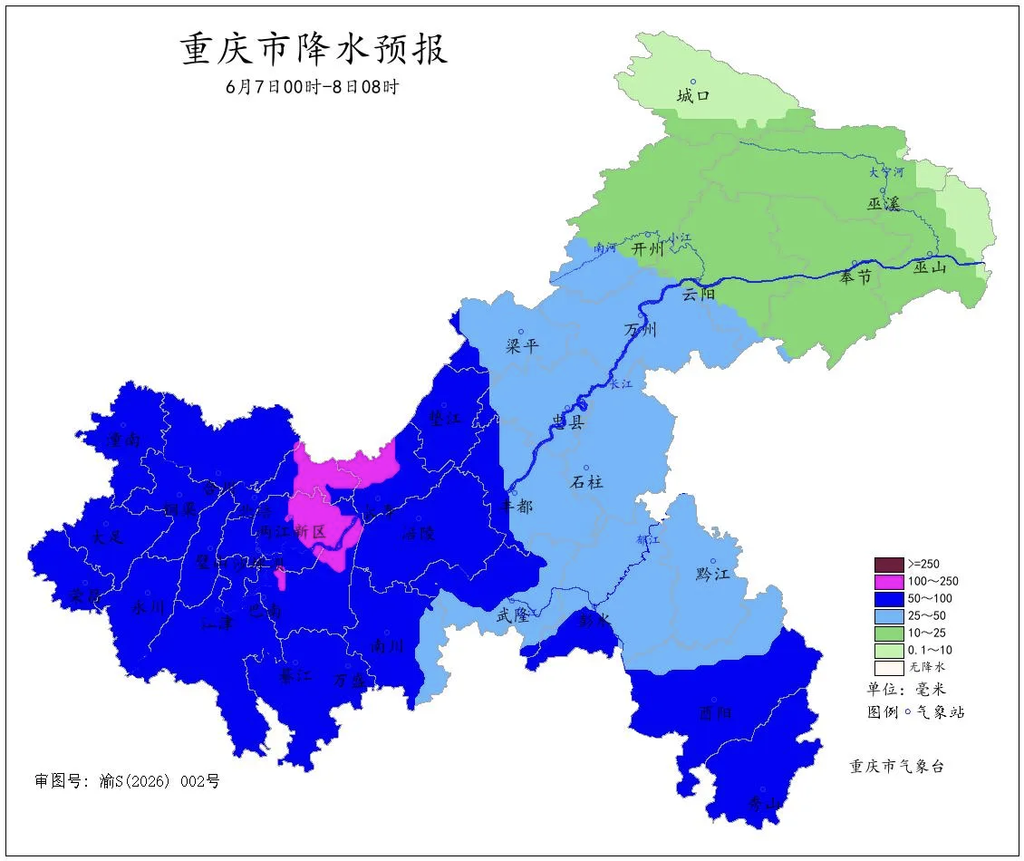
Specifically, the period of heavy rainfall will be from early morning to nighttime on the 7th (from 0:00 on the 7th to 8:00 on the 8th). The central-western and southeastern regions will experience heavy to torrential rain, with localized extreme downpours. The cumulative rainfall in the central-western region is expected to be 50–90 mm, locally 100–150 mm; in the southeastern region, 30–60 mm; and in other areas, 10–30 mm. The maximum hourly rainfall will be 30–50 mm, accompanied by localized thunderstorms and gusty winds of force 6–8.
Detailed forecast:
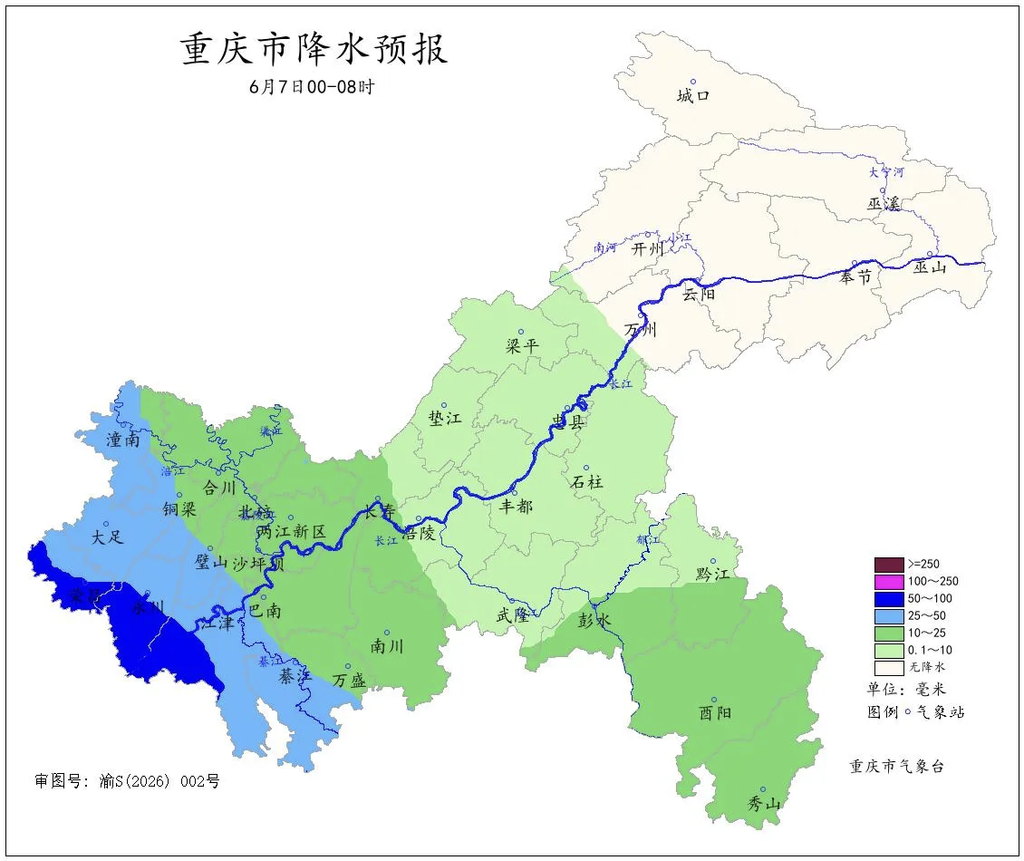
Early morning of the 7th (0:00–8:00 on the 7th): Heavy rainfall will mainly affect the western region, with moderate to heavy rain. Areas such as Rongchang, Yongchuan, and Jiangjin may experience torrential rain in some parts, accompanied by localized thunderstorms and gusty winds of force 6–8. The central urban area will have thundershowers with moderate rain.
Daytime of the 7th (8:00–20:00 on the 7th): The rain area will expand eastward with increasing intensity. The central-western and southeastern regions will experience heavy rain. Areas such as Beibei, Liangjiang New Area, Shapingba, Chongqing High-tech Zone, Nan’an, Dadukou, Jiulongpo, Bishan, Changshou, and Fuling may see torrential rain in some parts, accompanied by localized thunderstorms and gusty winds of force 6–8. The central urban area will have heavy to torrential rain, with localized thunderstorms and gusty winds of force 6–8.
Chongqing is a major city in southwestern China, known for its dramatic mountainous landscape and its role as a key industrial and transportation hub. Historically, it served as the wartime capital of the Republic of China during the Second Sino-Japanese War (1937–1945) and was a vital base for Allied operations. Today, it is famous for its spicy cuisine, particularly hotpot, and its unique urban scenery of skyscrapers rising above the confluence of the Yangtze and Jialing Rivers.
Rongchang
Rongchang is a district in Chongqing, China, known for its long history and cultural heritage, particularly its traditional pottery and cloth industries. Historically, it served as an important commercial hub along trade routes, with its pottery-making tradition dating back over 1,000 years to the Tang Dynasty. Today, Rongchang is recognized for its intangible cultural heritage, including Rongchang pottery and folding fans, which remain symbols of its enduring craftsmanship.
Yongchuan
Yongchuan is a district in Chongqing, China, known for its rich cultural heritage and natural landscapes, including the scenic Bamboo Sea and tea plantations. Historically, it served as an important commercial and transportation hub during the Ming and Qing dynasties due to its location along the Yangtze River tributaries. Today, it blends traditional elements with modern development, offering attractions like the ancient Songji Old Town.
Jiangjin
Jiangjin is a district in Chongqing, China, located at the confluence of the Yangtze and Qijiang Rivers. Historically, it served as a key military and commercial hub due to its strategic riverine position, with a history dating back over 1,400 years to the Sui dynasty. Today, it is known for its scenic landscapes, including the Simian Mountain National Park, and its role in modern industrial development.
Beibei
Beibei is a district in Chongqing, China, known for its scenic beauty along the Jialing River and its historic cultural sites. It was an important industrial and educational hub during the Second Sino-Japanese War (1937–1945), hosting relocated universities and factories from coastal areas. Today, Beibei is a popular tourist destination, featuring attractions like the Jinyun Mountain and the ancient town of Pianyan.
Liangjiang New Area
Liangjiang New Area is a国家级新区 (national-level new area) located in Chongqing, China, established in 2010 to drive regional economic development and urbanization. It serves as a key hub for modern manufacturing, logistics, and innovation, playing a significant role in China’s “Go West” strategy. The area integrates industrial growth with ecological preservation, reflecting Chongqing’s historical importance as a gateway to southwestern China.
Shapingba
Shapingba is a densely populated district in Chongqing, China, renowned as a major educational and cultural hub. Historically, it gained prominence during the Second Sino-Japanese War (1937–1945) when many universities and cultural institutions relocated there to escape the conflict, earning it the nickname “Cultural District.” Today, it is home to prestigious schools like Chongqing University and is known for its vibrant student life and historical sites such as the Ciqikou ancient town.
Chongqing High-tech Zone
The Chongqing High-tech Zone, officially established in 1991, is a key national-level development area in southwestern China focused on innovation and advanced industries. It was created to drive economic growth and technological advancement, hosting numerous research institutions, tech companies, and manufacturing hubs. Over the decades, it has evolved into a major engine for Chongqing’s modernization and high-tech industrial transformation.