Recently, the Shenzhen Municipal Industry and Information Technology Bureau issued the “Shenzhen Action Plan for Building a Leading Hub for AI OPC Entrepreneurship Ecosystem (2026-2027)” (hereinafter referred to as the “Action Plan”). The Action Plan systematically integrates the city’s talent employment and housing policies, industrial support policies, and ecosystem service resources to provide enterprises with a startup environment characterized by “guaranteed landing, policy-backed development, and ecosystem-supported growth,” aiming to build a premier and leading hub for AI innovation and entrepreneurship nationwide.
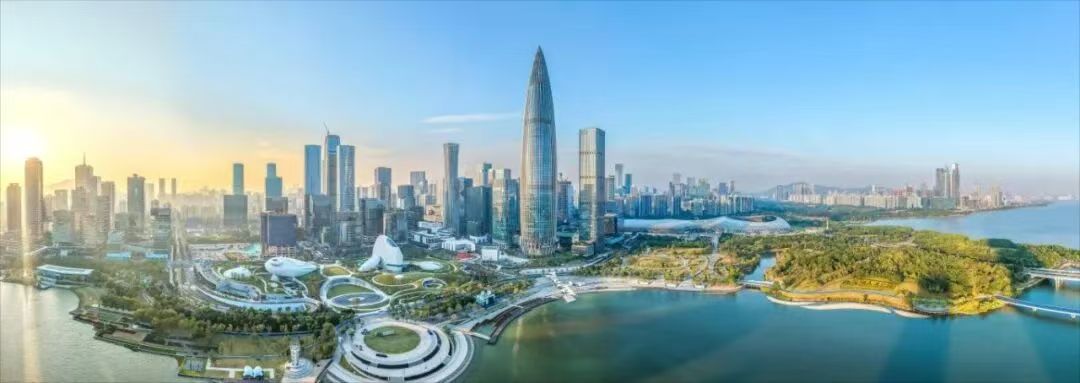
Shenzhen adheres to the principles of self-reliance and application orientation, vigorously promoting the “AI+” initiative and fully committing to building a pioneer city in artificial intelligence. Currently, Shenzhen’s AI industry ranks within the top tier nationally in terms of comprehensive strength, with leading capabilities in the large-scale application of intelligent hardware products. It boasts advantages such as a complete industrial chain, rich application scenarios, integration of mechanics and electronics, and a well-developed ecosystem. The city is home to over 2,600 AI enterprises, covering the entire industrial chain from chips, models, and hardware to applications. It has formed a “flying geese formation”梯队 structure led by leading enterprises like Huawei and Tencent, supported by high-growth companies, with numerous startups competing for development. This environment has given rise to globally popular intelligent products such as the Ray-Ban Meta smart glasses and Insta360 cameras. The scale of Shenzhen’s AI industry ranks among the top in the country and has achieved double-digit growth for two consecutive years.
Shenzhen’s AI industry demonstrates significant agglomeration effects. A number of AI ecosystem communities have been built and are operational. The “Model Camp” has attracted nearly 200 outstanding startups. Initiatives like the “Angel Hub · Thousand-Model Application Accelerator” in Futian District, “Model Valley” in Longgang District, and “Light Particle · AI Innovation Space” in Guangming District actively play an incubating role, providing startups with low-cost industrial space and innovative resource services such as computing power, models, data corpora, capital, and talent. The city has also launched a 10-billion-yuan AI and embodied robotics industry fund and a 5-billion-yuan AI terminal industry investment fund, continuously increasing investment and financing support for startup enterprises.
Closely Integrating “Investment in Things” and “Investment in People” to Build High-Quality OPC Communities
Shenzhen’s issuance of the Action Plan focuses on the development needs of AI startup enterprises, defining work goals for the next two years, specifying concrete measures, and strengthening overall coordination and city-district collaboration to provide comprehensive support for AI innovation and entrepreneurship.
The Action Plan proposes strong support for AI OPC innovation and entrepreneurship, adhering to the close integration of “investment in things” and “investment in people.” By fostering a vibrant AI innovation and entrepreneurship environment, the aim is to build over 10 OPC communities, each with an area of no less than 10,000 square meters, with significant agglomeration effects and national leadership by the end of 2027. The plan also aims to cultivate over a thousand high-growth AI startups, attract over ten thousand AI innovation and entrepreneurship talents, form a distinctive and influential OPC entrepreneurship ecosystem, and establish a premier and leading hub for AI innovation and entrepreneurship nationwide.
The plan involves deploying a number of high-quality spatial carriers, selecting areas with high talent density and active entrepreneurial ecosystems to establish OPC communities featuring city-district collaboration and coordinated innovation. Initially, OPC communities will be established based on existing AI innovation ecosystem communities in districts like Nanshan and Longgang, gradually expanding citywide. By the end of 2027, the total area of OPC communities in the city is expected to exceed 500,000 square meters, forming an AI OPC entrepreneurship ecosystem characterized by resource aggregation, clear functions, industrial clustering, and organic synergy.
Focusing on AI OPC Entrepreneurship to Create a Startup Environment of “Guaranteed Landing, Policy-Backed Development, and Ecosystem-Supported Growth”
The Action Plan focuses on building a leading hub for the AI OPC entrepreneurship ecosystem, making systematic arrangements in three areas: talent service guarantees, policy support, and ecosystem services.
First, strengthening talent service guarantees. By attracting young talent to develop in Shenzhen, providing pleasant workspaces, and ensuring housing security, the plan aims to genuinely address the concerns of talents starting businesses in the city. It establishes an open and diverse talent evaluation system, down