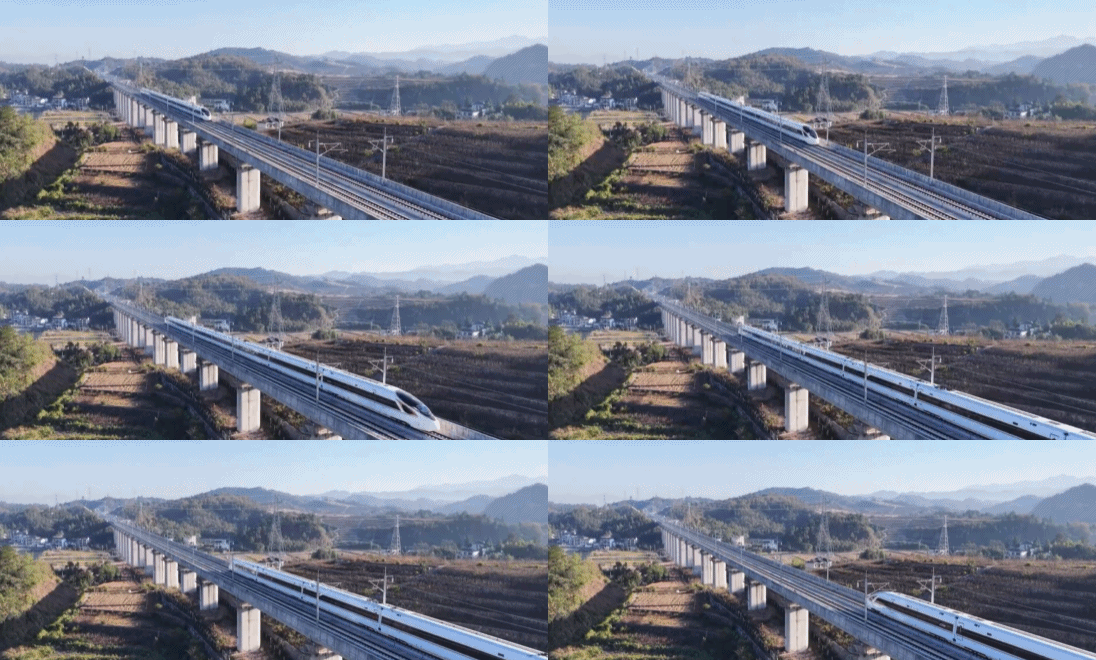
Recently
The Guangzhou-Zhanjiang High-Speed Railway officially began trial operations
The Harbin-Yichun High-Speed Railway completed full track laying
The Ge’er Tunnel on the Xining-Chengdu Railway was successfully completed
……
China’s high-speed railway progress continues to advance
These are all part of
“Eight Vertical and Eight Horizontal” High-Speed RailwayMain Corridors
network

The “Eight Vertical and Eight Horizontal” network weaves
the “vascular system” of China’s high-speed rail lines


China’s high-speed rail network construction has consistently faced
challenges like tunneling through mountains and bridging across waters
Let’s see how these difficult “tough nut” projects
were successfully completed
“Digital Brain”
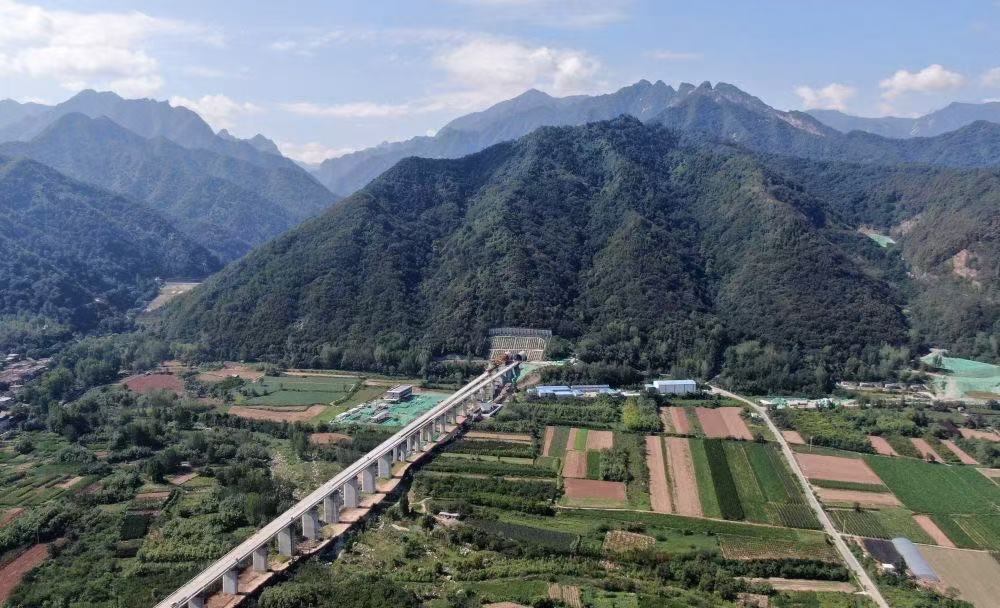
Xian-Ankang High-Speed Railway crossing the Qinling Mountains
The Xian-Ankang High-Speed Railway construction required crossing the natural barrier of Qinling Mountains
This area has complex geological structures and difficult track transportation
A small mistake could cause project delays
The “Digital Brain” is a smart control platform that can track track-laying equipment
position and status in real-time
enabling complex sections to pass smoothly
Transitioning from rough “mountain-cutting” methods
to millimeter-level precision
“Rainbow in the Sky”
Nantong-Suzhou-Jiaxing-Ningbo High-Speed Railway crossing rivers and sea
Hangzhou Bay has strong tides, complex geology
and high-salt, high-humidity environment
To cross this “hazard-filled” water area
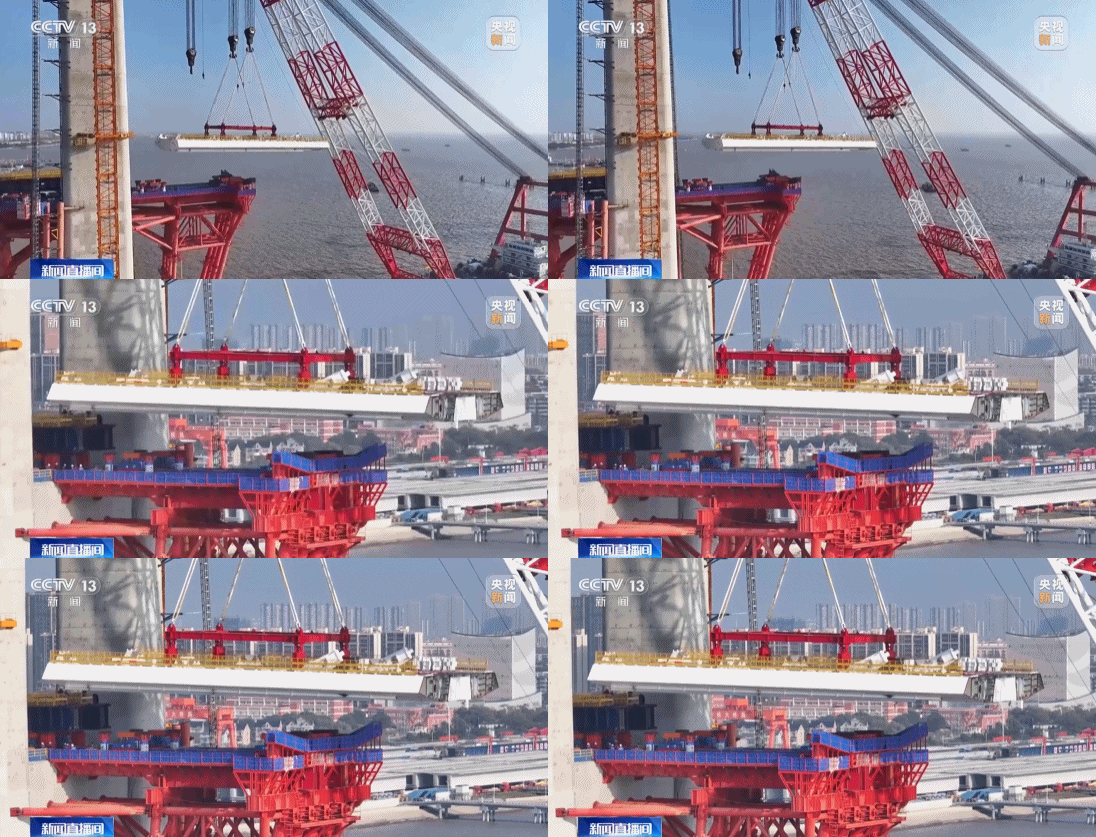
engineers built this “Steel Rainbow”—
the Hangzhou Bay Sea-Crossing Railway Bridge of Nantong-Suzhou-Jiaxing-Ningbo High-Speed Railway
Designed with 39 segments, with 450-meter spans between adjacent piers
It’s the world’s largest span ballastless track cable-stayed bridge under construction
Real-time Monitoring, Precision Blasting
Chengdu-Chongqing Middle Line High-Speed Railway protecting ecology
The Chengdu-Chongqing Middle Line High-Speed Railway crosses Sichuan and Chongqing
passing through multiple water source protection areas
Xuantian Lake, home to swans, is one of them
The construction team equipped with new environmental monitoring systems
monitoring water quality, noise and other indicators in real-time
Through reduced steel pipe pile usage, controlled blasting and other technologies
limiting environmental impact within specified ranges
Neither disturbing the swans’ habitat nor compromising high-speed rail construction