This weekend, the Shanghai International Flower Festival is set to open. As many citizens eagerly head to Tianzifang to see the old alleyways’ “floral attire” and take photos with flower-shaped cats and peacocks at Qiantan, a comprehensive industrial chain map covering seed sources, breeding, design, consumption, and planting services is gradually unfolding at the Shanghai Flower Port, a long-established floral cultural tourism landmark.
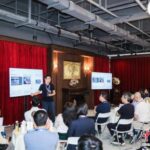
Yesterday, the “Brightness · Shanghai Garden Season” and Floral Cultural Tourism Industry Exchange was held at the Shanghai Flower Port. As one of the sub-venues for this year’s Shanghai International Flower Festival, this location is slightly different from others—it is not only a space for flower display and consumption but also leverages the complete floral industry layout of the Shanghai Flower Horticulture Group, from R&D and breeding to production, planting, and end-user services. This allows citizens to see the tangible possibilities right before their eyes: Shanghai is striving to achieve a full supply chain for flowers, deeply integrating the floral industry into urban aesthetics and the daily lives of its residents.
An Important Outlet for Emotional Value
In recent years, urban gardens have become common city amenities.
“Shanghai is also breaking down walls to reveal greenery and promoting open sharing, transforming urban gardens from mere viewing spaces into consumption scenes.” It was noted that currently, plant diversity in major domestic cities mostly falls within the range of 2,000 to 3,000 species. Shanghai continues to introduce new and superior plants, constantly raising the level of plant diversity. The continuous expansion of garden-style public spaces is quietly transforming the urban atmosphere.
It has been observed that in cities like Shanghai, landscape architecture has evolved from traditional design and construction into cultural products that carry spiritual needs. Garden tours and floral cultural tourism are becoming significant sources of high-quality emotional value for citizens.
This year’s Shanghai International Flower Festival, to some extent, confirms this observation. Despite the Shanghai Flower Port being over 60 kilometers from the city center, on weekdays, large numbers of citizens still arrive early to find the best photo spots.
It was learned that since its upgrade and renovation last year, the Shanghai Flower Port has expanded its function from simply flower viewing to a comprehensive cultural tourism space integrating flower displays, leisure entertainment, and interactive experiences.
“We hope that citizens in Shanghai can not only appreciate flowers but also broaden their horizons, truly integrating flowers into their aspirations for a better life.”
Strengthening the Floral Services Sector is Needed
At the exchange, industry practitioners generally recognized that as Shanghai citizens’ demand for flower consumption has upgraded from basic appreciation to higher-level aesthetic experiences, it is essential to accelerate the deep integration of the primary, secondary, and tertiary sectors of the floral industry. Particularly, there is a need to strengthen the floral services sector, bringing horticulture practitioners to the forefront to act as “translators” between flowers and people.
It was candidly shared that while participating in numerous horticultural landscape projects in Shanghai, there is a growing sense that garden designers must accurately grasp the relationship between flowers and space. “Flowers need to be organically embedded into urban spaces, creating relaxing and healing sensory experiences, ultimately realizing the value of cultural dissemination.”
“The core test lies in cultural storytelling capability.” It was pointed out that currently, besides shortcomings in seed source breeding, the domestic floral industry also needs to improve its cultural storytelling ability. At this year’s Shanghai International Flower Festival, the role of the floral “translator” is becoming increasingly prominent.
At the Shanghai Flower Port, an increasingly mature designer ecosystem is gathering excellent design forces from around the world. Thirty-four creative gardens are gradually unfolding within the 990-acre super space. Through the integration of plants, water features, garden ornaments, and even ecological scenes, they tell different stories, conveying design concepts and humanistic attitudes. A visitor, Ms. Guo, said what impressed her most was a garden adorned with small rabbit sculptures, where plants, water systems, and small animals together formed a miniature ecosystem, as if bringing “The Wizard of Oz” into reality.
It was learned that other sub-venues, such as Qiantan, are also fully leveraging the creativity of horticulturists and designers, building bridges through exquisite landscaping to foster more emotional resonance and aesthetic synesthesia between people and flowers.
Strengthening Core Competitiveness in Seed Sources
Currently, when discussing the floral industry, market focus often centers on end-consumption.
It was stated that in the past, the production, circulation, and application of the floral industry were primarily arranged around public consumption needs. Now, with the rising consumption power of urban residents, the floral industry must shift towards serving individual consumers