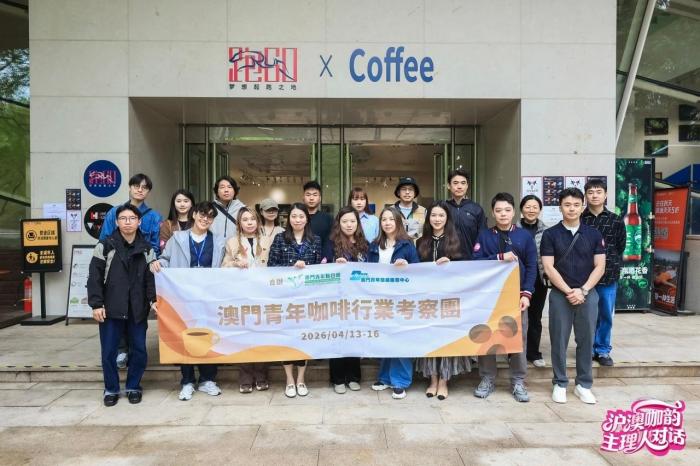
Recently, the “Shanghai-Macau Coffee Rhyme · Curator Dialogue” event was held in Shanghai’s Huangpu District. Thirteen Macau coffee curators gathered with local Shanghai curators for a heartfelt exchange.
Understanding the “City of Coffee” Through Its Urban Fabric
Accompanied by the spring breeze and the city’s pervasive aroma of coffee, the Macau coffee curators embarked on an immersive City Walk in Shanghai.
Starting from Xintiandi, they strolled through Sinan Mansions, INS New Paradise, Lady Huaihai, Culture Square, Nanchang Road, and Maoming South Road. Amidst the blend of century-old architecture and trendy boutiques, they carefully experienced the district’s character of “sophistication, slowness, tranquility, and elegance,” gaining a close-up feel for Shanghai’s coffee culture.
Along the way, the vibrant life of old alleyways, the design sense of independent shops, and the warmth of community coffee spaces intermingled. From spatial design and product presentation to operational models and brand philosophies, the Macau curators continuously compared the differences between the two cities through observation and conversation, gradually understanding the inclusive foundation of Shanghai-style coffee.
Through relaxed walking and exchange, the distance between the youth of Shanghai and Macau quietly closed. “Walking into Huangpu, you truly feel that Shanghai lives up to its reputation as the ‘City of Coffee.’ Here, coffee is not just a beverage but a lifestyle and a form of cultural expression,” one participant noted.
Another Macau curator shared that Shanghai’s open and inclusive coffee atmosphere was impressive. “Every small shop has its own soul, and the practitioners’ passion for coffee is particularly moving.”
Finding Resonance Between Two Cities Through Collaboration
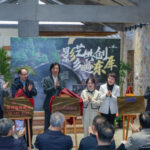
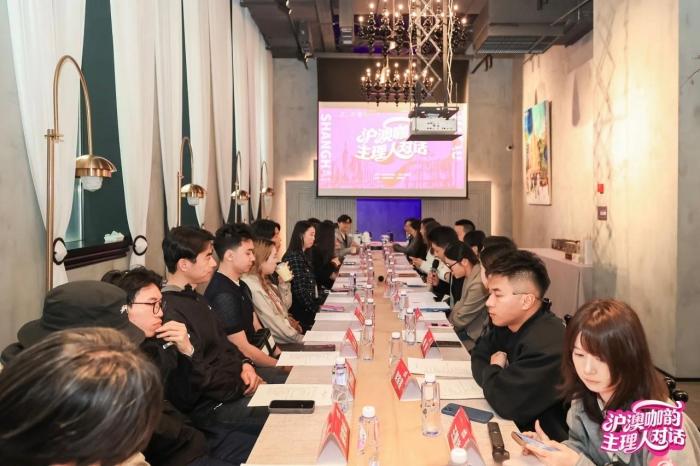
Carrying the authentic feelings from the City Walk, the “Curator Dialogue” session unfolded in a relaxed and harmonious atmosphere.
“Coffee is a cultural symbol that transcends mountains and seas to reach people’s hearts, and it is an important bond connecting the youth of Shanghai and Macau. We gather over coffee, hoping to become friends through exchange, partners through cooperation, and achieve mutual success through integration,” one speaker said.
A representative from the Ruijin Er Road neighborhood committee shared insights on district characteristics and the entrepreneurial environment: “The Ruijin neighborhood is a place suitable for strolling, lingering, and enjoying coffee. We provide practical support for entrepreneurs and look forward to more Macau youth turning their passion into a career here.”
A representative from the Gold Coffee Alliance stated: “Macau’s creativity and Shanghai’s ecosystem have good complementarity. In the future, we are willing to act as connectors, helping Shanghai coffee enter Macau and Macau brands establish themselves in Huangpu.”
At the exchange, curators from both sides shared their stories and thoughts. One Shanghai curator shared her original aspiration of persevering on Nanchang Road for 18 years. Another community shop curator told a heartwarming story about retaining regular customers through trust. A representative from a Yunnan coffee plantation extended an invitation to the Macau curators to visit Yunnan and taste excellent Chinese coffee beans together.
Moving from “Acquaintance” to “Appointment” Through Exchange
As the exchange deepened, a hand-brewing skills exchange session was held. This segment lacked competitive tension, focusing instead on relaxed sharing. Coffee curators from Shanghai and Macau poured water, extracted, and tasted together, allowing the flavors of specialty coffee beans like Yunnan Geisha, Ethiopian, and Kenyan to bloom slowly in their cups. Simultaneously, this aroma further sublimated the friendship between the two places.
Taking this opportunity, an invitation was extended to the Huangpu coffee curators, hoping to welcome Shanghai peers to the Macau Autumn Coffee Festival in October, to make the interaction between the two cities deeper and more substantive.
“Though coffee is small, it can connect two cities, connect a group of people, and connect the future,” one participant remarked.
<div class="my-4 p-4 rounded-lg shadow-md bg-blue-50 border-l-4 border-blue-400