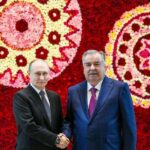
On January 4, President Xi Jinping sent a congratulatory message to Mamady Doumbouya on his election as President of the Republic of Guinea.
Xi Jinping pointed out that Guinea was the first country in Sub-Saharan Africa to establish diplomatic relations with the People’s Republic of China. For a long time, the two sides have always adhered to the principles of mutual respect, equality, and mutual benefit, supported each other on issues concerning each other’s core interests and major concerns, and carried out effective cooperation in common development. I attach great importance to the development of China-Guinea relations and am willing to work with President Doumbouya to promote greater development of the comprehensive strategic cooperative partnership between the two countries, making greater contributions to enhancing the well-being of the two peoples and promoting solidarity among the Global South.
Guinea
Guinea is a country in West Africa, not a specific cultural site, but it is home to significant historical landmarks. Its history includes being part of several West African empires, later becoming a French colony until gaining independence in 1958. Notable cultural sites within Guinea include the Fouta Djallon highlands and the Nimba Mountains, a UNESCO World Heritage site.
People’s Republic of China
The People’s Republic of China (PRC), founded in 1949 by the Communist Party of China under Mao Zedong, is a modern nation-state with a civilization dating back thousands of years. It is home to numerous UNESCO World Heritage sites, including the Great Wall and the Forbidden City, which reflect its long and continuous historical and cultural legacy. Today, it is a major global power known for its rapid economic development and profound cultural influence.
Sub-Saharan Africa
Sub-Saharan Africa is a vast and diverse region encompassing all African countries and territories located fully or partially south of the Sahara Desert. Historically, it was home to numerous powerful pre-colonial kingdoms and empires, such as Great Zimbabwe, the Mali Empire, and the Kingdom of Aksum. Today, it is recognized for its immense cultural variety, with thousands of ethnic groups and languages, and a history significantly shaped by the transatlantic slave trade and later European colonization.
Global South
The term “Global South” is not a specific geographic place but a socio-economic and political concept referring broadly to countries in Africa, Asia, Latin America, and Oceania that have historically been marginalized in the global political and economic system. Its history is rooted in the legacies of colonialism and the Cold War-era “Third World” designation, representing a collective identity for nations often characterized by developing economies and advocacy for a more equitable world order. Today, it serves as a key framework for discussing issues of development, sovereignty, and solidarity among these diverse nations.