Trump: Unconcerned About Reaching a Deal with Iran, “I’m Not in a Hurry at All”
According to Xinhua News Agency, U.S. Secretary of State Rubio stated on the 26th that progress has been made in negotiations between the United States and Iran, but he would not disclose the relevant details.
Speaking to the media at the airport before departing for France to attend the G7 Foreign Ministers’ Meeting, Rubio said that some countries are acting as intermediaries to assist in conveying messages, and indeed some progress has been made in the exchange of information. However, this remains “an ongoing and variable process,” and therefore he would not publicly discuss or disclose the specific content of the negotiations before the media.
According to CNN, the U.S. side will pressure other countries at the G7 Foreign Ministers’ Meeting to help “reopen” the Strait of Hormuz. In response to this, Rubio stated when answering questions, “It is in their interest to provide help,” and “they should take action for this.”
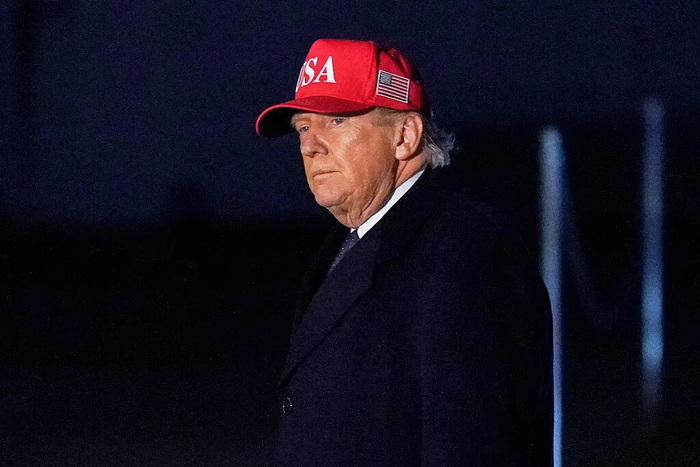
Trump: I’m Not in a Hurry at All
U.S. President Trump’s special envoy Witkoff confirmed earlier that day at a cabinet meeting held at the White House that the U.S. side had conveyed its “15-point plan” for ending the conflict to Iran through Pakistan. Trump stated at the meeting that the U.S. side is engaged in substantive dialogue with “relevant key individuals.”
He also sharply criticized U.S. media reports at that meeting which claimed he was eager to end the war through diplomatic channels, insisting that it is the Iranian side seeking to restart negotiations.
He stated that whether to cease hostilities depends on Iran, and during this period, U.S. military airstrikes will continue. He said he does not care whether an agreement can be reached with Iran, “I’m not in a hurry at all.”
Trump also said he is unsure whether Iran will comply with the deadline he set for opening the Strait of Hormuz by the 27th at the latest, and is unsure whether the negotiations will proceed smoothly, but “we have plenty of time.”
He also posted on his social media that day, stating that at the request of the Iranian government, strikes on Iranian energy facilities would be suspended for 10 days, resuming at 8 PM Eastern Time on April 6.
Trump stated that the current relevant negotiations are “progressing well,” and denied some media reports claiming the negotiations were not going smoothly.
Iran: This is Not Negotiation, It’s Information Exchange
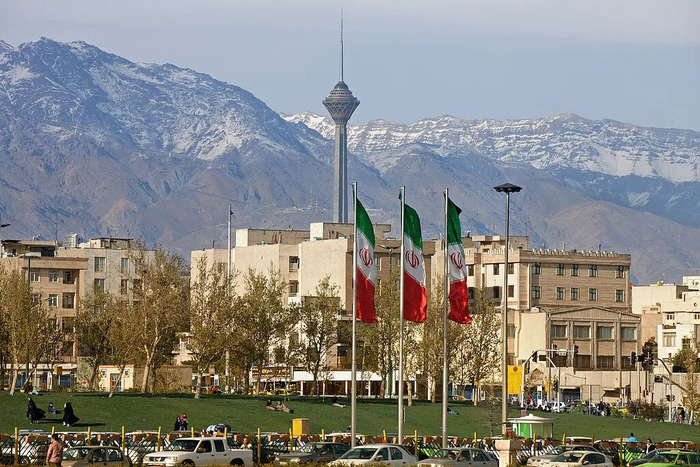
Iranian Foreign Minister Araghchi stated on the 25th that over the past few days, the United States has conveyed messages to Iran through several friendly countries, and Iran has sent warnings or stated its position to the U.S. side via these mediators. “This is not negotiation or dialogue, but an exchange of information.”
Iran’s Press TV reported that day, citing a senior official, that Iran rejected the U.S. proposed ceasefire plan and put forward its own five conditions for a ceasefire.
On the 26th local time, according to a statement from the Iranian presidential office, Iranian President Pezeshkian stated in a phone call with Malaysian Prime Minister Anwar that day that Iran is committed to a comprehensive end to the war, and emphasized that Iran has never sought to possess nuclear weapons.
The statement said that Pezeshkian and Anwar discussed regional and international developments since the U.S.-Israel military actions against Iran on February 28. Pezeshkian pointed out that accusations about Iran attempting to acquire nuclear weapons are a pretext for the illegal aggressive actions of the U.S. and Israel.
Iranian media reported on the 26th, citing informed sources, that Iran’s response was formally sent through mediating countries on the evening of the 25th. Iran is well aware that “this time, the Americans are again using negotiations as a pretext, attempting to pave the way for new crimes.”
G7 Foreign Ministers’ Meeting
The G7 Foreign Ministers’ Meeting is a diplomatic forum where the top diplomats from Canada, France, Germany, Italy, Japan, the United Kingdom, and the United States convene to coordinate foreign policy on global issues. It emerged from the larger G7 (Group of Seven) summit of major advanced economies, which was first formed in the 1970s to address economic crises. These ministerial meetings serve as a crucial preparatory and follow-up mechanism for the annual leaders’ summits, focusing on geopolitical security, development, and humanitarian challenges.
Strait of Hormuz
The Strait of Hormuz is a strategically vital maritime chokepoint connecting the Persian Gulf with the Gulf of Oman and the wider Indian Ocean. Historically, it has been a key trade route for centuries, but in the modern era, its significance is defined by the transit of about one-fifth of the world’s oil supply. Its geopolitical importance has made it a focal point of regional tensions and international security concerns for decades.
White House
The White House is the official residence and workplace of the President of the United States, located in Washington, D.C. It was designed by James Hoban, with construction beginning in 1792 and the first president, John Adams, moving in in 1800. The building has been expanded and renovated over the centuries, including a major reconstruction after being burned by British forces in 1814.
Pakistan
Pakistan is a modern nation-state established in 1947 as a homeland for Muslims of British India, with a rich history rooted in the ancient Indus Valley Civilization. Its cultural landscape is deeply influenced by a blend of indigenous traditions and Islamic heritage, evident in sites like the Mughal-era Lahore Fort and the archaeological ruins of Mohenjo-daro. Today, it is known for its diverse geography, from the Karakoram mountains to the Indus River plains, and a vibrant culture encompassing music, cuisine, and various regional languages.
Iran
Iran, historically known as Persia, is a country in Western Asia with one of the world’s oldest continuous major civilizations, dating back to the Elamite kingdoms in the 4th millennium BCE. It is renowned for its profound cultural and historical legacy, including the Achaemenid Empire founded by Cyrus the Great, the Persian architectural marvels of Persepolis, and its influential contributions to art, science, and literature throughout the Islamic Golden Age. Today, Iran is a modern nation-state that preserves a rich tapestry of traditions, from its poetic heritage and intricate handicrafts to its numerous UNESCO World Heritage Sites.
Malaysia
Malaysia is a Southeast Asian nation formed in 1963 through the union of former British territories, with a history shaped by ancient maritime kingdoms, colonial rule, and diverse Malay, Chinese, and Indian influences. Culturally, it is renowned for its vibrant fusion of traditions, iconic landmarks like the Petronas Twin Towers in Kuala Lumpur, and UNESCO sites such as the historic cities of Melaka and George Town.
U.S.
The United States is a federal republic founded in 1776 after declaring independence from Great Britain, with its modern government established by the Constitution in 1789. Culturally, it is a vast and diverse nation built on immigration, known for its global influence in areas like technology, entertainment, and democratic ideals. Key historical sites reflecting its story include Independence Hall in Philadelphia and the National Mall in Washington, D.C.
Israel
Israel is a country in the Middle East, established as a modern state in 1948, with a history deeply rooted in ancient times as the historic homeland of the Jewish people. It is a region of profound religious significance for Judaism, Christianity, and Islam, containing key cultural and historical sites like Jerusalem’s Old City, the Western Wall, and the Church of the Holy Sepulchre. Its contemporary history is marked by the complex Israeli-Palestinian conflict and its development into a technologically advanced nation.