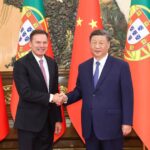
Approaching his self-imposed deadline, US President Trump made a concession.
Trump stated during an interview aboard the presidential aircraft “Air Force One” on November 25 that he would no longer set a deadline for Ukraine to accept the Russia-Ukraine “peace plan.”
“For me, the ‘deadline’ is when everything is over. I think everyone is tired of the conflict at this moment,” Trump said. Previously, he had indicated that November 27 was the final deadline for Ukraine to accept the “peace plan.”
Trump also mentioned that US negotiators had made progress in talks with Russia and Ukraine, and that Moscow had agreed to make some compromises.
As of the 26th, Russia stated it had not yet formally received the “peace plan” proposed by the United States. Multiple senior Russian officials, including Presidential Assistant Ushakov, Presidential Press Secretary Peskov, and Deputy Foreign Minister Ryabkov, made statements regarding the “peace plan” on the same day.
On the 25th, Trump posted on social media that he would send US Middle East envoy Witkoff to Moscow to meet with Russian President Putin in hopes of finalizing a peace plan aimed at ending the Ukraine crisis.
Trump wrote that the 28-point new plan drafted by the US had been “fine-tuned,” with only a few remaining points of disagreement. US Army Secretary Driscoll would also meet with Ukrainian representatives. He looked forward to meeting with Ukrainian President Zelenskyy and Putin soon, but only if an agreement to “end this war” had been finalized or was in its final stages.
Meanwhile, Russia, as a party involved, had still not formally received the “peace plan” proposed by the United States.
On November 26, Russian Presidential Assistant Ushakov stated that Russia had not officially received the US-proposed Ukraine “peace plan” but had obtained text materials through informal channels. He indicated that Russia had not discussed the specific details of the US “peace plan” with any party, and some of its provisions required in-depth analysis.
Ushakov revealed that Russia had obtained multiple versions of the US “peace plan” through informal channels, and the content system even contained self-contradictory elements.
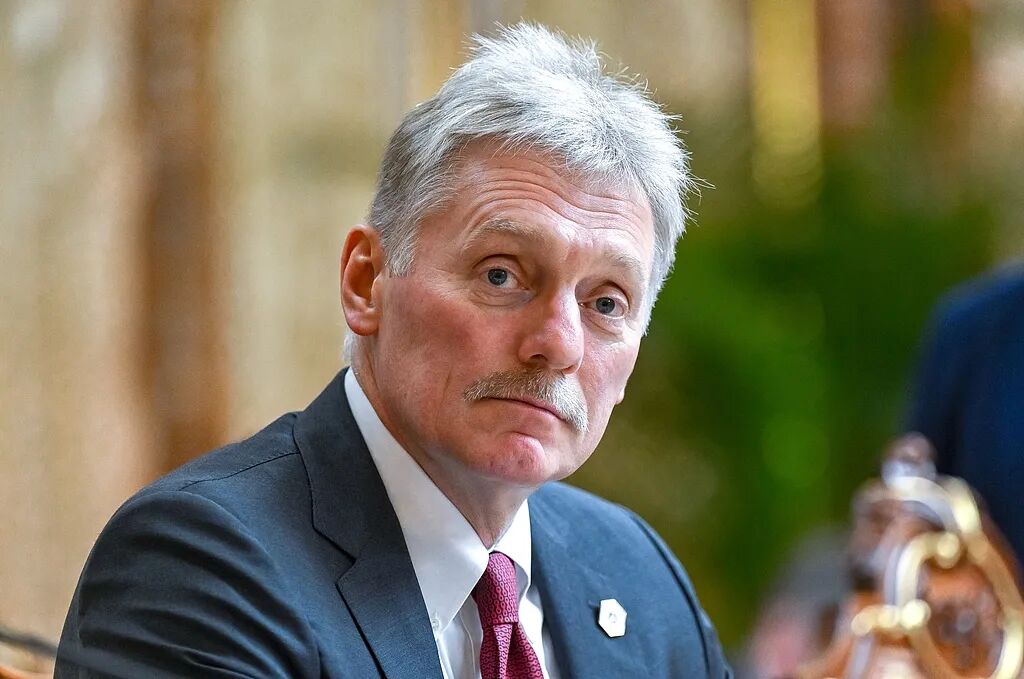
On the same day, Russian Presidential Press Secretary Peskov commented on statements that Russia and Ukraine were close to reaching a peace agreement, saying, “It’s too early to draw conclusions.”
Peskov stated that the timing for Russia’s contact with US Middle East envoy Witkoff had not yet been determined. Regarding US media recently disclosing details of a previous phone call between Russian and US officials, he called such behavior “damaging” to the current process.
Russian Deputy Foreign Minister Ryabkov also addressed the “peace plan” during a press conference on the 26th, stating that against the backdrop of the special military operation, Russia would absolutely not make any concessions or “abandon” its principles.
Ryabkov stated that the US was taking contradictory actions in its relations with Russia, and its delivery of weapons and equipment as well as intelligence information to Ukraine was continuing.
Additionally, he indicated that if the New START treaty’s arms limitation clauses remained effective, Russia would not rule out extending the one-year term again. If the US rejected Russia’s proposed treaty suggestions, regional tensions would sharply escalate.