On June 3, the grand drama “Looking East” – 2026 Nanluoguxiang Theater Performance Season kicked off. With the theme “City of Drama: Drama Everywhere,” this season connects three main venues: theaters, cultural heritage residences of historical figures, and hutongs (traditional alleyways). It deeply integrates technology, immersive performances, and interactive experiences to create a three-month theatrical cultural feast. This effort fully supports the construction of Dongcheng District as a “City of Drama,” integrating theatrical art into the urban fabric and enriching citizens’ lives.
As one of Dongcheng District’s flagship “Grand Drama Looking East” events, the Nanluoguxiang Theater Performance Season has consistently adhered to the principles of “highlighting Dongcheng elements, supporting original plays, spreading theatrical knowledge, and encouraging public participation.” It showcases features of “universality, immersion, and local atmosphere.” Since its launch in 2010, it has successfully held 13 editions, with over 1,300 performances reaching more than 300,000 audience members, making it a highly influential cultural brand in Beijing.
The opening ceremony featured a video connection titled “Theater: Encountering the City,” exploring key locations in Wangfujing Theater Valley along two spatial axes. It visited landmarks such as the Central Academy of Drama’s Experimental Theater, Nanluo Theater, Dongtu Theater, the Happy Twist A99 Theater in Longfu Commercial Area, 77 Theater, the Capital Theater in the core of Theater Valley, the China Children’s Art Theater, Jixiang Grand Theater, Tianleyuan and Pigment Guild Hall in the Qianmen area, the Dahua Urban Performing Arts Center and National Theater’s Pioneer Smart Theater in Dongdan, and the Beehive Theater, a hub for avant-garde plays. This vividly showcased the rich resources and theatrical ecosystem of “Wangfujing Theater Valley.”
Three major sections—Dongcheng Original Play Showcases, Theater Invitational Performances, and University Drama Invitationals—bring together 22 high-quality plays covering diverse themes and art forms to meet various aesthetic needs. The Dongcheng Original Play Showcase focuses on local creations, featuring six works including the plays “Questions to Myself,” “Through the Ends of the Earth,” “Under the Gate of Chongwen,” and the children’s play “Visible Dunhuang.” These will be performed in rotation at venues like the Central Academy of Drama’s Experimental Theater, the National Theater’s Pioneer Smart Theater, and Nanluo Theater, highlighting Dongcheng’s original theatrical strength. The Theater Invitational Performances gather 11 classic and innovative works, including plays “Chekhov’s Dining Table,” “Good Night, Mother,” and “The Rhinoceros in Love,” presented at spaces like the Beijing International Theater Center’s People’s Art Small Theater and the Beehive Theater, delivering theatrical tension through compact and refined performances. The University Drama Invitational, through online submissions, attracted nearly 30 works from universities in and outside Beijing. After selection, five outstanding pieces were brought together—including the Central Academy of Drama’s play “Crack of Love,” Beijing Quju Opera “Big City, Little Stove,” and the Chinese Opera Academy’s Peking Opera “Seeking Medicine”—for centralized incubation and debut at Nanluo Theater, showcasing the innovative vitality and artistic expression of young theatrical talents.
This season innovatively introduces the “Heritage Residences with Drama” section, using theater as a medium and historical residences as stages to immerse art in Nanluoguxiang’s cultural landmarks, blending literary stories, historical memories, and contemporary artistic spaces.
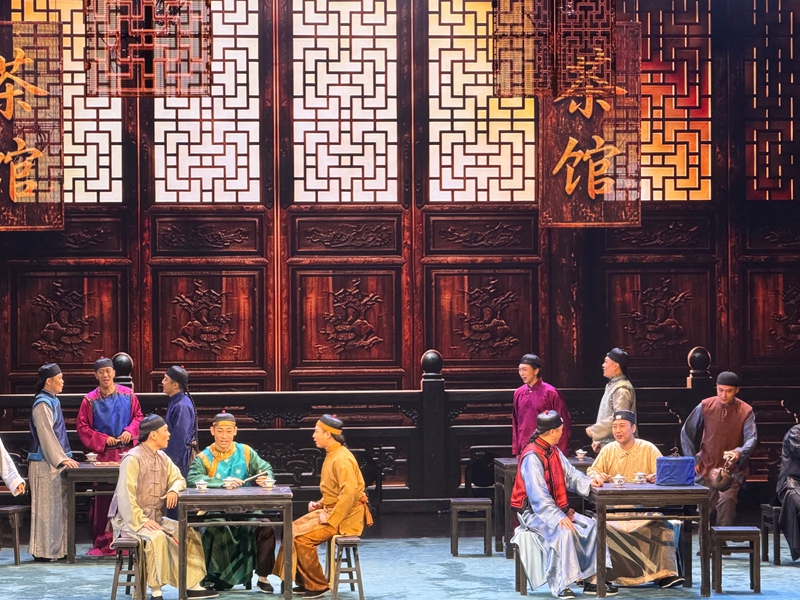
At the Former Residence of Qi Baishi, an immersive Quju Opera (a Beijing-style opera) “Teahouse” tourism version will be performed, using authentic Beijing dialect and tunes to present classic scenes, allowing audiences to experience the old Beijing street life and historical depth in a century-old residence. On Cultural and Natural Heritage Day, cultural heritage protection experts will be invited to the Nanluo Yuhe Temple to give a live talk on the historical and cultural value of the Grand Canal (Beijing section), a World Heritage site. This will be followed by performances of works like “Rain Breaking the Southern Silk” and “Half a Pot of Tea,” co-created by artists from the Central Academy of Fine Arts and the Beijing National Orchestra, using modern artistic expressions to rejuvenate the charm of ancient cultural relics. The Jiaodaokou Street Community Party Service Center will host fun parent-child workshops, where the National Peking Opera Company and the Beijing Children’s Art Theater jointly offer diverse activities such as Peking Opera face painting experiences, Chinese-style dance, and children’s stage plays, using art to brighten children’s summer.
The