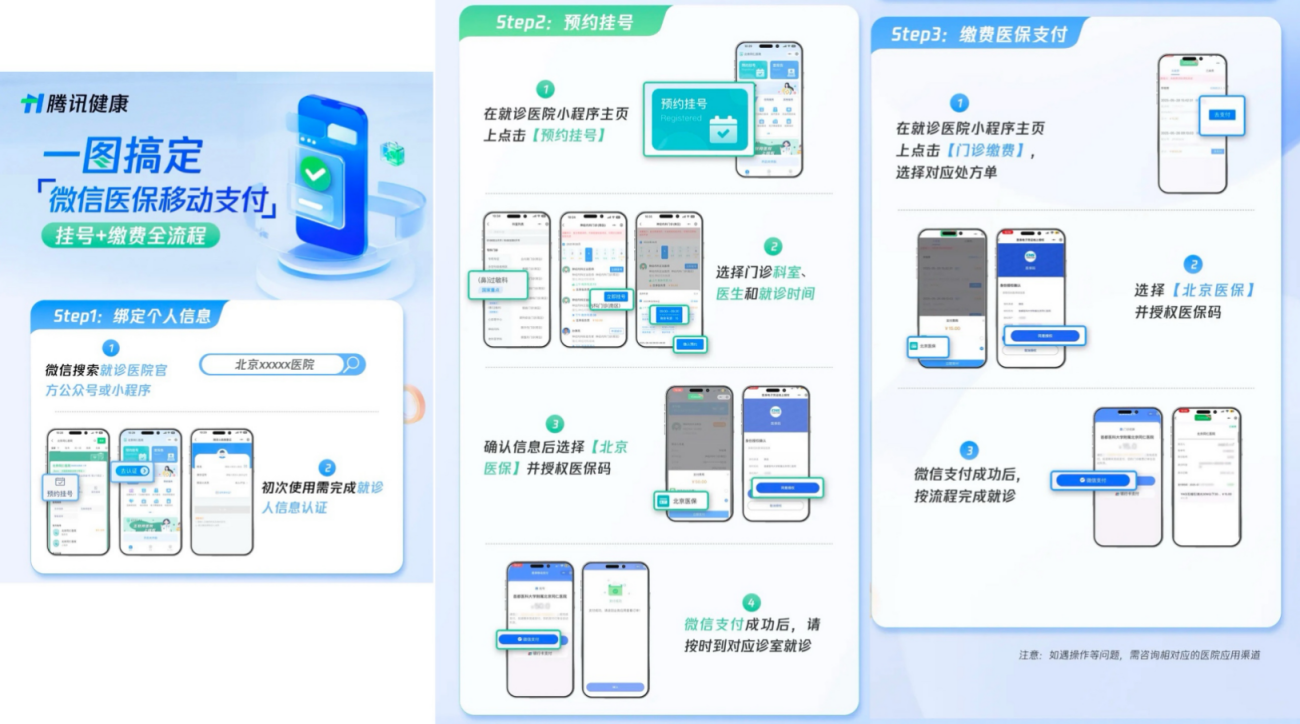
Beijing patients with medical insurance now enjoy new convenient benefits. The WeChat medical insurance mobile payment function has been fully implemented in 140 public hospitals. Patients with insurance can complete registration, payment, and real-time medical insurance settlement directly through their mobile phones, solving the problems of repeated queuing and running around during medical visits.
“Now I don’t need to queue at the window for registration and payment. With just a few taps on my phone, the medical insurance directly covers the cost. It’s so convenient!” praised a patient who experienced the service at Beijing Tongren Hospital. The 140 hospitals now offering this service include Peking Union Medical College Hospital, Peking University People’s Hospital, and other public hospitals.
Patients can access full online services through the “Jing Tong” mini-program or hospitals’ own apps and mini-programs. For example, at Beijing Tongren Hospital, first-time users can search for the “Beijing Tongren Hospital” mini-program on WeChat, complete patient information verification, then click “Appointment Registration” to select the hospital campus, department, doctor, and appointment time. After confirming the information, choose “Beijing Medical Insurance” and authorize the medical insurance code. Once payment is successful, patients can attend their appointment on time. For paying examination or medication fees, simply click “Outpatient Payment” on the mini-program homepage, select the corresponding hospital campus and prescription, then use medical insurance payment again.
This service simplifies the previously cumbersome process of “queuing for registration—queuing for consultation—queuing for payment—queuing for examination—queuing again for payment—queuing for medication” into a new model of “mobile registration—consultation—mobile payment—examination/medication pickup.” This not only breaks the time and location limitations of hospital window services but also significantly reduces patients’ time spent in the hospital, particularly benefiting those with scheduled appointments and follow-up visits.
“Before, I had to queue multiple times just for payments. Now I only need to queue once when picking up medication,” remarked a patient who frequently requires follow-up visits. As medical insurance mobile payments become more widespread, citizens are personally experiencing the convenience of “medical care at their fingertips.”