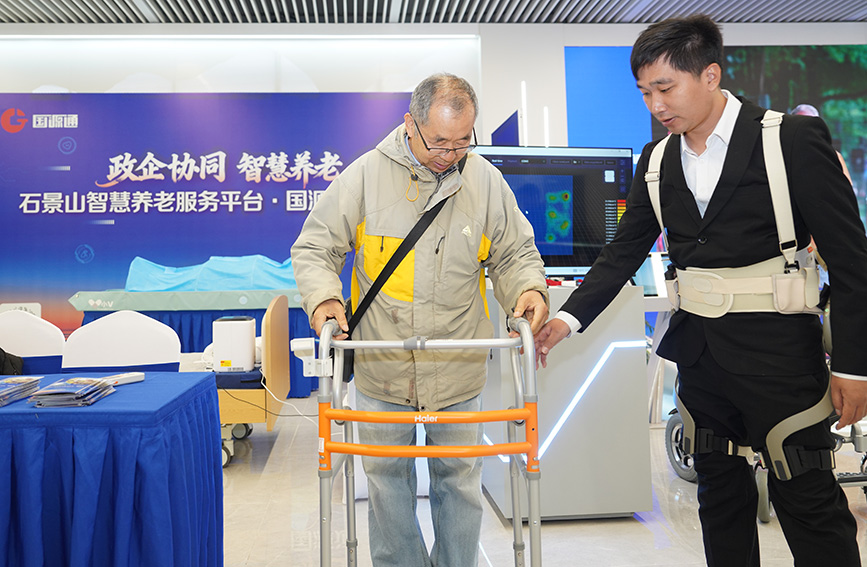
Beijing, April 17 — On April 16, the “Guoyuantong” smart elderly care service platform was launched in the city meeting hall of the Shijingshan District Government Service Center.
Shijingshan District is a highly aging area, with 144,000 permanent elderly residents aged 60 and above, accounting for 25.7% of the permanent population. Among them, about 29,000 are elderly people aged 80 and above or those with disabilities and cognitive impairments. The aging population, combined with urban transformation and development, has led to an increasingly urgent demand for professional, affordable, and high-quality elderly care services.
In recent years, the Shijingshan District Committee and District Government have prioritized elderly care as a key livelihood project. They have established 55 elderly care institutions, opened 79 community dining points, and, as the only pilot district in the city for long-term care insurance, have included over 6,300 severely disabled elderly individuals in the coverage. However, challenges such as information asymmetry and service disconnection still exist in the “last meter” of elderly care. To address this, Shijingshan District has actively introduced professional resources and collaborated with enterprises to create the “Guoyuantong” smart elderly care service platform, using digital methods to remove bottlenecks.
The platform focuses on the practical needs of the elderly in areas such as food, clothing, housing, transportation, medical care, health, and wellness. It offers eight functional features, including meal assistance, care services, institutional elderly care, age-friendly home modifications, medical consultations and medication access, and welfare application. Elderly individuals and their family members can easily book services via mobile phones, phone calls, or offline service points. Considering that some elderly people are not accustomed to using smartphones, the platform retains traditional phone call methods and introduces voice ordering, allowing users to place orders simply by speaking. The platform also integrates payment through the elderly care and disability card, enabling government subsidies and allowances to be “bound with one click and used directly.” Currently, the platform has onboarded 52 meal assistance institutions, 25 elderly care institutions, and over 100 age-friendly products, offering 7 categories and 22 types of home-based services. More thoughtfully, the platform strictly adheres to data security and personal information protection requirements, ensuring “data does not cross boundaries” through strict permission settings. While fully safeguarding the privacy rights of the elderly, it integrates data from medical, health insurance, and civil affairs sources to create personalized service profiles for the elderly and disabled. The system actively records individuals’ health conditions, medication habits, and care needs, accurately matching and recommending the most suitable services, shifting elderly care from “people seeking services” to “services seeking people.” Additionally, through offline age-friendly home modification showrooms and the upcoming Silver Hair Mall, elderly individuals can first experience services before placing orders, making online services more reliable.
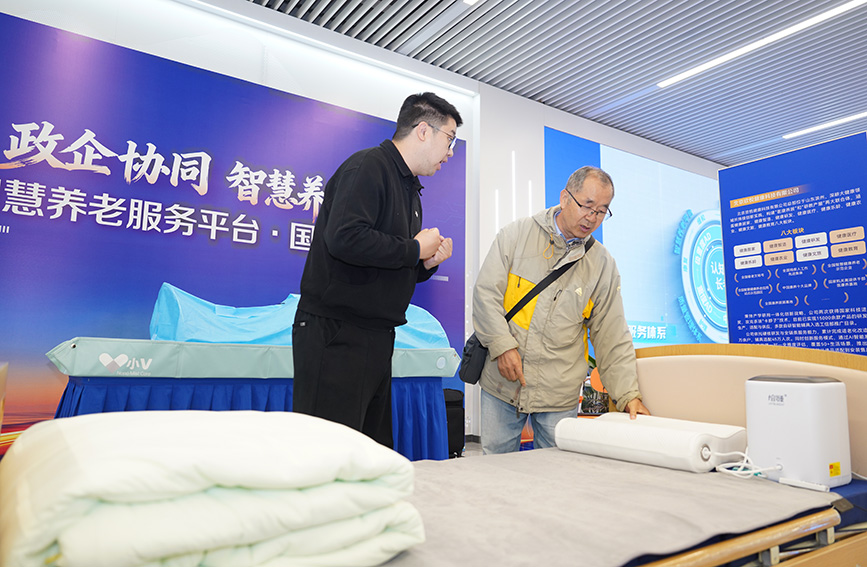
It is reported that the platform began trial operations on April 9, with some elderly residents already registered and experiencing related services. At the launch event, two elderly individuals were appointed as “service experience officers” to oversee service quality and help the platform continuously improve.
Industry-driven, platform-enabled development is an inherent requirement for elderly care services and a current trend. The launch of the Shijingshan District smart elderly care service platform aligns with this trend, aiming to create a “total service hub” for matching supply and demand in regional elderly care. Through digital means, it makes services more accessible and convenient, truly achieving a dual improvement in livelihood warmth and service capability.
Moving forward, Shijingshan District and Guotou Health will continue to deepen government-enterprise collaboration, promoting the deep integration of smart elderly care with medical care, health, and home-community care. This will make technology more compassionate and elderly care more tangible, ensuring that every elderly person in Shijingshan District feels that “smart care is within reach, and warmth is always nearby.” After the launch event, an exhibition and experience session was held, with multiple elderly care institutions setting up booths for guests and elderly friends to visit and try out services.