Beijing Adds Another Smart Post Office, Intelligent Delivery Robots Provide “Door-to-Door” Service
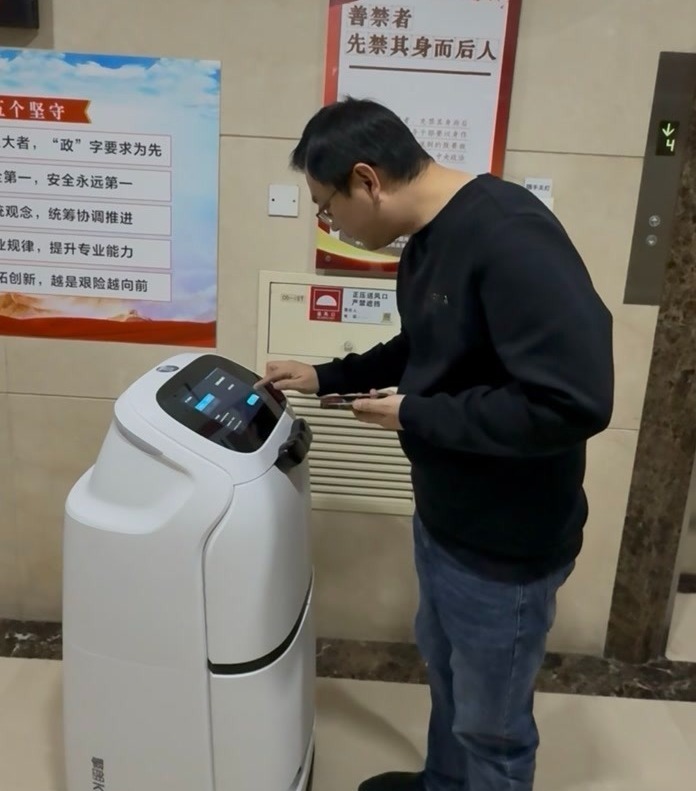
“Robots can deliver packages to me now, that’s really novel!” Recently, in an office building at No. 131 Xuanwumen West Street, Mr. Huang, an office worker, received a pickup call from a robot at his workstation. A delivery robot with blinking indicator lights “took” the elevator from the smart post office on the first floor and went upstairs alone to deliver the package. Mr. Huang went to the elevator entrance, entered a verification code, and the robot opened its compartment door in one smooth motion—inside was the urgent package he had been waiting for.
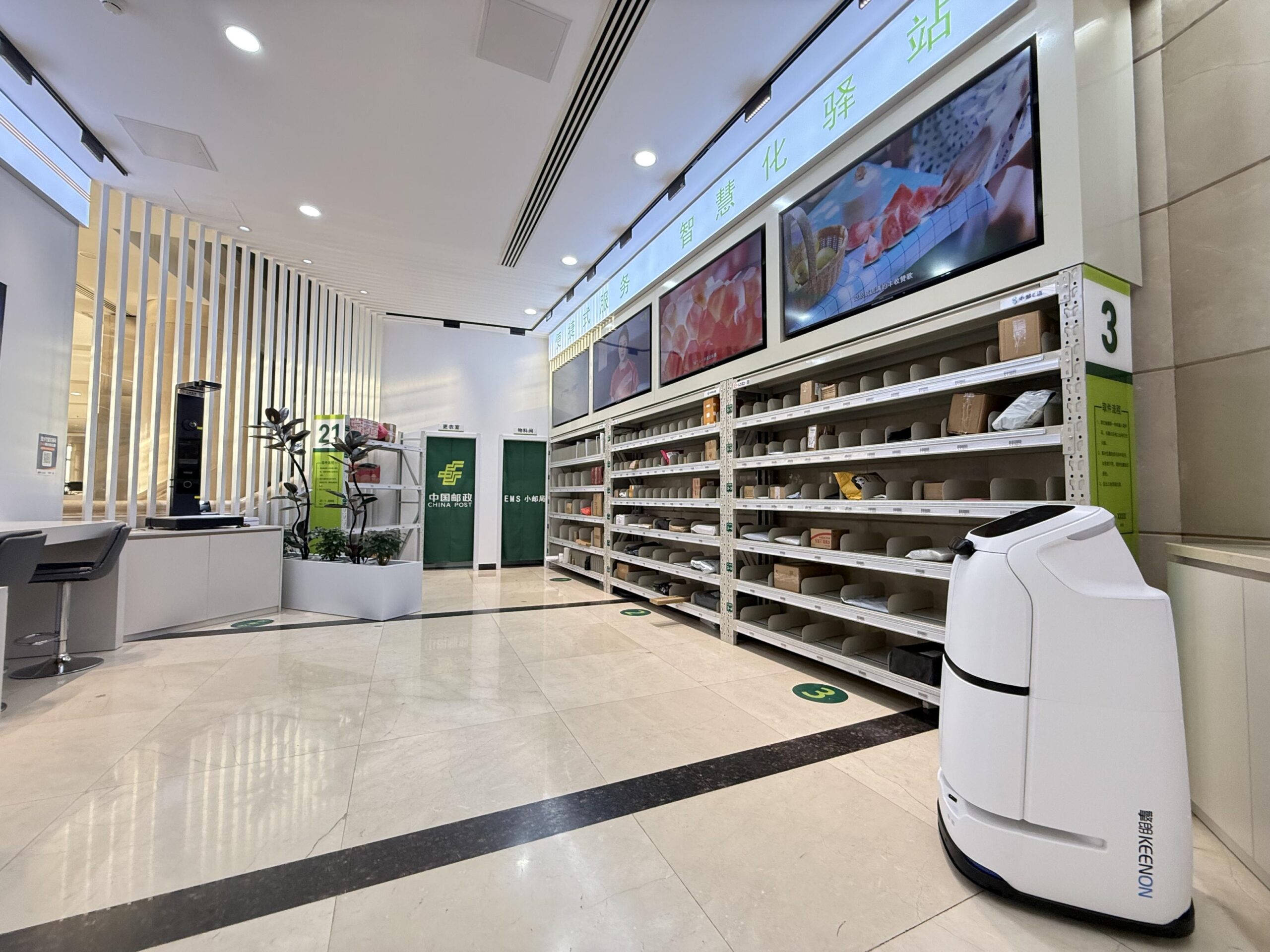
In the lobby of this office building, a nearly 30-square-meter idle area has been renovated and transformed into a smart mini post office. Robots can carry packages and take the elevator by themselves for pickup and delivery; the pickup shelf compartments can light up to guide the way; and the post office can operate with “24-hour unattended service”… This is Beijing’s second smart post office. Previously, the Yinglan Building at No. 7 Financial Street was upgraded to become the city’s first “Smart Post Office.”
“In the past, after receiving a delivery call, if I was in a meeting or busy and couldn’t go downstairs myself, I had to ask others for help. If I let the courier leave it in a designated spot, I was a bit uneasy.” An employee with the surname Wu in the office building said, “Now with this mini post office, I no longer have to rush downstairs at specific times to pick up packages, and I’m not restricted by pickup hours anymore.”
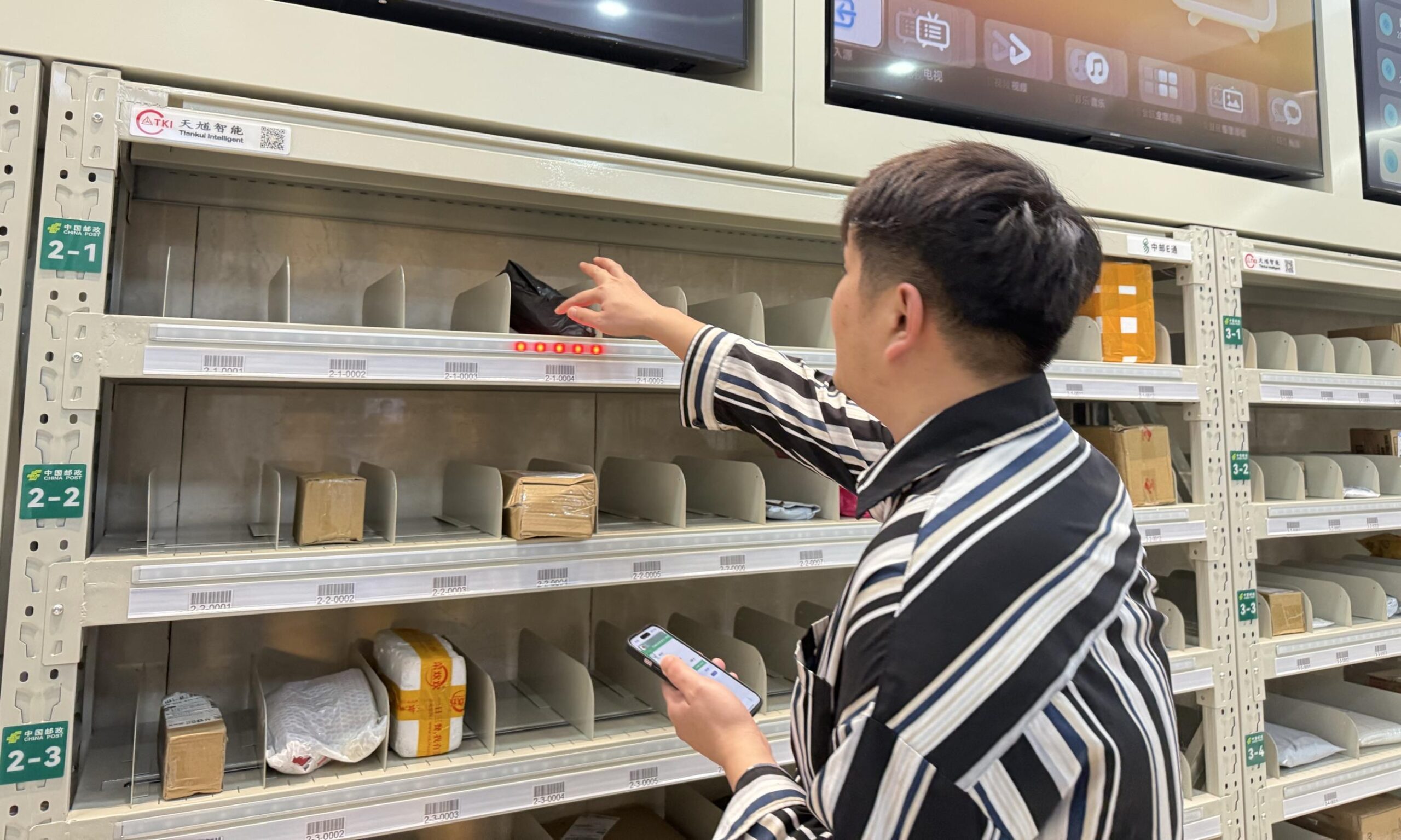
Entering this smart post office, the intelligent light-guided shelf placed against the wall is the core equipment. To pick up a package, users scan a QR code at the entrance and enter a pickup code. After completing verification via scan or facial recognition, the corresponding shelf compartment storing their package immediately lights up with green, yellow, or blue lights, providing precise directional guidance. The self-service mailing machine supports users in independently completing the entire process of placing an order, weighing, payment, and printing labels around the clock.
After finding the package, the recipient still needs to complete verification at the intelligent checkout device. The project lead explained that when a user places the package barcode in the scanning area, the device reads the package information while simultaneously performing facial recognition and recording an image of the recipient, achieving “second-level” checkout and security traceability. A 360-degree intelligent monitoring system ensures the entire service process is safe and controllable. “If someone accidentally takes the wrong package, the system immediately issues a voice reminder, and the incorrect compartment flashes a red warning light,” the project lead stated.
Compared to the first smart post office, this one has added delivery robots. Postal workers only need to place packages into the robot’s storage compartment. The robot can then rely on its autonomous navigation system to plan a route, take the elevator, and accurately reach any designated floor within the building, automatically sending text messages and making phone calls to notify recipients. After users schedule a pickup via a mini-program, the robot can also perform “door-to-door collection,” enabling “mail anytime, smart pickup.”
It was observed that
No. 131 Xuanwumen West Street office building
No. 131 Xuanwumen West Street is a modern office building located in Beijing’s Xicheng District. While the building itself is not a historic site, its address is significant as it stands within the historic Xuanwumen area, which was the site of the southern gate of Beijing’s imperial city during the Ming and Qing dynasties. Today, the building primarily serves as commercial office space in a central urban location.
smart post office
A “smart post office” is a modernized postal service facility that integrates digital technology, such as self-service kiosks, package tracking systems, and automated sorting, to improve efficiency and customer experience. This concept emerged globally in the 21st century as postal services adapted to the digital age, often evolving from traditional post offices with long histories of mail delivery. For example, Japan Post began implementing advanced automation in the 2000s, while countries like South Korea and Singapore have developed highly automated postal hubs as part of national smart city initiatives.
Yinglan Building
The Yinglan Building, also known as the “Yinglan Mansion,” is a historic Western-style building located in the Gulangyu Island UNESCO World Heritage Site in Xiamen, China. Originally constructed in the early 20th century, it was the residence of Huang Zhongxun, a prominent overseas Chinese businessman from the Philippines, and exemplifies the fusion of Southern Fujian architectural styles with European influences common on the island during that period. Today, it stands as a well-preserved example of Gulangyu’s unique architectural heritage and international history.
No. 7 Financial Street
No. 7 Financial Street is a prominent modern office tower located in Beijing’s Financial Street district, a planned hub for China’s financial institutions and regulatory bodies. Completed in the early 2000s, it was developed as part of the district’s expansion to centralize national banking, securities, and insurance operations. The building symbolizes Beijing’s rise as a global financial center and houses major domestic and international financial firms.
Smart Post Office
The Smart Post Office is a modern postal service facility that integrates digital technology and automated systems to improve efficiency and customer experience. While not a historical site itself, it represents the evolution of traditional postal services, which have a centuries-old history of communication and logistics, adapting to the digital age.
intelligent light-guided shelf
An “intelligent light-guided shelf” is a modern retail technology, not a historical place or cultural site. It uses LED lights and sensors to guide warehouse or store employees to exact item locations, significantly improving picking accuracy and efficiency. This innovation emerged in the 21st century with the rise of automation and smart logistics in supply chain management.
self-service mailing machine
A self-service mailing machine is an automated kiosk, commonly found in post offices or public areas, that allows users to weigh, calculate postage, and print shipping labels for letters and packages without staff assistance. These machines emerged in the late 20th century, evolving from simple stamp vending machines into sophisticated digital systems as postal services sought to increase efficiency and offer 24/7 convenience. They represent a shift toward automation in postal services, integrating electronic payment and tracking technology.
intelligent checkout device
An “intelligent checkout device” is not a traditional cultural or historical site, but a modern retail technology. These automated systems, like self-service kiosks or scan-and-go apps, emerged in the late 20th and early 21st centuries to streamline shopping by reducing wait times and labor costs. They represent a significant shift in consumer culture toward automation and data-driven retail experiences.