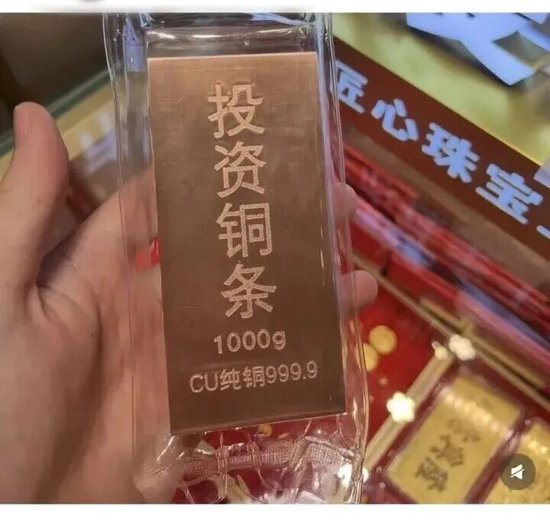
Recently, the precious metals market has been booming, with gold and silver prices continuously rising, becoming a popular investment focus. Amid this surge, another metal has quietly “broken through” — investment copper bars.
“It’s not that gold and silver bars are unaffordable, but copper bars offer better value for money.”
On many online social platforms, Shuibei’s “investment copper bars” have also sparked heated discussions, with many photos of the actual “investment copper bars” circulating.
1-kilogram investment copper bars range from 180 to 280 yuan
Many inquiries, few purchases
Shenzhen’s Shuibei is the largest gold and jewelry distribution center in China. Just this month, many merchants in markets like Jinzuo, Yinzuo, and Teli have tentatively launched 999.9 pure copper investment bars, available in 500-gram and 1000-gram specifications, with 1000 grams being more common. The price for a 1000-gram investment copper bar ranges from 180 to 280 yuan.
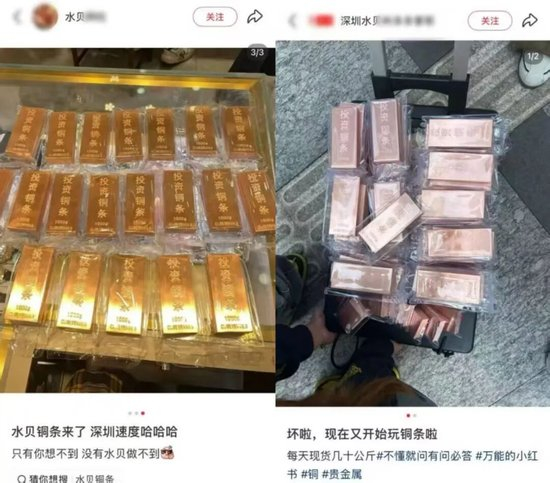
Some netizens said they initially thought it was a joke, only to find out it was real. Others joked: “I won’t dare to call it ‘scrap metal’ anymore…”
According to reports, most merchants currently do not have copper bars in stock; they require pre-orders, with lead times ranging from 3 to 7 days. Bulk orders may receive discounts.
In the Hangzhou market, some investors have also started paying attention to investment copper bars. The owner of an old gold shop in Hangzhou said that the day before yesterday, a customer mentioned the recent rise in copper prices while buying silver bars and asked if the shop sold investment copper bars. “In the public’s perception, copper is very cheap. Buying a small amount doesn’t yield much appreciation, buying a lot leaves no place to store it, and future recycling is also a problem.”
So, what is the actual trading situation for investment copper bars?
A Shuibei merchant said that there have been many inquiries in the past couple of days, but very few actual orders. Regarding “investment copper bars,” most people are actually just watching out of curiosity.
People are generally more concerned about future recycling. Can investment copper bars be recycled like investment gold and silver bars? Multiple merchants stated that the specific recycling method is currently unknown, “We are only selling, not recycling at the moment.”
Another merchant said: “The processing fee for copper bars might be higher than the price of the copper itself. Even if recycled, it would likely be at the raw material price, so the value isn’t significant. Even if I see peers stocking up, I wouldn’t blindly follow the trend.”
Copper prices have surged over 30% in a year
Investors: Not suitable for personal investment
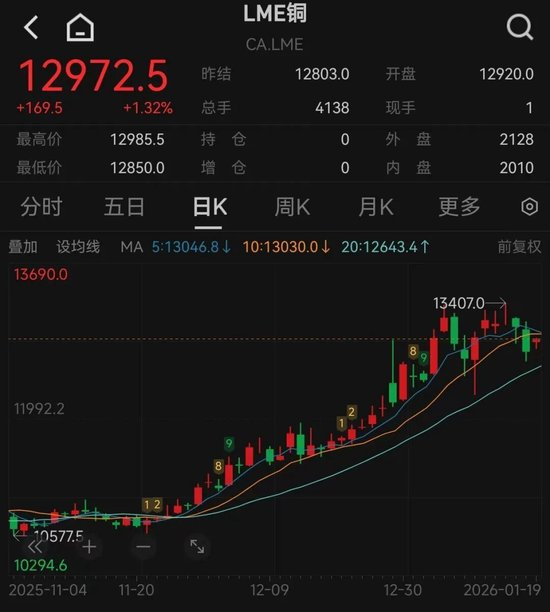
Last year, prices for commodities, represented by copper, rose sharply, with copper’s annual price increase exceeding 30%.
According to data, spot copper prices fluctuated upwards, starting the year at 73,830 yuan per ton and rising to 99,180 yuan per ton by year-end, a full-year increase of 34.34%.
Since the beginning of the new year, copper prices have repeatedly hit new highs. On January 14, London Metal Exchange (LME) copper futures once reached a historic high of $13,407 per ton; domestic copper futures also soared above 100,000 yuan per ton.
Against the backdrop of soaring copper prices, should ordinary people invest in copper?
“Copper is suitable for hoarding by the ton, not by the pound. The premium on copper bars is too high; you wouldn’t break even even after holding them for years,” said a precious metals investor. He calculated that at 200 yuan per kilogram, it would require the copper price to rise to 200,000 yuan per ton just to break even, not including cost interest and recycling discounts. “The problem is, spot prices are quoted at 100,000 yuan per ton today…”
Furthermore, the biggest difference between copper and gold or