

1
I’m sorry, but it looks like you didn’t provide the name of the place or cultural site. Could you please specify which location you’d like me to summarize?
2
I’m sorry, but it seems like you’ve only provided the number “2” without specifying a place or cultural site. Could you please provide the name of the location or site you’d like me to summarize?
3
I’m sorry, but you’ve only provided the number “3.” Could you please specify the name of the place or cultural site you’d like me to summarize?
4
I’m sorry, but you’ve only provided the number “4,” which doesn’t correspond to a specific place or cultural site. Could you please provide the name of the location or site you’d like me to summarize?
5
I’m sorry, but you’ve provided “5” as the place or cultural site. Could you please specify the name of the location you’d like me to summarize?
6
I’m sorry, but the input “6” does not correspond to a known place or cultural site. Could you please provide the name of the location or site you’d like summarized?
7
The number 7 is not a specific place or cultural site, but rather a numeral with deep symbolic significance across many cultures. Historically, it has been considered a sacred number in ancient Mesopotamia, Judaism, Christianity, and Islam, often representing completeness or divine perfection—such as the seven days of creation or the seven wonders of the ancient world. Its cultural importance persists today in concepts like the seven deadly sins, lucky number 7 in gambling, and the seven continents.
8
The number 8 is not a physical place or cultural site, but it holds deep cultural significance, particularly in Chinese culture, where it is considered the luckiest number due to its pronunciation resembling the word for “wealth” or “prosperity.” This belief has historical roots in ancient Chinese numerology and Taoist traditions, where the number symbolizes infinity
seven wonders of the ancient world
The Seven Wonders of the Ancient World were a celebrated list of remarkable constructions from classical antiquity, compiled by Hellenic travelers and historians like Antipater of Sidon and Philo of Byzantium. The canonical list includes the Great Pyramid of Giza, the Hanging Gardens of Babylon, the Statue of Zeus at Olympia, the Temple of Artemis at Ephesus, the Mausoleum at Halicarnassus, the Colossus of Rhodes, and the Lighthouse of Alexandria. Today, only the Great Pyramid of Giza remains largely intact, while the others were destroyed by earthquakes, fires, or other disasters over the centuries.
seven deadly sins
The “Seven Deadly Sins” is a classification of vices in Christian theology, originating from early monastic teachings and formally codified by Pope Gregory I in the 6th century. These sins—pride, greed, wrath, envy, lust, gluttony, and sloth—were later popularized in medieval art and literature, most notably in Dante’s *Divine Comedy* and Chaucer’s *Canterbury Tales*. The concept has since become a enduring cultural symbol, often referenced in modern media and psychology as a framework for human moral failings.
seven continents
The term “seven continents” refers to the widely accepted geographical division of Earth’s landmasses: Africa, Antarctica, Asia, Europe, North America, Australia (Oceania), and South America. This classification has evolved over centuries, rooted in ancient Greek concepts of separate landmasses and refined through European exploration and cartography from the 15th century onward. Today, the seven-continent model is a standard educational framework, though some regions use alternative models (e.g., combining Europe and Asia as Eurasia).
Related news

Ma Zhengyong transferred from Guangdong to Sichuan.
The official website of the Sichuan Provincial Gov...

Daily Study|The Beacon Fire of War Forges a Monument of Spirit
Daily Study|Eighty years have passed since the smo...
Nation’s first local subsidy policy for consumer goods trade-in programs implemented in Jiangsu.
It has been learned that the province has taken th...

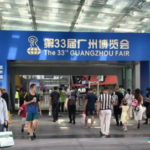
The 2025 Guangzhou Fair will showcase technology, inventions, and robots.
Guangzhou Fair 2025 to Showcase Technology, Invent...