1/8
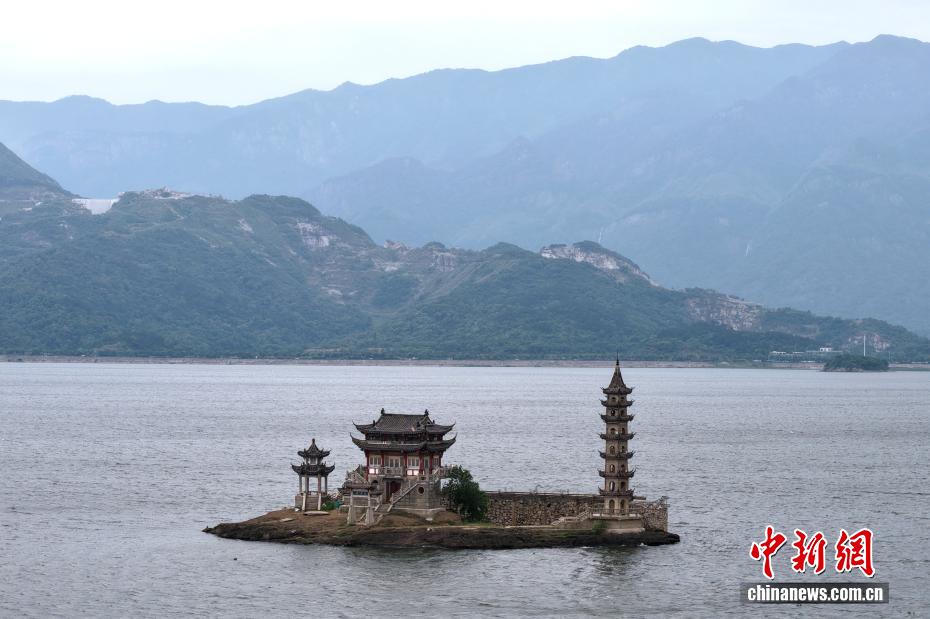
On May 29, in Lushan City, Jiangxi Province, due to recent continuous rainfall, the water level of Poyang Lake, the largest freshwater lake in China, rose rapidly, submerging the base of the thousand-year-old stone island “Luoxingdun.” Located in the Poyang Lake area of Lushan City, Jiangxi Province, “Luoxingdun” is a landmark of Poyang Lake. During the dry season, it is fully exposed, while during the wet season, it appears like a solitary boat hidden on the lake surface. The image shows “Luoxingdun” in Poyang Lake, with the world-famous Lushan Mountain in the background. (Drone photo)
Lushan City
Lushan City, located in Jiangxi Province, China, is best known as the gateway to the renowned Lushan National Park, a UNESCO World Heritage site celebrated for its dramatic peaks, waterfalls, and misty landscapes. The area has a rich history dating back over 2,000 years, serving as a retreat for poets, scholars, and officials during the Tang and Song dynasties, and later hosting the historic Lushan Conference in 1959, a key meeting of the Chinese Communist Party. Today, it remains a popular tourist destination, blending natural beauty with cultural and political significance.
Jiangxi Province
Jiangxi Province, located in southeastern China, is renowned for its rich cultural heritage and natural beauty, including the famous Lushan Mountain and Poyang Lake. Historically, it was a key center of the Song Dynasty’s porcelain industry, particularly in Jingdezhen, known as the “Porcelain Capital” for its high-quality ceramics. The province also played a significant role in the early stages of the Chinese Communist Revolution, with places like the Jinggang Mountains serving as a crucial base.
Poyang Lake
Poyang Lake, located in Jiangxi Province, China, is the country’s largest freshwater lake. Historically, it has served as a vital ecological and economic hub, supporting wetlands, fisheries, and bird migration, while also being a strategic site for battles, such as the famous naval conflict during the Ming dynasty’s rise in the 14th century. Today, it faces environmental challenges due to seasonal fluctuations and human activity.
Luoxingdun
Luoxingdun, located in Jiaxing, Zhejiang Province, China, is an important Neolithic archaeological site dating back approximately 6,000 years. It represents the Majiabang culture and has yielded significant artifacts such as rice remains, pottery, and tools, providing key evidence of early rice cultivation and ancient human settlement in the Yangtze River Delta. The site is now a protected cultural heritage area, offering insights into the region’s prehistoric life and agricultural development.
Lushan Mountain
Lushan Mountain, located in Jiangxi Province, China, is a renowned scenic and cultural site known for its dramatic peaks, waterfalls, and misty landscapes. Its history dates back over 2,000 years, serving as a retreat for scholars, poets, and officials, and it became a center for religious activities in Taoism and Buddhism. The mountain also played a significant role in modern Chinese history, hosting the Lushan Conference in 1959, a key meeting of the Chinese Communist Party.
&
Luoxingdun
Luoxingdun is an ancient archaeological site located in the Yangtze River Delta region of China, dating back to the Neolithic period around 5,000 to 6,000 years ago. It is associated with the Majiabang culture and provides important evidence of early rice cultivation, fishing, and the development of prehistoric settlements in the area. The site has yielded artifacts such as pottery, stone tools, and rice remains, offering valuable insights into the daily life and agricultural practices of early Chinese civilizations.
Poyang Lake
Poyang Lake, located in Jiangxi Province, China, is the country’s largest freshwater lake, known for its dramatic seasonal fluctuations in size. Historically, it has been a crucial ecological and economic hub, serving as a major wetland for migratory birds and a key waterway for trade. The lake also holds historical significance as the site of the pivotal Battle of Poyang Lake in 1363, a decisive naval conflict during the Ming Dynasty’s rise to power.
Lushan Mountain
Lushan Mountain, located in Jiangxi Province, China, is a renowned scenic and historical area known for its breathtaking landscapes, including waterfalls, cloud-shrouded peaks, and hot springs. Its history dates back over 2,000 years, serving as a retreat for scholars, poets, and officials, and it gained further prominence as the site of the 1959 Lushan Conference, a key event in the Chinese Communist Party’s history. Today, it is a UNESCO World Heritage site and a popular tourist destination.
Lushan National Park
Lushan National Park, located in Jiangxi Province, China, is a UNESCO World Heritage site renowned for its dramatic natural scenery, including steep peaks, deep gorges, and misty waterfalls. Historically, it has been a center of cultural and religious significance since the Eastern Han dynasty, serving as a retreat for scholars, poets, and Buddhist and Taoist monks. The park also holds modern historical importance as the site of the 1959 Lushan Conference, a key meeting of the Chinese Communist Party.
Jingdezhen
Jingdezhen, often called the “Porcelain Capital” of China, is a city in Jiangxi province with a history of ceramic production spanning over 1,700 years. It rose to global prominence during the Ming and Qing dynasties, serving as the primary source of imperial porcelain and a key hub for the Silk Road trade. Today, it remains a living museum of pottery culture, blending ancient kilns, artisan workshops, and modern ceramic art.
Jinggang Mountains
The Jinggang Mountains, located in Jiangxi Province, China, are a historically significant revolutionary site often called the “Cradle of the Chinese Revolution.” In the late 1920s, Mao Zedong established the first rural revolutionary base here, marking a pivotal turning point in the Chinese Communist Party’s struggle. The area is now a popular tourist destination, featuring museums and preserved battle sites that commemorate its role in early communist history.
Majiabang culture
The Majiabang culture was a Neolithic civilization that flourished in the lower Yangtze River region of China, primarily in present-day Zhejiang and Jiangsu provinces, from around 5000 to 3300 BCE. It is known for its early rice cultivation, distinctive pottery with cord-marked designs, and advanced jade carving techniques, which laid foundations for later regional cultures. Archaeological sites, such as those near the Majiabang area in Jiaxing, reveal a settled, agricultural society that also engaged in fishing and hunting.
Yangtze River Delta
The Yangtze River Delta is a major economic and cultural region in eastern China, centered around the mouth of the Yangtze River and including key cities like Shanghai, Nanjing, and Hangzhou. Historically, it has been a hub of trade and civilization for over a thousand years, flourishing during the Song and Ming dynasties due to its fertile land and waterways. Today, it is one of the world’s most densely populated and economically dynamic areas, known for its rapid urbanization and industrial growth.