In the first quarter of 2026, Shanghai’s gross domestic product reached 1,352.691 billion yuan, a year-on-year increase of 5.9% at constant prices.
By industry, the primary sector added 2.133 billion yuan, the secondary sector added 250.932 billion yuan, and the tertiary sector added 1,099.626 billion yuan.
The secondary sector accounted for 18.55% of GDP. Excluding non-manufacturing segments like construction, manufacturing’s share of GDP is actually below 20%.
From the investment side, fixed asset investment in Shanghai grew 7.6% year-on-year in the first quarter. Industrial investment increased 22.8%, outpacing overall fixed asset investment growth by 15.2 percentage points, highlighting the city’s continued tilt toward manufacturing and the real economy.
“The 15th Five-Year Plan proposal calls for maintaining a reasonable share of manufacturing,” noted a Shanghai municipal government counselor at a recent conference.
A blue book pointed out that the focus of economic development should remain on the real economy, adhering to intelligent, green, and integrated directions, maintaining a reasonable share of manufacturing, and building a modern industrial system. It also emphasized optimizing and upgrading traditional industries while cultivating and expanding emerging and future industries to promote high-quality development.
Maintaining a “Reasonable Share”
The spatial distribution of Shanghai’s manufacturing shows a “center shifting outward” characteristic. As early as 2015, suburban industrial output above a designated size accounted for nearly 90% of the city’s total.
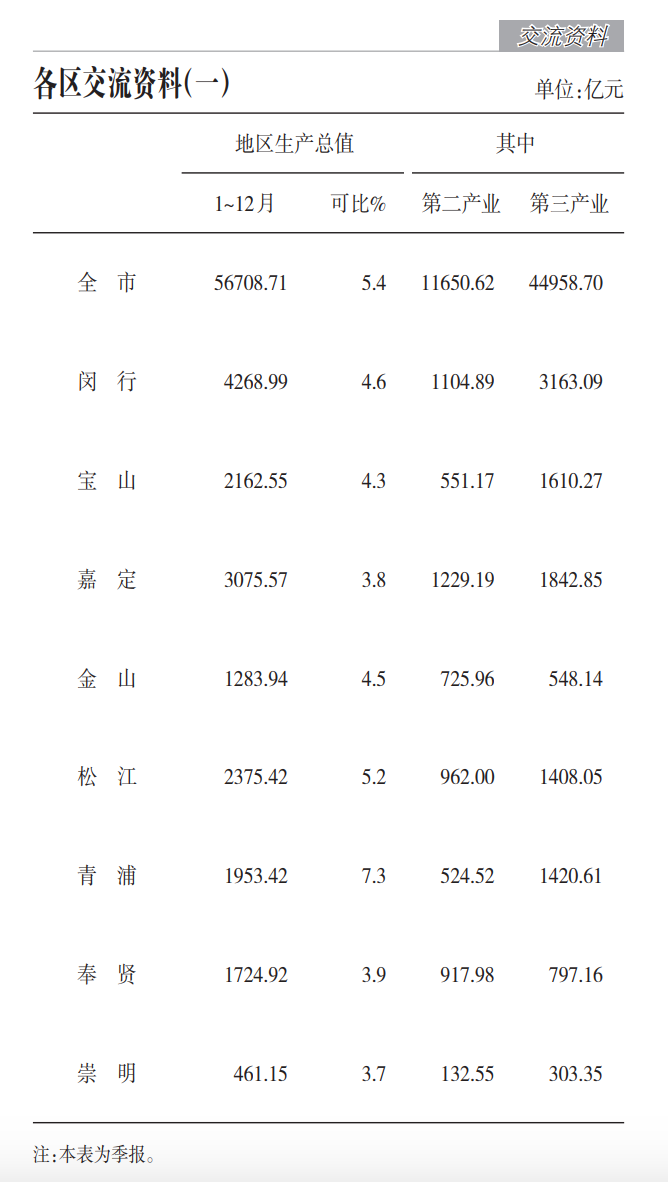
In the suburban camp, industry is not only a pillar but also the absolute foundation. For example, in Fengxian District, the industrial added value as a share of GDP remained above 50% for several consecutive years during the 14th Five-Year Plan period.
Note: 2025 Shanghai and suburban district gross domestic product. Source: Fengxian District February 2026 Statistical Monthly Report.
It is noteworthy that suburbs are also transitioning from an industry-led to a service-led economy. Currently, the tertiary sector in districts like Qingpu has surpassed the secondary sector, and the share of the tertiary sector in districts like Fengxian continues to rise.
As the former “rear base” supporting manufacturing undergoes transformation, how Shanghai maintains a “reasonable share” of manufacturing has become a critical question.
However, the pace of “quality improvement” has already outpaced “quantity expansion.” In the first quarter of this year, industrial output above a designated size in Shanghai grew 5.6% year-on-year, with strategic emerging industries output rising 8.6%, outpacing the overall industrial growth rate.
In major industrial districts, the growth gap between strategic emerging industries and total industrial output is even more pronounced. For example, in Fengxian, industrial output above a designated size grew 10.5% in the first quarter, while strategic emerging industries grew 13.1%.
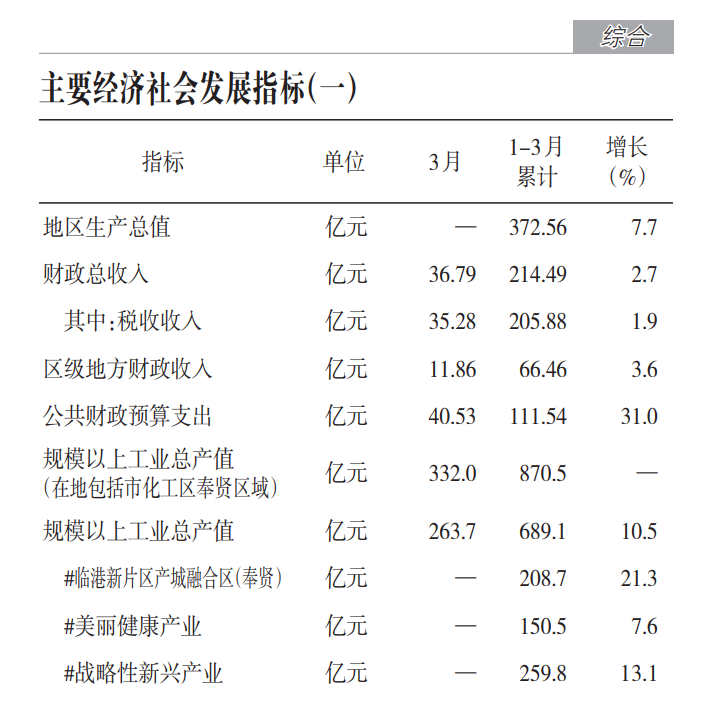
The blue book indicated that the growth rate of strategic emerging industry output significantly exceeds the overall industrial growth rate, reflecting an accelerated evolution of the industrial structure toward high-end, green, and intelligent directions.
“The stronger the manufacturing, the more its added value comes from producer services, especially R&D, design, consulting, finance, and trade, because services empower manufacturing,” a professor from Shanghai Jiao Tong University once wrote. He noted that the upgrading of manufacturing may manifest as