European and U.S. stock futures rise across the board, Chinese stocks gain pre-market, Baidu up over 4%
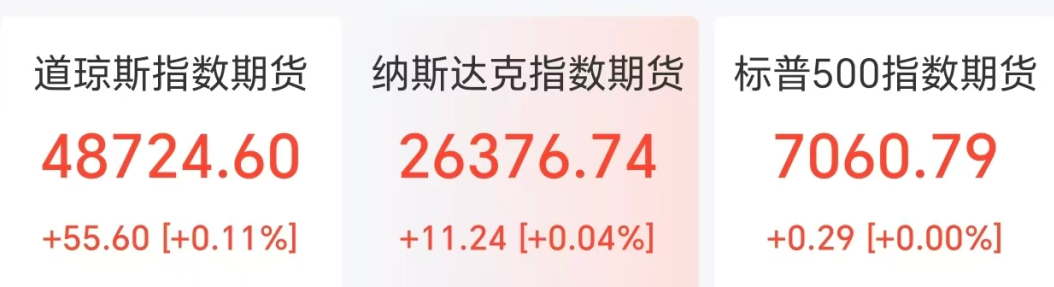
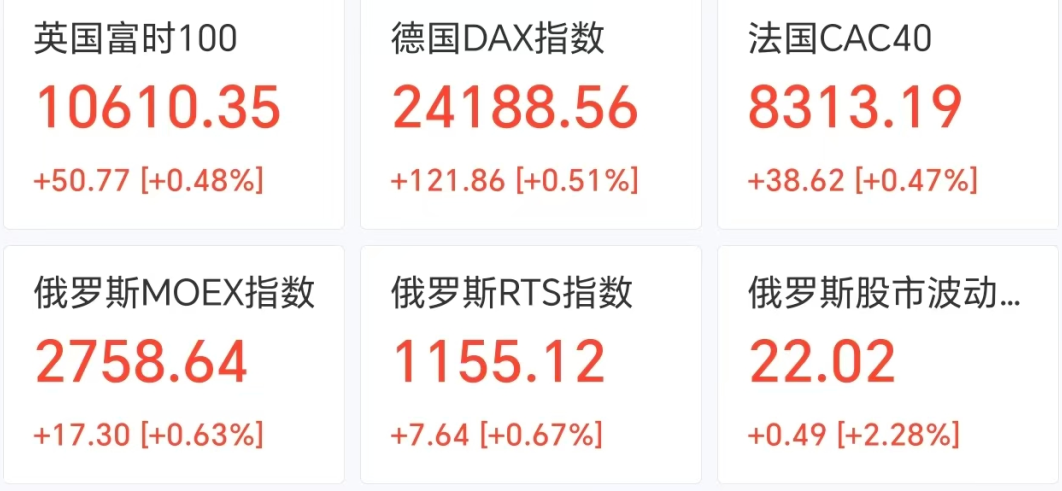
On April 16, major European stock markets opened higher across the board. As of around 18:45, Germany’s DAX index, the UK’s FTSE 100, and France’s CAC 40 all rose by approximately 0.5%. The three major US stock index futures were all in positive territory, with the Nasdaq and S&P 500 indices having already hit new highs yesterday.
Major tech stocks strengthened pre-market, with Microsoft and Oracle rising over 1%. TSMC plunged, falling over 2% after previously gaining more than 2%. The company reported a 58% surge in first-quarter net profit, reaching a record high. The SaaS sector continued its upward trend, with Salesforce and ServiceNow rising over 2% and Adobe gaining 1%.
Memory stocks continued their pre-market correction, with Micron Technology falling over 2%, and SanDisk and Seagate Technology declining about 1%.
Several popular US-listed Chinese stocks surged pre-market, with Baidu up over 4%, and NIO and Alibaba rising over 3%. Today, Baidu’s Hong Kong shares had already gained nearly 8%, and Alibaba’s Hong Kong shares rose 5.6%, adding over HKD 130 billion in market value in a single day.
Shoe giant Allbirds plummeted nearly 30% pre-market, following a staggering 580% surge yesterday that triggered a trading halt.
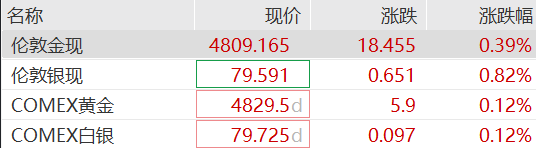
In commodities, spot and futures prices for gold and silver saw slight increases; crude oil fluctuated higher, with both WTI and ICE Brent crude rising over 1%.
Cryptocurrencies rose across the board but gains narrowed. Over the past 4 hours, Bitcoin gave up its gains and turned negative. In the last 24 hours, over 110,000 traders globally were liquidated in the cryptocurrency market.
Amid ongoing uncertainty in the Middle East situation, the reason for US stocks continuing to rise has been identified. Analysis suggests that investors still hold hope that the Middle East conflict will end soon, with market sentiment increasingly leaning towards the belief that the US and Iran will ultimately reach a peace agreement. It is noted that the recent shift occurred because, when the Middle East conflict first erupted, the market anticipated the situation could worsen and had already reduced risk exposure. Now, as the likelihood of further deterioration appears to be decreasing, investors, not wanting to miss the market rally, are buying back in.
DAX index
The DAX index is Germany’s premier stock market index, launched in 1988, which tracks the performance of the 40 largest and most liquid companies listed on the Frankfurt Stock Exchange. It serves as a key indicator for the German economy and European financial markets, with its composition regularly reviewed to reflect the changing corporate landscape. Historically, its predecessor indices date back to 1959, but the modern DAX was formally established to provide a real-time, investable benchmark following international standards.
FTSE 100
The FTSE 100 is not a physical place or cultural site, but a financial index. It is a share index of the 100 companies listed on the London Stock Exchange with the highest market capitalization, serving as a key indicator of the health of the UK stock market. It was launched in 1984 by the Financial Times and the London Stock Exchange, hence the acronym “FTSE” (Financial Times Stock Exchange).
CAC 40
The CAC 40 is the benchmark French stock market index, representing the 40 largest and most actively traded companies listed on Euronext Paris. It was established in 1987 with a base value of 1,000 points, serving as a key indicator of the health of the French economy and major corporate sector.
Nasdaq
The Nasdaq is the world’s first electronic stock market, founded in 1971 by the National Association of Securities Dealers (NASD) to automate over-the-counter trading. It is now the second-largest stock exchange by market capitalization and is famous for being the home of many major technology companies like Apple and Microsoft. Its history is marked by innovation, including the 2000 merger with Scandinavian exchanges to form Nasdaq OMX and its iconic MarketSite Tower in Times Square, which features a prominent digital ticker.
S&P 500
The S&P 500 is not a physical place or cultural site, but a major U.S. stock market index. It was launched in 1957 by the financial firm Standard & Poor’s to track the performance of 500 large, publicly traded companies, providing a key benchmark for the health of the American economy.
Microsoft
Microsoft is an American multinational technology company founded by Bill Gates and Paul Allen in 1975, which revolutionized personal computing with its Windows operating system and Office software suite. It has since grown into one of the world’s largest tech corporations, expanding into cloud computing, gaming, and artificial intelligence, while playing a central role in the digital transformation of businesses and daily life globally.
Oracle
**Oracle** refers to the ancient Greek sanctuary of Delphi, which was home to the most famous oracle of the classical world, the Pythia. Located on the slopes of Mount Parnassus, it was considered the center of the world in Greek mythology and served as a major religious site where leaders sought prophetic advice from the god Apollo for over a millennium. Its influence declined with the rise of Christianity, and the site was eventually abandoned by the 4th century CE.
TSMC
TSMC (Taiwan Semiconductor Manufacturing Company) is a global leader in semiconductor manufacturing, founded in Hsinchu, Taiwan, in 1987. It pioneered the dedicated semiconductor foundry model, producing chips for other companies without designing its own. This innovation has made it a critical player in the global tech supply chain, producing advanced chips for everything from smartphones to AI systems.