Symphony, Drones, and Giant Pandas: “Our Homeland” Giant Panda Conservation Concert Held
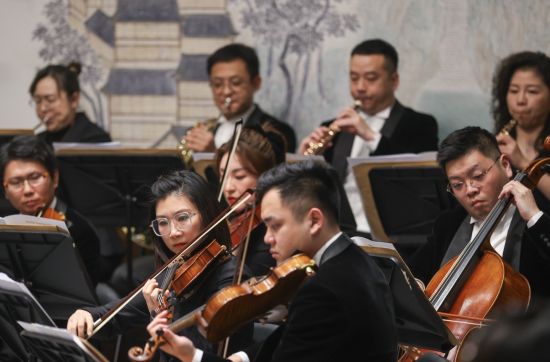
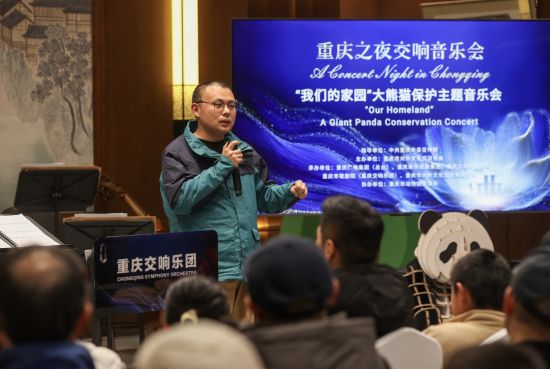
When giant panda conservation meets music, what kind of sparks will fly? To vividly tell the ecological story of Chongqing and build social consensus for jointly building a beautiful China, the “Chongqing Night” Symphony Concert—”Our Home” Giant Panda Conservation Themed Concert was held at the Chongqing International Reception Hall.
At 7:30 PM, the bow flute concerto “Flute Melody” opened the concert. Amidst the melodious ancient tune, the “bow flute,” which structurally resembles a bamboo flute but is shaped like a curved bow, immediately captured everyone’s attention. This new type of flute, recreated based on the instrument held by the “Flute Girl” in the Dazu Rock Carvings, does not have the bright and vigorous timbre of a bamboo flute but is soft, mellow, and full, showcasing the unique charm of traditional Chinese culture.
Western pieces, “Mozart’s Flute Concerto in G Major” and the fourth movement of “Haydn’s Symphony No. 45 in F-sharp minor ‘Farewell’,” followed, using beautiful melodies to display the beauty of the natural ecology, immersing the entire audience in an atmosphere full of harmony and vitality.
“The giant panda’s favorite food is bamboo, and the material used for my bow flute is also bamboo. This showcases the integration between our intangible cultural heritage and ecology,” said a bow flute performer. The concert not only aims to promote giant panda conservation but also to deeply portray the beautiful picture of harmonious coexistence between humans and nature, encouraging more people to engage in environmental protection actions.
“Using the form of music to help everyone understand giant pandas better gives us a feeling like our ‘child’ is on TV. We feel both proud and honored,” said a panda keeper. “We hope more people can understand and love giant pandas, deeply root the idea of environmental protection in their hearts, and jointly protect our beautiful home.”
Citizens watch a panda-themed drone performance at the Chongqing International Reception Hall.
After the concert, the evening’s drone light show featured a large number of panda-themed programs. Elements such as the “Panda Train,” “Wall-Climbing Panda,” “Cart-Pushing Panda,” and “Tai Chi Panda” made appearances one by one, eliciting exclamations of amazement from the attending citizens.
Chongqing International Reception Hall
The Chongqing International Reception Hall, also known as the Chongqing People’s Auditorium, is a landmark building completed in 1954. Designed with a traditional Chinese architectural style, it was built to host major political conferences and state guests during the early years of the People’s Republic. Today, it remains a key venue for important meetings and cultural events in the city.
Dazu Rock Carvings
The Dazu Rock Carvings are a UNESCO World Heritage Site in Chongqing, China, comprising thousands of intricate religious sculptures and inscriptions carved into cliff faces. Created primarily between the 9th and 13th centuries during the Tang and Song dynasties, they represent a harmonious synthesis of Buddhist, Taoist, and Confucian iconography. These carvings are celebrated for their exceptional artistry, historical narrative quality, and well-preserved state, offering a complete visual record of Chinese society and spiritual life from that era.
Flute Girl
“Flute Girl” is a nickname for a famous ancient Greek bronze statue, more formally known as the “Statue of a Flute-Playing Girl” or “The Girl of Marathon.” It was created around 325-300 BC and was discovered in the sea near Marathon, Greece, in 1926. The statue, depicting a young musician in motion, is a rare and well-preserved example of Hellenistic art and is housed in the National Archaeological Museum in Athens.
Mozart’s Flute Concerto in G Major
“Mozart’s Flute Concerto in G Major” is not a place or cultural site, but a musical composition. It was written by Wolfgang Amadeus Mozart in 1778, originally for the flute and orchestra, and is celebrated for its elegance and melodic beauty, reflecting the classical style of the period.
Haydn’s Symphony No. 45 in F-sharp minor ‘Farewell’
Haydn’s Symphony No. 45, nicknamed the “Farewell,” is a famous 1772 work by the Austrian composer Joseph Haydn. Its history stems from a clever musical protest: to persuade his employer, Prince Nikolaus Esterházy, to end a prolonged summer stay at the remote Esterháza Palace and allow the homesick orchestra musicians to return to their families, Haydn wrote a finale where players gradually stop playing and leave the stage.
bow flute
“Bow flute” likely refers to the **bawu (巴乌)**, a traditional Chinese wind instrument with a reed. It originated among the Yi, Hani, and other ethnic groups in China’s Yunnan province, with a history dating back centuries. Played horizontally, it produces a soft, mellow sound and is often used in folk music and solo performances.
bamboo flute
The bamboo flute is a traditional wind instrument with ancient origins, found in diverse cultures worldwide, particularly across Asia. Its history dates back thousands of years, with early versions appearing in China during the Neolithic period, later evolving into instruments like the Chinese *dizi* and Japanese *shakuhachi*. It is celebrated for its simple construction, expressive sound, and deep connection to folk music, meditation, and classical traditions.
Panda Train
The Panda Train is a themed tourist railway service in China’s Sichuan Province, designed to enhance travel to the Chengdu Research Base of Giant Panda Breeding and other regional attractions. Launched in 2018, its carriages are vividly decorated with panda motifs, reflecting the area’s role as a global center for giant panda conservation. The service combines modern convenience with cultural promotion, making the journey itself an engaging part of the eco-tourism experience.