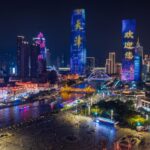
Chongqing is a major city in southwestern China, known for its mountainous terrain, spicy
Nanbin Road
Nanbin Road, located along the Yangtze River in Chongqing, China, is a historic waterfront promenade known for its scenic views and vibrant nightlife. Originally developed as a commercial and transportation hub in the early 20th century, it has been revitalized into a popular cultural and leisure destination, featuring architecture that blends traditional and modern styles. The road offers a unique perspective on Chongqing’s urban landscape and its evolution as a major inland port city.
Nan’an District
Nan’an District is a historic district located in the southwestern part of Chongqing, China, along the Yangtze River. It has a rich cultural heritage dating back to ancient times, known for its scenic mountains and hot springs, and served as a key commercial and transportation hub during the Ming and Qing dynasties. Today, it blends modern urban development with preserved historical sites, such as the Nanshan Scenic Area and the ancient Huangjueya old street.
Chongqing
Chongqing is a major city in southwestern China, known for its mountainous terrain and strategic location at the confluence of the Yangtze and Jialing rivers. Historically, it served as the provisional capital of China during the Second Sino-Japanese War (1937–1945) and has since grown into a key industrial and economic hub. Today, it is famous for its spicy hotpot cuisine, vibrant night scenery, and the Three Gorges region nearby.
Yangtze River
The Yangtze River is the longest river in Asia and the third-longest in the world, flowing over 6,300 kilometers through China. It has been a cradle of Chinese civilization for thousands of years, supporting agriculture, trade, and cultural development since ancient times. Historically, it served as a crucial transportation route and natural boundary, with major cities like Shanghai and Chongqing growing along its banks.
Nanshan Mountains
The Nanshan Mountains, located near Sanya on China’s Hainan Island, are a renowned scenic area known for their lush tropical landscapes and cultural significance. Historically, the site is associated with Buddhist traditions, most notably home to the towering 108-meter Guan Yin statue, which was completed in 2005. The area also features the Nanshan Temple, originally built during the Tang Dynasty and later restored, blending natural beauty with spiritual heritage.
Huangjueya Old Street
Huangjueya Old Street is a historic pedestrian street in Chongqing, China, dating back over 300 years to the Qing Dynasty. Originally a key post road and commercial hub for merchants traveling between Chongqing and Guizhou, it features well-preserved traditional architecture, stone-paved lanes, and local snack stalls. Today, it offers visitors a glimpse into old Chongqing’s culture and daily life, set against a scenic hillside backdrop.
Danzishi area
The Danzishi area in Chongqing, China, is a historic district known for its well-preserved traditional architecture and scenic views along the Yangtze River. Originally a bustling commercial port during the late Qing Dynasty and early Republic period, it served as a key hub for trade and cultural exchange. Today, the area has been revitalized into a popular cultural and tourist destination, blending its rich history with modern shops, restaurants, and art spaces.
Jialing River
The Jialing River is a major tributary of the Yangtze River in southwestern China, flowing through the provinces of Shaanxi, Gansu, and Sichuan before joining the Yangtze in Chongqing. Historically, it served as a vital transportation and trade route, linking the Sichuan Basin to central China, and its banks have been inhabited for thousands of years, with many ancient cities and cultural sites along its course. Today, the river remains an important ecological and economic resource, supporting agriculture, industry, and tourism in the region.