At noon on June 8, local time, General Secretary Xi Jinping arrived in Pyongyang on a special plane, beginning a state visit to North Korea.
The camera captured a series of historic moments.
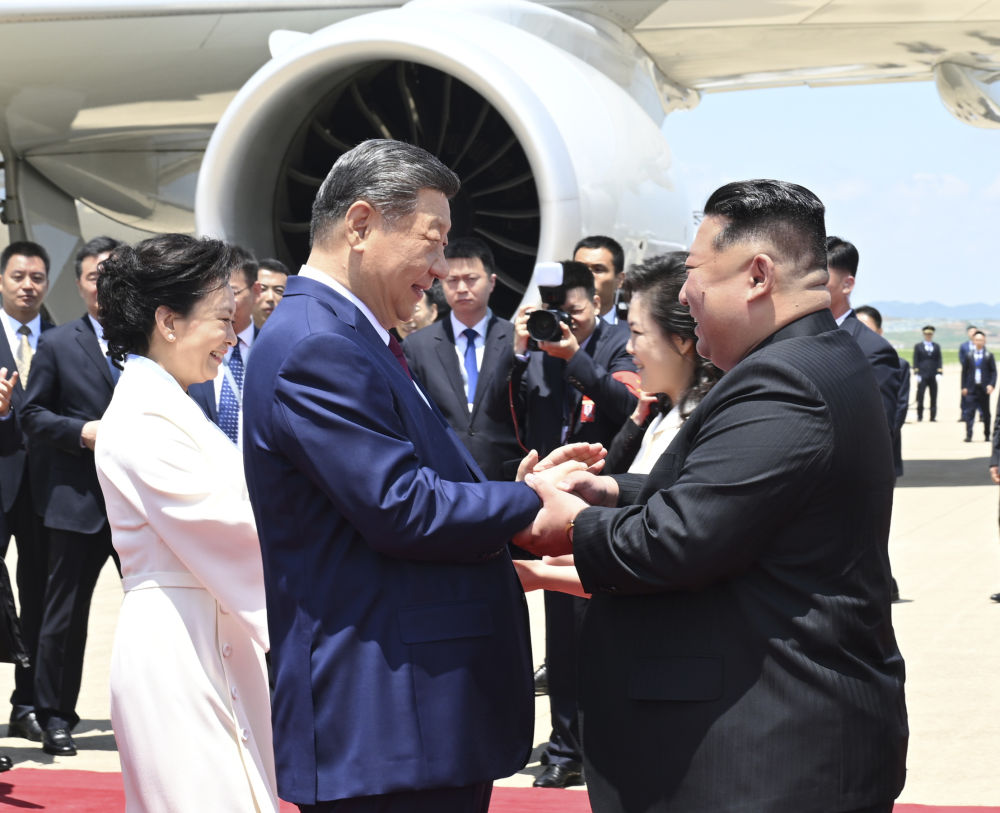
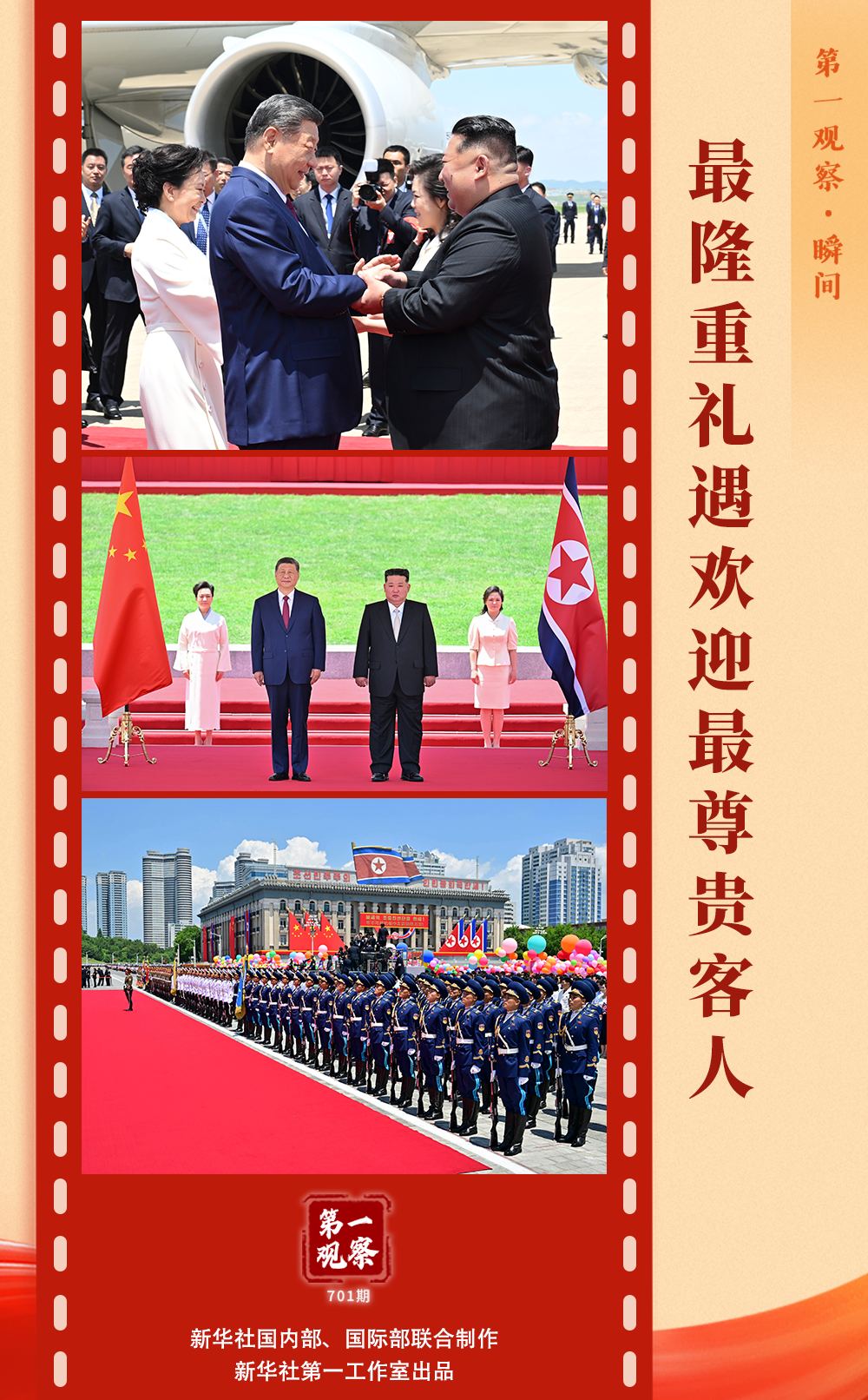
General Secretary Xi Jinping and his wife, Peng Liyuan, stepped out of the cabin and descended the gangway. General Secretary Kim Jong Un warmly shook hands with General Secretary Xi Jinping. The traditional China-North Korea friendship, which has withstood the test of changing times and international vicissitudes, was renewed in this warm reunion.
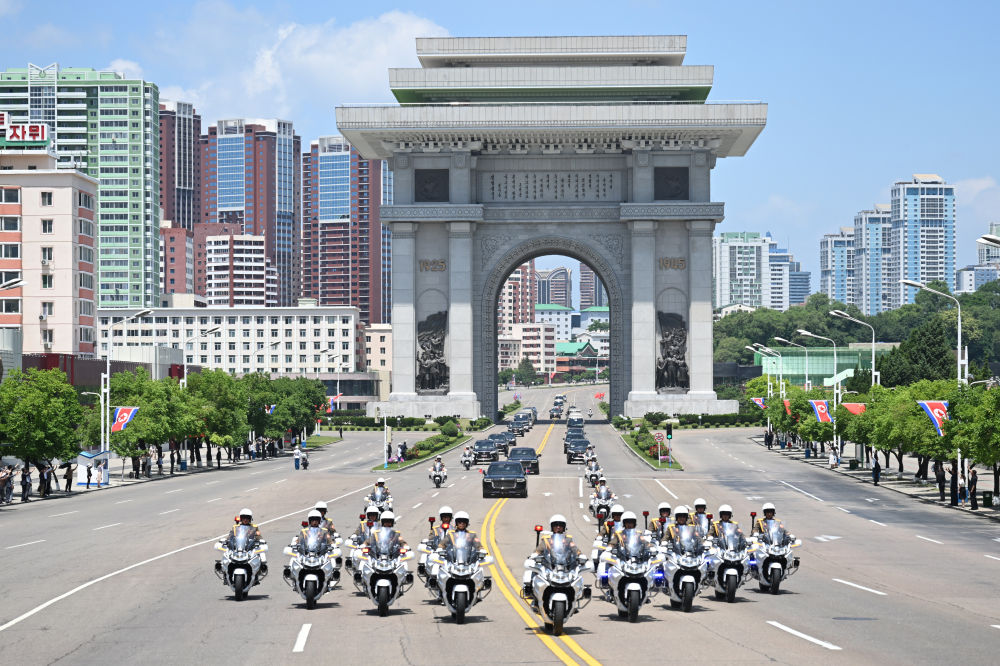
Afterward, General Secretary Xi Jinping, escorted by a ceremonial motorcycle convoy, drove past the Arch of Triumph toward Kim Il Sung Square. North Korean citizens, holding signs reading “China-North Korea Friendship,” cheered along the roadsides, welcoming General Secretary Xi Jinping’s visit after seven years.
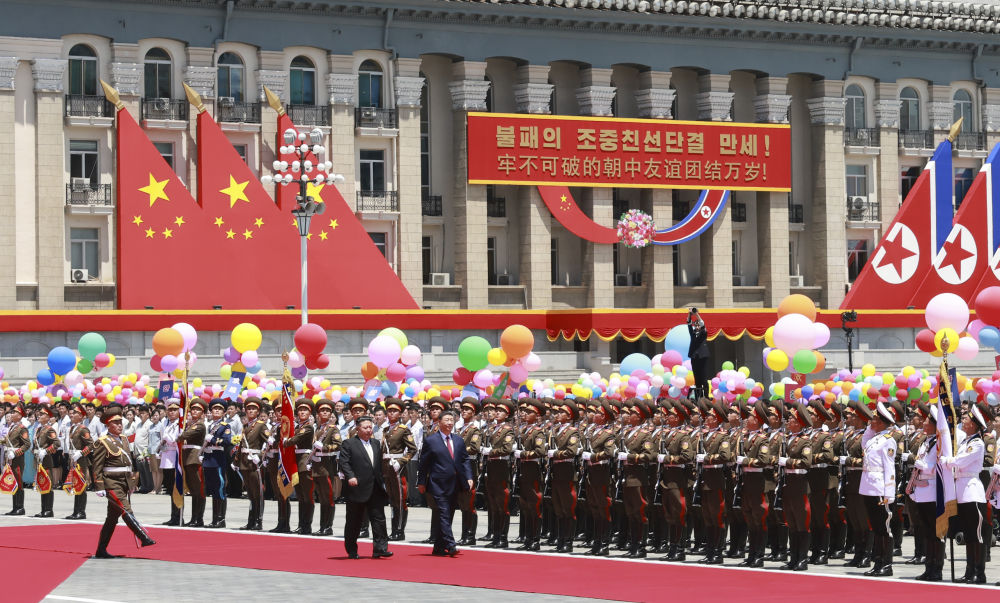
At the welcome ceremony, a large portrait of the top leaders of both parties and countries was hung in the center of Kim Il Sung Square. Neatly lined honor guards stood tall, and enthusiastic crowds from all walks of life in Pyongyang, along with children, dressed in festive attire, waved flags, flowers, and balloons, shouting slogans of China-North Korea friendship, filling the entire square with a warm atmosphere.
When General Secretary Xi Jinping and his wife, Peng Liyuan, arrived at Kim Il Sung Square, General Secretary Kim Jong Un and his wife, Ri Sol Ju, welcomed them