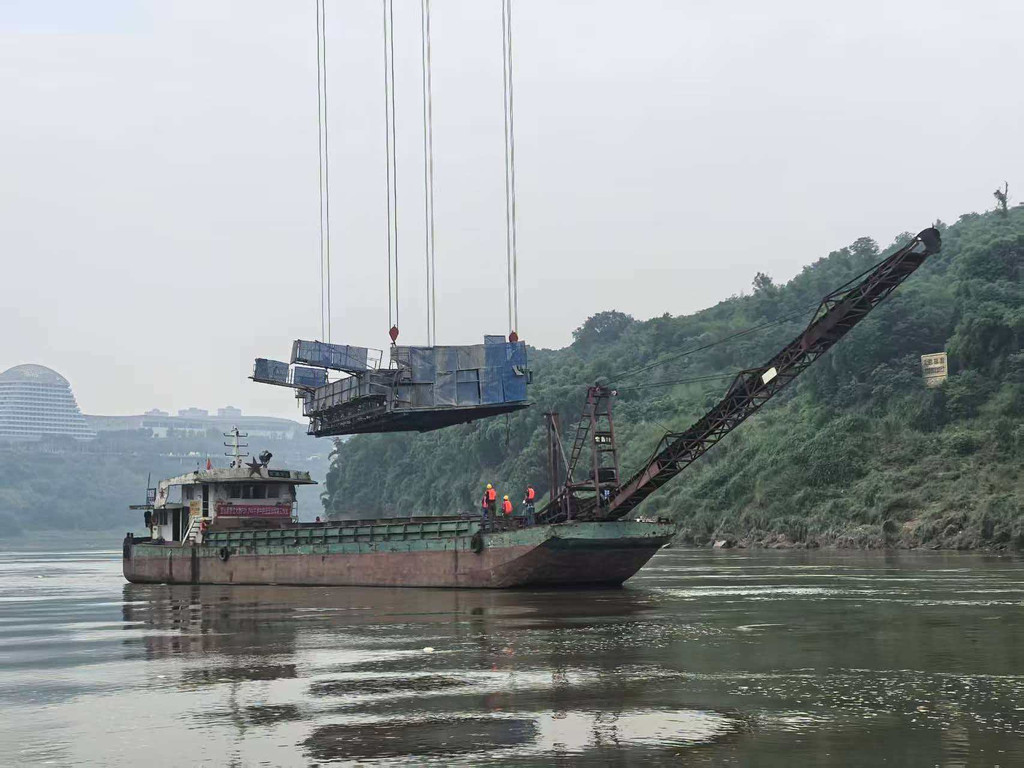
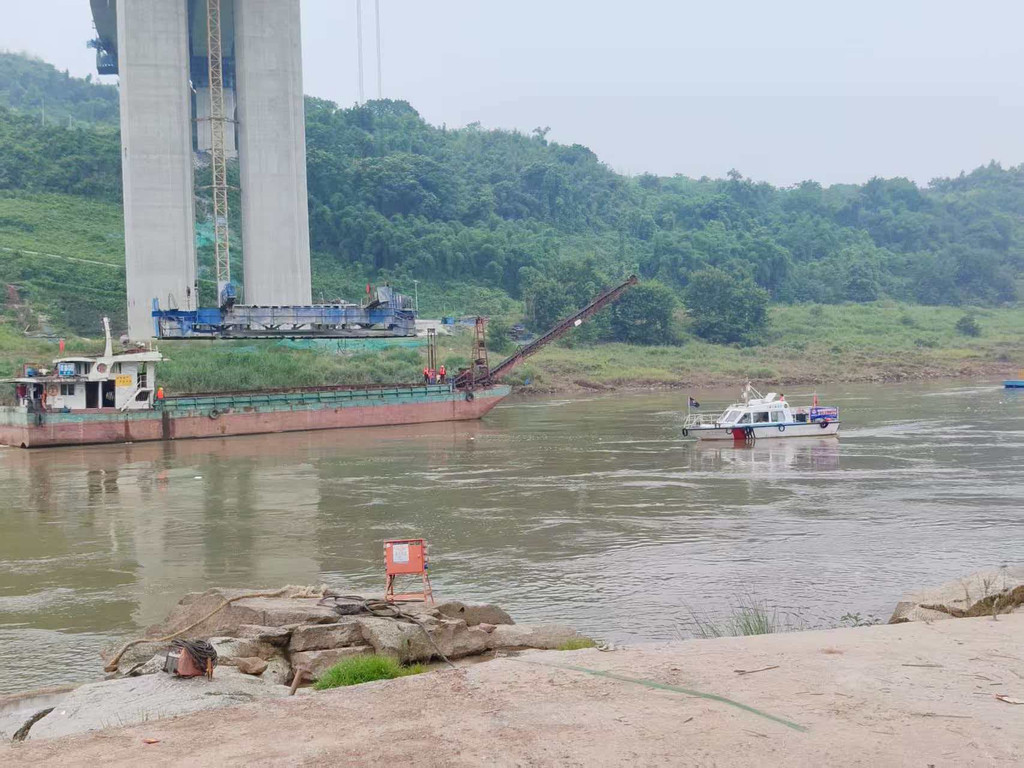
During the construction of removing the hanging baskets on the Baoshan Jialing River Bridge, passing vessels should be cautious.
On June 6, construction crews began removing the hanging baskets from the Baoshan Jialing River Bridge. This project is a key part of Chongqing’s fifth expressway link, starting from the Shilong Village west bridge interchange in the Caijia area, crossing the Jialing River, and ending at the Chunxuan interchange in the Yuelai area.
The removal of the hanging baskets is highly sensitive to external conditions such as water levels and environmental temperatures. During the flood season, combined with the impact of water discharge from the Caojie Power Station, safety control during construction is challenging.
To address the site conditions, the safety control water level for construction was precisely defined. A round-the-clock dynamic monitoring system for water levels and temperatures was established. Real-time data on water conditions was collected from relevant departments, including water affairs and the power station. Regular inspections of the construction trestle and adjacent water areas were conducted to dynamically assess safety risks. If water levels exceed limits or temperature differences become too great, construction is immediately halted to avoid hazards, preventing safety risks from the start.
To balance construction safety with navigable waterway clearance, the maritime department activated a round-the-clock dynamic navigation control mode during the hanging basket removal. Dedicated 24-hour monitoring points were set up at upstream and downstream navigation maintenance stations and temporary berthing areas near the bridge. Using on-site announcements and real-time updates via group messaging, passing vessels were guided to navigate properly and stay clear of the construction zone.
Additionally, enforcement vessels conducted regular patrols, marking a designated construction area and barring unauthorized vessels from entering to ensure the waterway remained clear.
The hanging basket removal operation is scheduled to take 15 days. On-site inspections will be continuously strengthened to ensure the safe removal of the hanging baskets and maintain the safety and order of the main Jialing River shipping channel.
Baoshan Jialing River Bridge
The Baoshan Jialing River Bridge is a significant cable-stayed bridge located in Chongqing, China, spanning the Jialing River. Completed in 2015, it was built to alleviate traffic congestion in the Baoshan area and improve connectivity between the city’s districts. The bridge features a distinctive design with a single tower and is an important part of Chongqing’s modern transportation infrastructure.
Caijia area
The Caijia area, located in the Chongqing municipality of China, is a rapidly developing urban district historically known for its agricultural roots and rural character. Its modern transformation began in the early 21st century as part of Chongqing’s expansion, with significant infrastructure projects like the Caijia Bridge and subway lines turning it into a growing residential and commercial hub. Today, it blends remnants of its pastoral past with new high-rise developments and green spaces.
Jialing River
The Jialing River is a major tributary of the Yangtze River in southwestern China, flowing through the provinces of Gansu, Shaanxi, and Sichuan before joining the Yangtze at Chongqing. Historically, it served as a vital transportation route and cultural corridor, facilitating trade and migration since ancient times, and its banks are dotted with historic towns and sites. The river’s name, meaning “good tomb,” is derived from a legend about a royal concubine buried along its banks during the Qin dynasty.
Yuelai area
The Yuelai area, located in the Liangjiang New District of Chongqing, China, has developed from a historically rural and industrial zone into a modern, eco-friendly urban hub. It is known for hosting the Yuelai International Convention Center and the Yuelai Smart City, which emphasize innovation and sustainable development. The area’s transformation reflects Chongqing’s rapid urbanization and its strategic focus on becoming a center for international events and smart technology.
Caojie Power Station
Caojie Power Station is a major hydroelectric facility located on the Jialing River in Chongqing, China, primarily built for flood control, irrigation, and electricity generation. Construction began in 2010 and was completed in 2016, making it one of the largest hydropower stations on the Jialing River. The station plays a crucial role in supporting regional energy needs and managing water resources in the area.