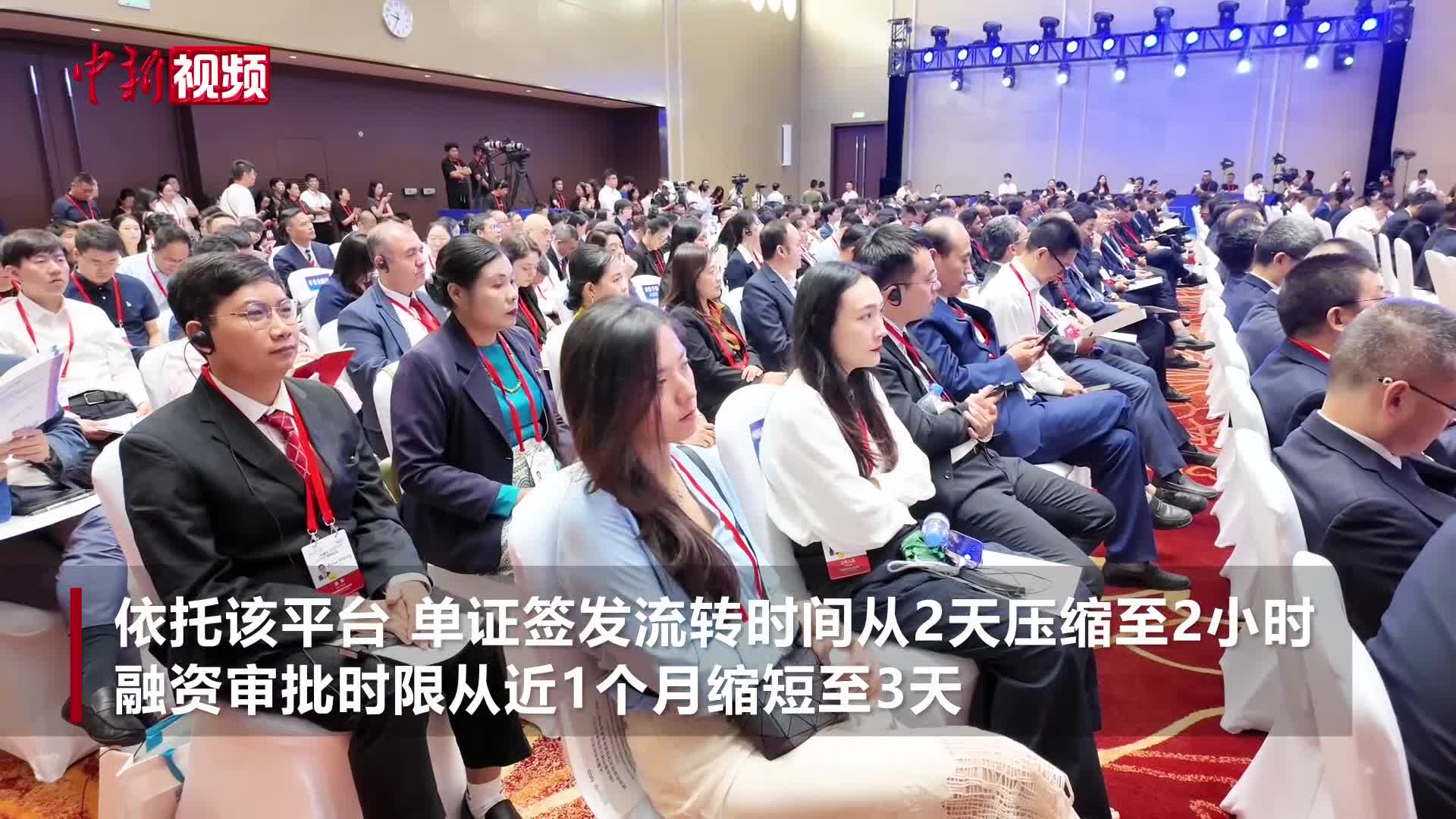
On June 1, the Office of Port and Logistics of the Chongqing Municipal Government released a public service platform for negotiable cargo documents in Chongqing.
On the same day, an event titled “From Chongqing to Accra: The United Nations Convention on Negotiable Cargo Documents Shaping a New Vision for Inclusive Global Trade” was held in Chongqing, co-hosted by the Chongqing Municipal Government and the United Nations Commission on International Trade Law. Approximately 300 Chinese and foreign guests attended the event.
A negotiable cargo document (NCD) is a new type of negotiable document of title representing goods in transit. It can be in paper or electronic form and is applicable to single-mode transport such as water, road, rail, and air, as well as multimodal transport, and can be used for all types of goods.
The core content of the United Nations Convention on Negotiable Cargo Documents includes: creating a “negotiable cargo document” applicable to various cross-border transport modes such as road, rail, air, and maritime shipping, establishing a unified legal framework for single-mode and multimodal transport; clarifying that transport documents issued under the convention have the nature of documents of title, providing strong legal protection for the transfer and financing of goods in transit in cross-border trade; and accommodating electronic document forms to support the digital transformation of global trade.
Relying on this platform, the time for document issuance and transfer has been reduced from two days to two hours, and the financing approval period has been shortened from nearly one month to three days. Data cannot be tampered with throughout the process, preventing risks of duplicate pledges from the source. Cargo release operations can also be completed on the same day, significantly improving cargo turnover efficiency.
Through the release of this platform, the practical exploration results of the full-chain closed-loop operation of NCD digitalization were demonstrated to participating enterprises and representatives from various countries, verifying the feasibility and effectiveness of the core systems of the NCD convention in cross-border trade, and providing a tangible and testable practical example for countries to join the United Nations Convention on Negotiable Cargo Documents.