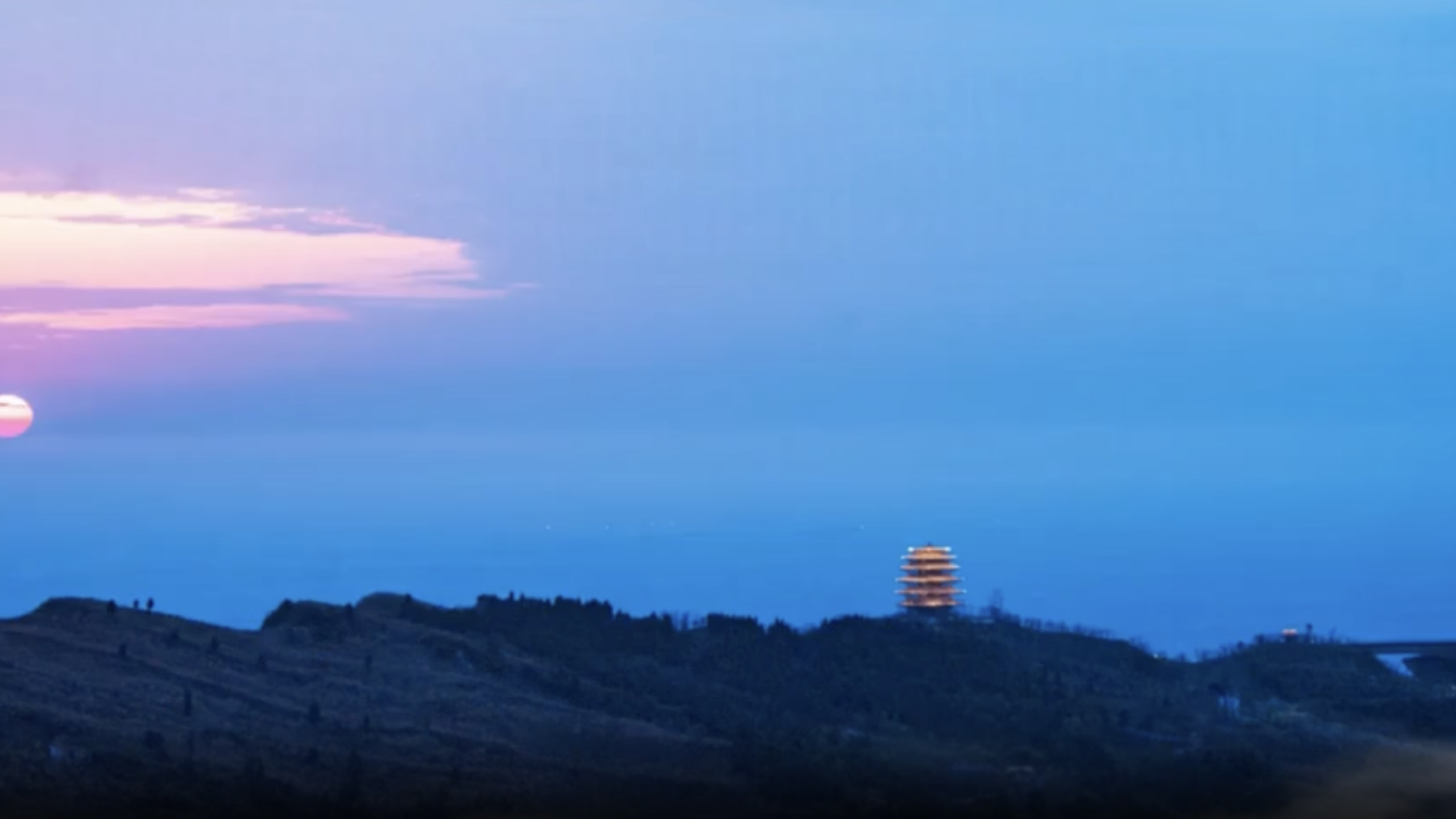
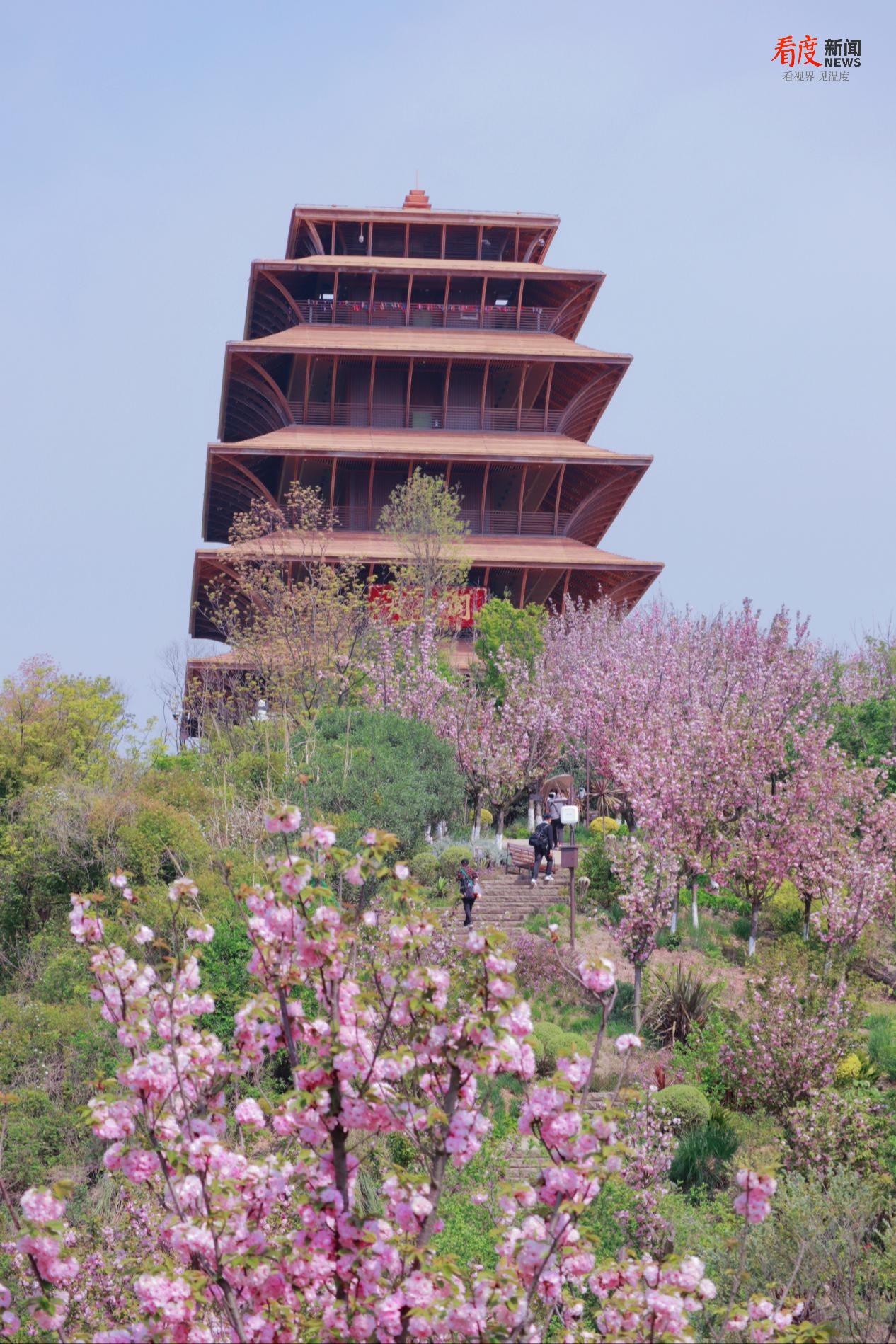
Video|A 3.2-kilometer free hiking trail in Tianfu offers a journey filled with wild charm and blooming flowers.
As Chengdu’s first spring holiday approaches, the popular suburban flower-viewing and hiking destination—Chengdu Longquan Mountain Danjingtai Scenic Area—has entered its annual peak blooming season in early March. Every year from March to April, several types of flowers such as crabapple, peach blossoms, cherry blossoms, acacia, and snow willow bloom in succession, offering citizens and visitors a visual feast of spring.
New Floral Displays: Blooming Schedule
Acacia Flowers: January to Early March
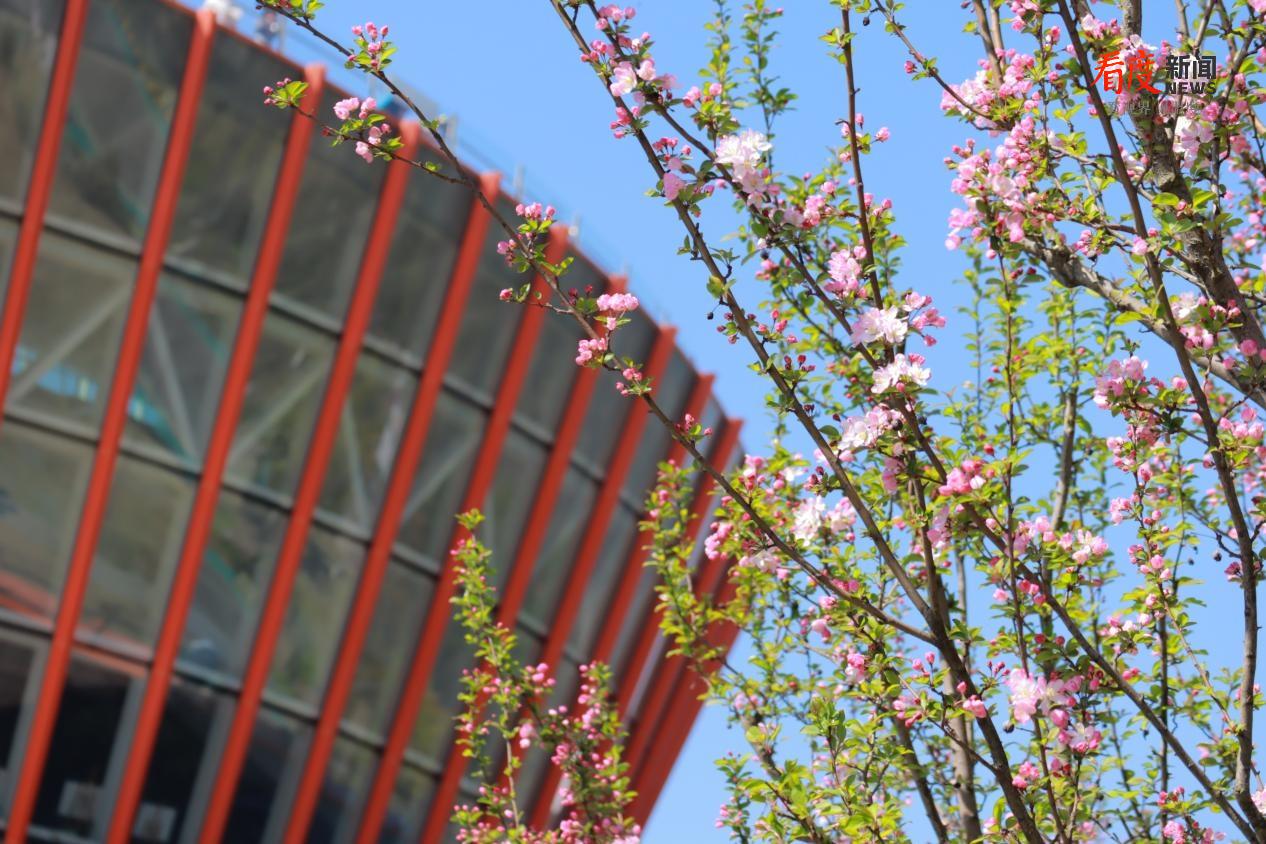
From January to early March each year, silver-leaf acacias are the first to bloom along the roads near the scenic area’s main building. Their fluffy yellow spherical flowers create a warm and bright scene against the backdrop of Danjingtai’s iconic metallic orange spiral structure, making for excellent photographs.
Crabapple & Peach Blossoms: March
Currently, thousands of crabapple trees (including weeping crabapple and Malus micromalus) and the famous Longquan Mountain peach blossoms are at their peak. The best viewing spots are concentrated below the Danjingtai main building, along the stone-paved path leading to the “Sky Mirror,” and around the entrance to the glass walkway.
Cherry Blossoms: March to Early April
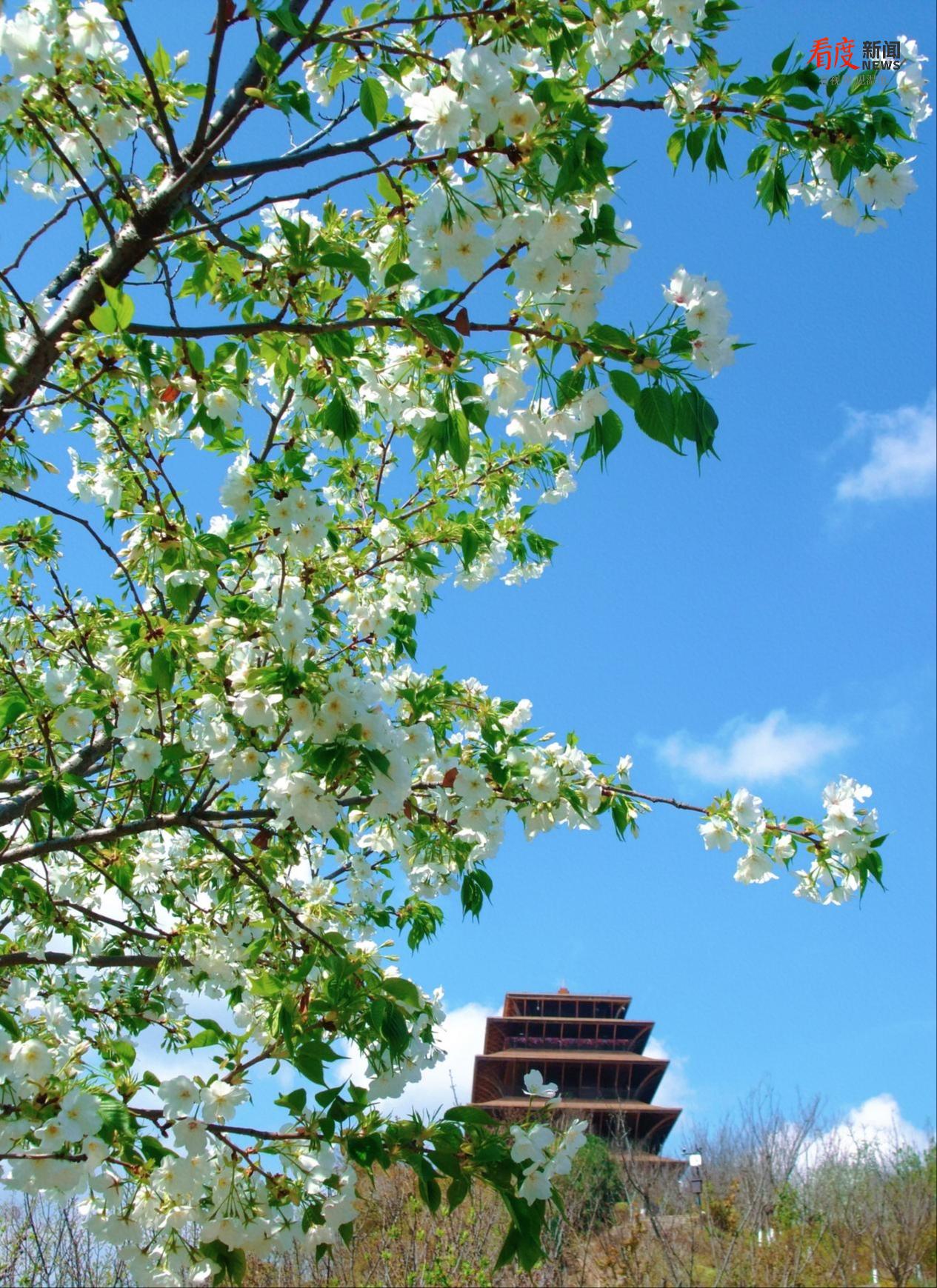
Cherry blossoms are one of the main flower varieties in the scenic area, primarily distributed along the route from Danjing Pavilion to Danjing Tower. Some cherry blossoms have already begun to bloom, displaying white petals. The peak blooming period is expected from mid-to-late March to early April. During this time, the path from Danjing Pavilion to Danjing Tower will be covered in pink cherry blossoms, forming an unmissable “Cherry Blossom Avenue” of spring.
Featured Route: Spring Flower-Viewing Hiking Tour
Following the launch of the hiking “Horse Route” in the Longquan Mountain Peach Blossom Hometown Scenic Area, Danjingtai has introduced a 3.2-kilometer flower-viewing hiking trail that combines sightseeing with fitness, allowing visitors to experience the beauty of the Tianfu countryside up close. With an elevation gain of 150 meters and a hiking duration of approximately 1-2 hours, this route not only covers key landmarks like the “Eye of the City,” Danjing Tower, and the glass walkway in one go but also connects the area’s prime flower-viewing spots. It is a light hiking trail suitable for all ages.
Interactive Experience: “Five Dragons Collect Blessings” Adds Fun
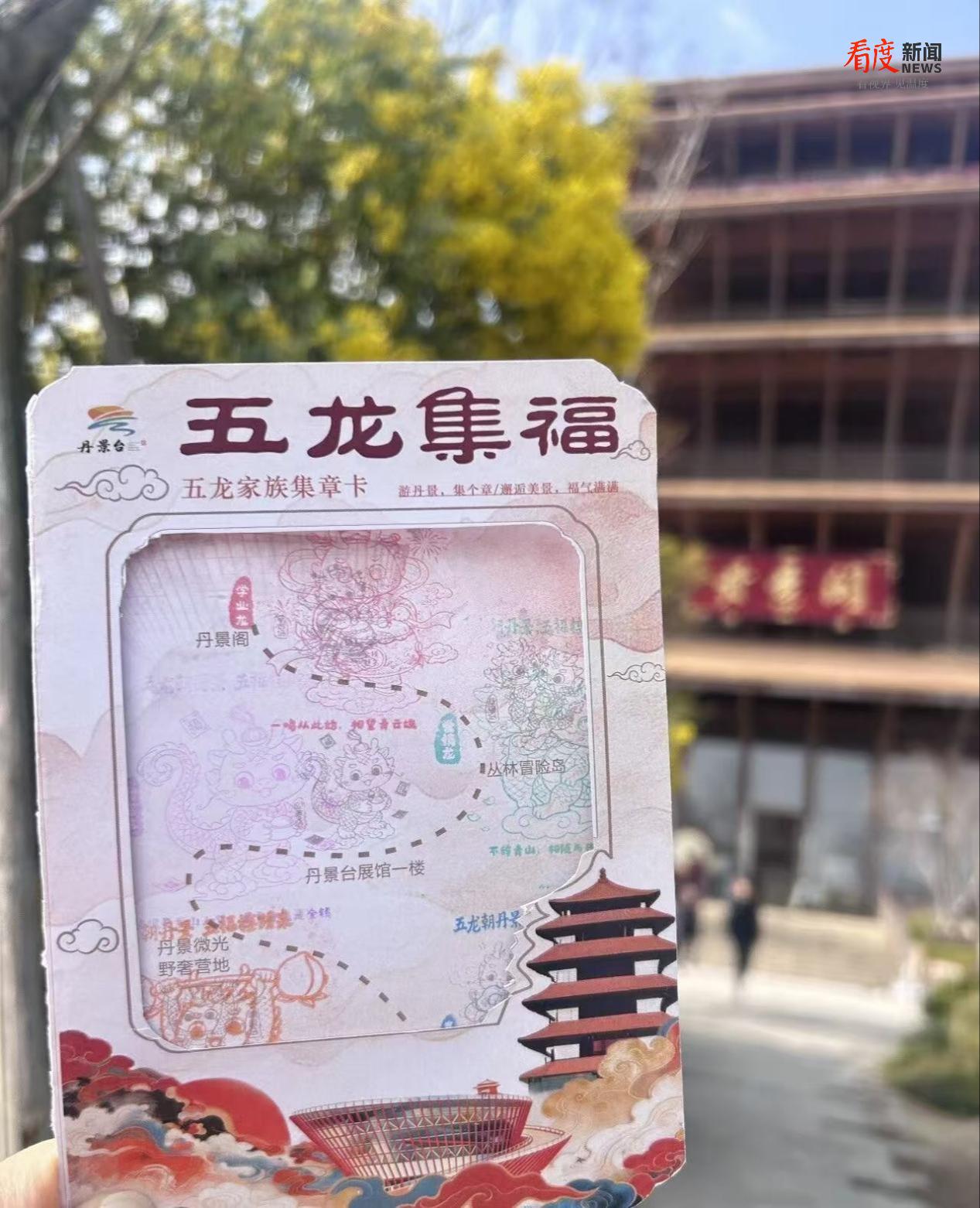
To enhance the enjoyment of flower-viewing and hiking, the scenic area has launched the “Five Dragons Collect Blessings” stamp collection activity. Until April 6, 2026, visitors can obtain a free stamp card on the first floor of the Danjingtai Exhibition Hall. By collecting the five dragon stamps representing different “blessings” at specific locations in the scenic area, they can exchange the card for a random cultural and creative product
Chengdu Longquan Mountain Danjingtai Scenic Area
The Chengdu Longquan Mountain Danjingtai Scenic Area is a scenic mountain retreat located near Chengdu, Sichuan, renowned for its lush forests, peach blossoms, and panoramic views. Historically, the area has been associated with Taoist culture, and the Danjingtai (Elixir Platform) itself is traditionally linked to ancient practices of alchemy and cultivation. Today, it serves as a popular destination for hiking, sightseeing, and experiencing local folklore.
Danjingtai
Danjingtai, or the “Cinnabar Terrace,” is a historic Taoist site located on Longhu Mountain in Jiangxi Province, China. It is traditionally regarded as the place where the founder of Taoism, Zhang Daoling, refined elixirs and ascended to immortality during the Eastern Han Dynasty (c. 2nd century CE). Today, it remains a significant pilgrimage destination and a key part of the mountain’s UNESCO Global Geopark, symbolizing the deep connection between Taoist culture and the region’s natural landscape.
Danjing Pavilion
The Danjing Pavilion, located in the city of Yangzhou, China, is a historic structure originally built during the Qing Dynasty (1644-1912) as part of a private garden. It is most famous for being the place where the Qing Emperor Qianlong enjoyed watching operas during his southern tours, and it remains a celebrated example of classical Chinese garden architecture and theatrical culture.
Danjing Tower
Danjing Tower, also known as the Danjing Pavilion, is a historic landmark located in the city of Kaifeng, China. It was originally built during the Northern Song Dynasty (around 1049 AD) as part of a royal garden and is famous for its association with the legendary physician Bian Que. Today, it stands as a symbol of traditional Chinese medicine and Kaifeng’s rich cultural heritage.
Sky Mirror
“Sky Mirror” is a natural rock formation located on the coast of Beris, Yan, in Kedah, Malaysia. It is a large, flat sandbar that emerges during low tide, creating a stunning reflective surface that mirrors the sky, similar to the Salar de Uyuni in Bolivia. While it has no ancient historical structures, it gained significant popularity as a tourist destination after being promoted by local guides and photographers around 2015, showcasing Malaysia’s unique coastal geography.
Eye of the City
“Eye of the City” is a modern public art installation in Shanghai, China, officially known as the “Eye of the Shanghai International Financial Center.” Completed in 2018, it is a large, circular steel structure suspended between skyscrapers, symbolizing a portal or lens viewing the city’s rapid development. Its history is tied to the Lujiazui financial district’s transformation, representing Shanghai’s futuristic vision and status as a global metropolis.
Danjingtai Exhibition Hall
The Danjingtai Exhibition Hall is a modern museum located in the ancient city of Xi’an, China. It is built upon the archaeological site of the Daming Palace, the grand imperial palace complex of the Tang Dynasty, which served as the political center of the empire for over 200 years. The hall primarily exhibits artifacts and models to showcase the history, architecture, and cultural significance of this UNESCO World Heritage site.
Longquan Mountain Peach Blossom Hometown Scenic Area
Longquan Mountain Peach Blossom Hometown Scenic Area is a renowned cultural and natural attraction in Chengdu, Sichuan, celebrated for its vast, picturesque peach blossom landscapes each spring. Historically, the area has been associated with peach cultivation since ancient times and is deeply linked to local folklore and the poetic tradition of appreciating blossoms. Today, it serves as a major tourist destination that combines agricultural heritage with scenic beauty.