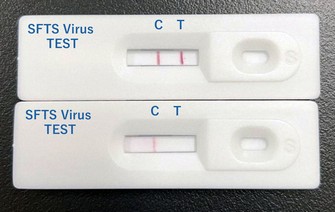
Researchers are developing a rapid diagnostic kit for severe fever with thrombocytopenia syndrome (SFTS), a deadly tick-borne viral disease that a project leader warned could spread nationwide in Japan.
The study, being carried out in collaboration with multiple institutions, aims to create a test kit capable of delivering same-day results at medical facilities, potentially shortening the time needed to diagnose the disease.
SFTS has a mortality rate of between 10 and 30 percent and can rapidly worsen after symptoms appear, making early diagnosis critical. The disease is mainly spread through the bite of ticks carrying the virus and causes symptoms including fever and vomiting.
According to health security sources, cases have been reported in a number of Asian countries. In Japan, infections have been confirmed since 2013, mainly in western parts of the country.
More than 100 cases have been reported annually in recent years, with elderly people accounting for many of the infections. In 2025, the first reported cases were also recorded in the prefectures of Gifu and Ibaraki as well as Hokkaido, suggesting the geographic spread of the disease.
At present, the primary method used to diagnose SFTS is PCR testing. But the process can take time.
According to a public health institute, samples from suspected patients must first be sent from medical institutions for testing, and the examination itself can take from half a day to a full day to complete.
While the antiviral drug Avigan is available as a treatment option, doctors say it needs to be administered early for maximum effectiveness.
To speed up the process, researchers are developing a compact diagnostic kit using serum, a component of blood, as the testing sample.
The project leader said the kit uses an immunochromatographic method that detects reactions between antigens and antibodies.
Like pregnancy or influenza tests, results would be determined visually after a sample is applied to the device, allowing medical workers to quickly identify positive or negative cases.
Researchers are currently investigating antibodies that react sensitively only to SFTS antigens. Multiple candidate antibodies have already been obtained, and prototype kits have been produced.
The project brings together institutions with different areas of expertise. One institution provides clinical and epidemiological knowledge, while another contributes antibody development technology.
The goal is to create a diagnostic kit that is quick, convenient and highly sensitive.
An official from a prefecture said doctors currently face significant hurdles when they suspect an SFTS infection because testing is not readily available at ordinary medical facilities.
If rapid testing becomes more accessible, patients could receive a diagnosis more quickly without undergoing multiple tests for other suspected illnesses, the official said.
SFTS is also regarded as a growing concern because the virus infects animals including cats and can spread from them to owners and veterinarians.
The institution leading the research describes the illness as a “common, deadly zoonotic disease,” and researchers warn that the area affected by the virus is continuing to expand.
“It’s only a matter of time before it spreads nationwide,” said the project leader.
“We have secured most of the necessary materials and are now in the practical application research stage,” the project leader said. “We hope to complete development as quickly as possible, within one to two years.”
The institution is also planning to develop a vaccine to prevent SFTS infections. The project leader said he hopes the efforts in both diagnosis and prevention will help reduce deaths caused by the disease.
Gifu
Ibaraki
Gifu
Ibaraki
Hokkaido
Related news

2026/27 Season Membership (Annual Ticket) Applications Now Open
The Tokyo Metropolitan Government will hold a joint consultation meeting for its middle schools and other institutions for the 2026 academic year.

As school absenteeism rises, Japanese fathers seek support at izakaya gatherings.
Yoshida, the new mayor of Nerima Ward, declares art museum reconstruction “back to square one” — the strategy that won the election.