School bullying trauma continues to affect victims decades later, a survey finds.
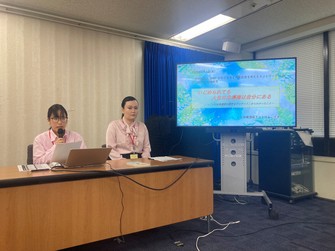
Natsumi Chikada, left, head of the group “Ijime kouisho.com,” announces the survey results in Tokyo’s Chiyoda Ward on June 4, 2026.
TOKYO — The impact of bullying extends far beyond school years and continues to significantly affect people’s lives even after graduation, according to a survey by a group in Japan led by a bullying survivor.
Nearly 40% of respondents in their 40s and 50s reported that symptoms of “bullying aftereffects,” such as flashbacks of past experiences and a deep distrust of others, have not improved.
The group named “Ijime kouisho.com” analyzed 252 online responses collected between May 2021 and March 2026. Of all respondents, 98% identified “school” as the place where they experienced bullying, with multiple responses permitted. In addition, 50% reported that the bullying lasted five years or longer.
Regarding specific symptoms of “bullying aftereffects” that persist even after harassment has ended, with multiple answers allowed, 84% of respondents cited low self-esteem, 77% reported flashbacks or nightmares, and another 77% reported they suffered from delusional feelings that others were speaking ill of them. By age group, 37% of respondents in their 40s and 39% in their 50s reported their symptoms had “not improved,” indicating that aftereffects persisted long after graduation.
Meanwhile, more than half said they did not receive support from family or people around them at the time when they were experiencing bullying. Of those who received help from both family members and others, 76% said their symptoms improved, compared with 50% among those who did not, showing a significant difference.
The group’s head, Natsumi Chikada, 32, said at a news conference, “Even after the bullying ends, the suffering of victims does not. I hope awareness of bullying aftereffects will grow so that people around victims can be more considerate.”
Tokyo
Tokyo is the bustling capital of Japan, blending ultramodern skyscrapers with historic temples like the Senso-ji. Originally a small fishing village named Edo, it became the political heart of Japan in 1603 under the Tokugawa shogunate and was renamed Tokyo (“Eastern Capital”) when the emperor moved there in 1868. Today, it stands as a global hub for culture, technology, and commerce, while still preserving its rich heritage.
Chiyoda Ward
Chiyoda Ward is the political and administrative heart of Tokyo, Japan, housing the Imperial Palace, the National Diet building, and the prime minister’s office. Historically, it was the site of Edo Castle, the seat of the Tokugawa shogunate during the Edo period, and became the center of modern Japan after the Meiji Restoration in 1868. Today, it blends historic landmarks like Yasukuni Shrine with business districts such as Marunouchi and Otemachi.
Tokyo
Tokyo is the bustling capital of Japan, blending centuries-old tradition with cutting-edge modernity. Originally a small fishing village named Edo, it rose to prominence in the early 17th century when it became the seat of the Tokugawa shogunate, and was renamed Tokyo (“Eastern Capital”) after the Meiji Restoration in 1868. Today, it is a global hub for culture, technology, and cuisine, home to historic landmarks like the Imperial Palace alongside neon-lit districts like Shibuya and Shinjuku.
Chiyoda Ward
Chiyoda Ward
Tokyo
Tokyo is Japan’s bustling capital and one of the world’s most populous metropolitan areas. Originally a small fishing village named Edo, it became the political center of Japan in the early 17th century under the Tokugawa shogunate, and was renamed Tokyo (“Eastern Capital”) in 1868 after the Meiji Restoration. Today, it is a global hub for technology, culture, and finance, blending historic landmarks like the Imperial Palace with cutting-edge districts such as Shibuya and Shinjuku.
Chiyoda Ward
Chiyoda Ward is the political and administrative heart of Tokyo, Japan, housing the Imperial Palace (the primary residence of the Emperor) and the National Diet Building (the parliament). Historically, the area was the site of Edo Castle, the seat of the Tokugawa shogunate during the Edo period, which later became the Imperial Palace after the Meiji Restoration. Today, it serves as a major center for government, business, and culture, blending historic landmarks with modern skyscrapers.
Senso-ji
Senso-ji is Tokyo’s oldest and most famous Buddhist temple, located in the Asakusa district. According to legend, it was founded in 628 AD after two fishermen discovered a statue of Kannon, the goddess of mercy, in the Sumida River. The temple has been rebuilt several times over the centuries, most notably after being destroyed during World War II, and today it remains a vibrant cultural and religious landmark.
Imperial Palace
The Imperial Palace, located in the heart of Tokyo, Japan, is the primary residence of the Emperor of Japan. Built on the site of the former Edo Castle, which served as the shogun’s seat of power during the Edo period, the palace was reconstructed after being destroyed in World War II. Today, the palace and its beautiful East Gardens are open to the public for guided tours, offering a glimpse into Japan’s imperial history and architecture.
National Diet building
The National Diet Building in Tokyo is the seat of Japan’s bicameral legislature, completed in 1936 after 16 years of construction. Its distinctive pyramidal tower and neoclassical design were chosen through a competition, symbolizing Japan’s modern parliamentary democracy established in the late 19th century. The building houses the House of Representatives and the House of Councillors, serving as the center of Japanese political decision-making.
Edo Castle
Edo Castle, located in present-day Tokyo, was the residence of the Tokugawa shoguns during the Edo period (1603–1868) and served as the political center of Japan. Originally built in 1457 by Ōta Dōkan, it was vastly expanded by the Tokugawa shogunate, becoming one of the largest castles in the world. After the Meiji Restoration, the castle grounds were transformed into the Imperial Palace, which remains the main residence of the Emperor of Japan today.
Yasukuni Shrine
Yasukuni Shrine is a Shinto shrine in Tokyo, founded in 1869 by Emperor Meiji to honor the souls of those who died in service to Japan, particularly in wars. It has been a source of controversy because it also enshrines Class-A war criminals from World War II, leading to international criticism, especially from China and South Korea. The shrine remains a symbol of Japan’s complex relationship with its wartime past and a site of annual political visits that spark diplomatic tensions.
Marunouchi
Marunouchi is a major business and commercial district in Tokyo, Japan, located between Tokyo Station and the Imperial Palace. Historically, it was the site of the daimyo (feudal lord) mansions during the Edo period, but after the Meiji Restoration, the area was redeveloped into a modern financial hub, now known for its iconic skyscrapers, luxury shopping, and corporate headquarters.