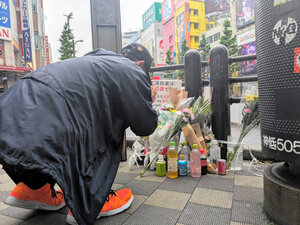
It has been 18 years since the indiscriminate killing spree in Tokyo’s pedestrian paradise, which left seven people dead and ten others injured. Under drizzling rain, many people visited the intersection where the incident occurred, offering flowers and drinks in memory of the victims.
The incident took place around 12:30 PM on June 8, 2008. Tomohiro Kato, then 25, drove a truck into the Sunday pedestrian zone and stabbed pedestrians one after another with a knife. Kato’s death sentence was finalized in February 2015, and he was executed in July 2022.
“I came to see you after a long time.”
On this day, Shigeru Akiyama, a 48-year-old office worker, visited the scene for the first time in three years. He placed flowers on the sidewalk, closed his eyes, and quietly joined his hands in prayer.
I was afraid to come to Akihabara
Naoki Miyamoto, who was 31 at the time of his death, was a friend from vocational school, and they even worked together for a while after graduation. In their student days, they often gathered at a mutual friend’s home to play video games. “He was good at games and also did well in school; he was excellent.”
After the incident, Akiyama learned from his friend’s wife that Miyamoto had been involved. “I couldn’t believe it could happen,” he said, finding it hard to accept the reality at first. It took time to come to terms with it. “I was always scared to come to Akihabara.” It was three years after the incident that he first visited the scene.
Even when talking with colleagues at work, some people now do not know about the incident. “If the memory fades, I would feel sorry for Miyamoto,” he said, so he posts about the incident on social media every year around this time. “Even after 18 years, the sadness hasn’t changed,” Akiyama said.
Toshiaki Kawauchi, a 47-year-old office worker visiting Tokyo for sightseeing, also prayed at the scene. “Why did innocent people have to be attacked for such selfish reasons? We must always remember this tragic event,” he said.
Tokyo’s pedestrian paradise
Tokyo’s “pedestrian paradise” refers to the car-free zones that appear on select streets and weekends, most famously in areas like Ginza and Shinjuku. This practice began in the 1970s as a way to reduce traffic congestion and pollution, while also promoting safer, more leisurely shopping and strolling. Today, these temporary pedestrian zones offer a vibrant glimpse into Tokyo’s urban culture, where people can enjoy street performances, outdoor cafes, and a break from the city’s usual bustle.
Akihabara
Akihabara, also known as “Electric Town,” is a vibrant district in Tokyo, Japan, famous for its concentration of electronics shops, anime, manga, and otaku culture. Originally a hub for black-market radio parts after World War II, it evolved into a major retail center for consumer electronics and later became a global mecca for gaming and pop culture enthusiasts. Today, Akihabara is a unique blend of high-tech stores, themed cafes, and hobby shops, reflecting Japan’s technological and cultural innovations.
Tokyo’s pedestrian paradise
Tokyo’s pedestrian paradise refers to the car-free zones that appear in popular districts like Ginza, Shinjuku, and Asakusa on weekends or holidays, where streets are closed to traffic and opened to walkers. This tradition began in the 1970s as “Pedestrian Heaven” (Hokoten) to reduce traffic congestion and pollution
Tokyo’s pedestrian paradise
Tokyo’s pedestrian paradise refers to the car-free zones in areas like Ginza and Akihabara, which are closed to traffic on weekends and holidays to create vibrant, walkable public spaces. This tradition began in the 1970s as part of urban planning efforts to reduce congestion and promote safer, more enjoyable city life. Today, these pedestrian paradises host street performers, pop-up shops, and crowds of locals and tourists, blending modern leisure with Tokyo’s historic role as a bustling commercial hub.
Akihabara
Akihabara, located in Tokyo, Japan, is a world-famous district known as the center of otaku culture, electronics, and anime. Originally a black market for radio parts after World War II, it evolved into a bustling hub for consumer electronics in the 1950s and later embraced gaming, manga, and pop culture. Today, Akihabara is a vibrant destination where visitors can explore multi-story shops, themed cafés, and arcades, blending its tech history with modern subculture.
Ginza
Ginza is a famous upscale shopping and entertainment district in Tokyo, Japan, known for its luxury boutiques, department stores, and fine dining. Originally a swampy area, it became the site of a silver-coin mint in the early 17th century, from which its name derives. After a devastating fire in 1872, Ginza was rebuilt as a modern, Western-style brick district, solidifying its reputation as a symbol of Japanese modernization and prosperity.
Shinjuku
Shinjuku is a major commercial and administrative hub in Tokyo, Japan, known for its skyscrapers, entertainment districts, and the bustling Shinjuku Station, one of the world’s busiest railway stations. Historically, it developed from a post town on the Kōshū Kaidō road during the Edo period and later became a vibrant center after the 1923 Great Kantō earthquake, which spurred its growth. Today, it blends modern high-rise buildings with traditional areas like the Shinjuku Gyoen National Garden, reflecting its dynamic evolution.
Asakusa
Asakusa is a historic district in Tokyo, best known for its vibrant Sensō-ji temple, Tokyo’s oldest Buddhist temple, originally built in the 7th century. The area flourished as a lively entertainment hub during the Edo period, centered around the bustling Nakamise shopping street leading to the temple. Despite being largely rebuilt after World War II, Asakusa retains a nostalgic, traditional atmosphere that attracts millions of visitors each year.