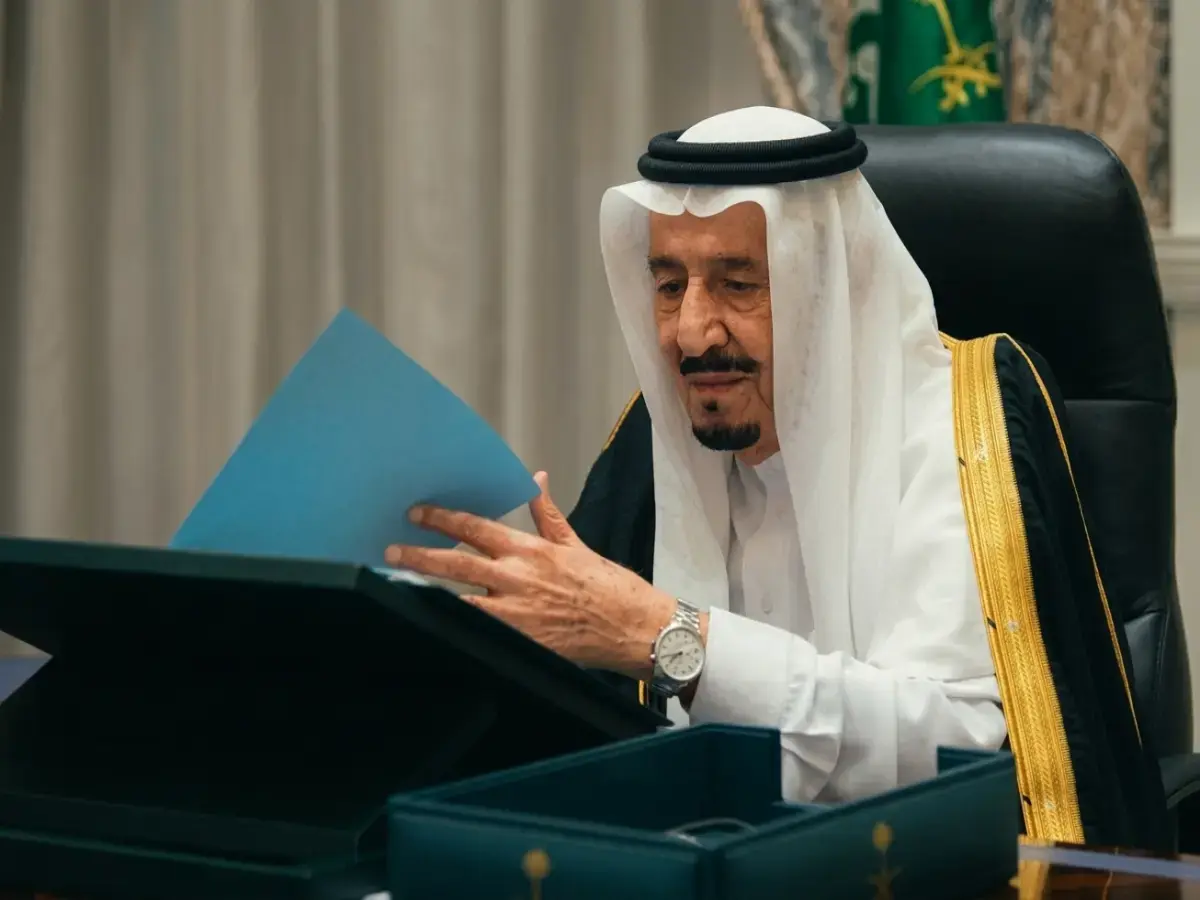
By a single royal decree, 212 judges were promoted and appointed across various levels of the judiciary, in a step described as the largest renewal of the Saudi judicial system.
The Custodian of the Two Holy Mosques, King Salman bin Abdulaziz Al Saud, issued this gracious decree as part of an ongoing series of support for the judiciary from the wise leadership.
The Minister of Justice and Acting President of the Supreme Judicial Council, Sheikh Dr. Walid bin Mohammed Al-Samaani, stated that this decree is an extension of the continuous support provided by the Custodian of the Two Holy Mosques and the Crown Prince and Prime Minister to the judiciary, emphasizing their commitment to enhancing its efficiency and improving the quality of its outcomes.
Dr. Al-Samaani added that the royal decree supports the development path of the judiciary, contributing to enhancing the efficiency of judicial performance, improving the quality of rulings, elevating the level of services provided, improving the user experience and satisfaction, and achieving prompt justice.
The Minister of Justice thanked the wise leadership for its ongoing support, asking God to grant success to the honorable judges in performing their duties to meet the aspirations of establishing justice.
Two Holy Mosques
“The Two Holy Mosques” refers to the Masjid al-Haram in Mecca and the Masjid al-Nabawi in Medina, the two holiest sites in Islam. Masjid al-Haram surrounds the Kaaba, which Muslims face during prayer, and has been a center of pilgrimage since the time of Prophet Abraham. Masjid al-Nabawi was built by the Prophet Muhammad in 622 CE and contains his tomb, serving as a key spiritual and historical landmark for Muslims worldwide.
Masjid al-Haram
Masjid al-Haram, also known as the Sacred Mosque, is the holiest site in Islam, located in Mecca, Saudi Arabia. It surrounds the Kaaba, which Muslims believe was built by the Prophet Abraham and his son Ishmael, and has been a center of pilgrimage for centuries. The mosque has undergone numerous expansions throughout Islamic history, most notably in recent decades to accommodate millions of worshippers during the annual Hajj pilgrimage.
Masjid al-Nabawi
Masjid al-Nabawi, or the Prophet’s Mosque, is one of the holiest sites in Islam, located in Medina, Saudi Arabia. It was originally built by the Prophet Muhammad in 622 CE, shortly after his migration (Hijrah) from Mecca, and it houses his tomb beneath the iconic Green Dome. Over the centuries, the mosque has been expanded and renovated by various Islamic rulers, becoming a major center for worship and pilgrimage.
Kaaba
The Kaaba is a sacred cube-shaped building located in the center of the Grand Mosque in Mecca, Saudi Arabia, and is considered the most holy site in Islam. According to Islamic tradition, it was originally built by the Prophet Abraham and his son Ishmael as a house of monotheistic worship. Today, Muslims around the world face the Kaaba during their daily prayers, and it is the focal point of the Hajj pilgrimage.
Mas
Masjid al-Haram
Masjid al-Haram, located in Mecca, Saudi Arabia, is the holiest site in Islam and surrounds the Kaaba, the direction of prayer for Muslims worldwide. Its history dates back to the time of Prophet Ibrahim (Abraham) and his son Isma’il, who are believed to have built the Kaaba, with the mosque expanding significantly over centuries, especially under Islamic rulers. It is the destination for the Hajj pilgrimage and daily prayers, drawing millions of worshippers each year.
Masjid al-Nabawi
Masjid al-Nabawi, also known as the Prophet’s Mosque, is one of the holiest sites in Islam, located in Medina, Saudi Arabia. It was originally built by the Prophet Muhammad himself in 622 CE, adjacent to his home, and has since undergone numerous expansions by various Islamic rulers. The mosque is revered as the burial place of the Prophet Muhammad, making it a major pilgrimage destination for Muslims worldwide.
Kaaba
The Kaaba is a cube-shaped building located in the center of the Grand Mosque in Mecca, Saudi Arabia, and is the most sacred site in Islam. According to Islamic tradition, it was originally built by the Prophet Abraham and his son Ishmael as a house of monotheistic worship, and it has been a focal point for pilgrimage long before the advent of Islam. Today, Muslims around the world face the Kaaba during their daily prayers, and it is the destination of the annual Hajj pilgrimage.