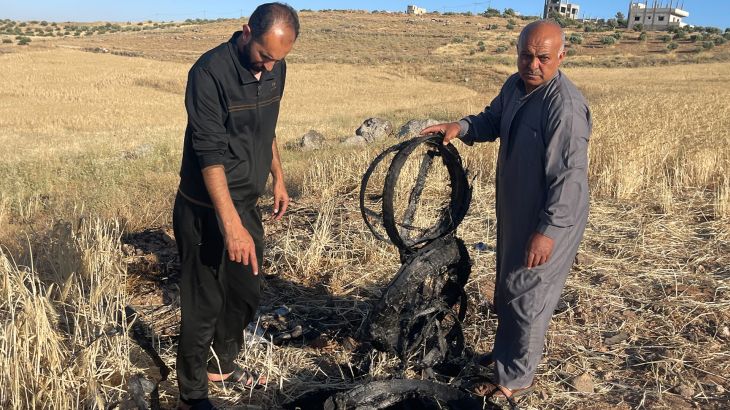
A Jordanian citizen, Amjad al-Limoun, did not expect that his moments of tending his sheep in the Fuqu’ district in the south would turn into a direct encounter with one of the repercussions of the ongoing war between America and Israel.

While he was watching his flock in the wheat fields, he spotted a burning object descending from the sky like a huge ball of fire, a scene that has been recurring in various parts of the country with the increasing fall of rocket shrapnel and debris resulting from the resumption of shelling between Tel Aviv and its adversaries, before its halt was announced.

Al-Limoun said: “I saw it descending like a ball of fire, so I prayed to God that it would land safely and not harm anyone.” He added that the shrapnel fell on a piece of land he owns planted with wheat without causing any fire or injuries, even though the area sometimes witnesses wide fires due to causes much less dangerous than that, such as cigarette butts.

While residents were inspecting the impact site, security forces and the Royal Engineering Corps of the Jordanian Armed Forces arrived and imposed a security cordon around the area before transporting the fallen debris and ensuring the site was free of any hazards.
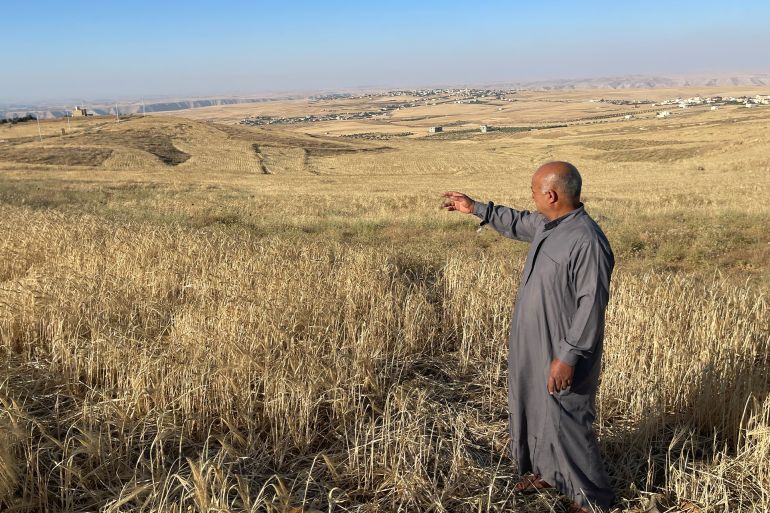
A Jordanian citizen inspects damage to his land after rocket debris fell on his property
A citizen inspects damage to his land after rocket debris fell on it

Similar Stories

Al-Limoun’s story is not unique in the country in recent weeks, as falling debris from rockets and drones has become a recurring scene in various parts of the kingdom with each escalation of the military confrontation between Iran and Israel.

On Sunday night, 6 pieces of shrapnel fell in different areas of Jordan without any human casualties, with damage limited to minor material damage to three homes, according to a Jordanian security source who preferred to remain anonymous.

In the Dhaniba area of the Ramtha district in the north of the country, specialized agencies continued their efforts to deal with rocket shrapnel that fell in the yard of a house, before its effects spread to several neighboring houses. Mohammed al-Saqqar, a resident of the area, said the sound of the fall was extremely loud, adding, “Almost all the windows of the houses shook from the intensity of the sound, but thank God there were no injuries.”

Al-Saqqar indicated that the fallen object remained burning for some time, suggesting it was a rocket fuel tank, noting that a number of citizens approached it and took souvenir photos despite repeated warnings from security authorities not to approach such objects.

Also, remnants of rocket shrapnel fell on Sunday morning on a house in the village of Umm Batma in the Muwaqqar district, causing material damage at the site. Witnesses confirmed that the incident did not result in any human injuries, and damage was limited to material losses.
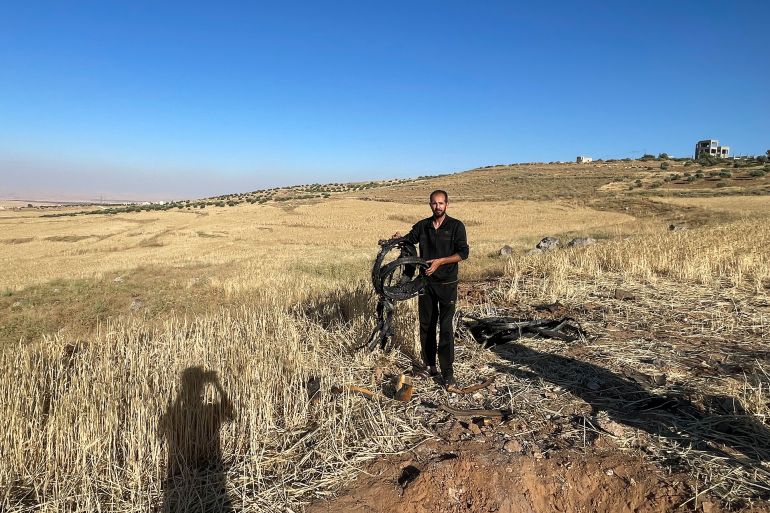
A Jordanian citizen inspects rocket debris that fell on his land

Interception and Downing

In the Aqaba governorate in southern Jordan, residents woke up on Monday night to the sound of two large explosions that shook the city, before it later became clear that the sounds were caused by the interception and downing of two drones that were on their way from somewhere towards the city of Eilat.

Citizen Mohammed al-Riyati said that small shrapnel scattered in a public street after the downing operation, adding that residents felt a state of anxiety upon hearing the two explosions due to their great intensity.

He explained: “Thank God no one was hurt, and the damage was very minor, but the sound of the explosion was huge and caused a state of fear among the residents,” noting that specialized agencies rushed to the site and dealt with the fallen shrapnel.

Official figures reveal the scale of the challenge faced by Jordan amid escalating regional tensions, before the American-Israeli-Iranian truce.


<h3 class="

Fuqu’ district

Fuqu’ District is a historic area located in the southwestern part of the West Bank, Palestine, known for its agricultural landscapes and ancient terraced hillsides. The district’s name is derived from a nearby village, and it has a long history of settlement dating back to the Canaanite and Roman periods. Today, it remains a rural area where traditional farming practices continue, reflecting its deep cultural and historical roots.

Dhaniba area

The Dhaniba area is a historically significant site in the Indian state of Odisha, known for its ancient rock-cut caves and Buddhist monastic remains dating back to the early centuries of the Common Era. It is believed to have been an important center for Buddhist learning and meditation, possibly linked to the Mahayana tradition, with inscriptions and sculptures that reflect its religious and cultural heritage. Today, Dhaniba stands as an archaeological treasure, offering insights into the region’s rich past under various dynasties, including the Kalinga rulers.

Ramtha district

Ramtha district, located in northern Jordan near the Syrian border, is historically significant as a key crossroads for trade and travel between the two countries. Its modern development accelerated in the 20th century, particularly after the establishment of the nearby King Hussein Bridge and its role as a transit hub during regional conflicts. Today, it is a vibrant area known for its agricultural production and cultural ties to the broader Levantine region.

Umm Batma

Umm Batma is a small village located in the Al Batinah Region of Oman, known for its traditional Omani architecture and agricultural heritage. Historically, it served as a modest settlement where locals engaged in farming and date palm cultivation, reflecting the region’s rural lifestyle. Today, it remains a quiet cultural site, offering visitors a glimpse into Oman’s historical village life and its enduring connection to the land.

Muwaqqar district

Muwaqqar district, located southeast of Amman in Jordan, is historically significant as a key area during the Umayyad period, featuring the ruins of an early Islamic desert palace known as Qasr al-Muwaqqar. This site was part of a network of hunting lodges and agricultural estates used by Umayyad caliphs, though it was largely destroyed by an earthquake in the 8th century. Today, the district is a primarily rural and residential area, with its archaeological remains offering insights into early Islamic architecture and desert life.

Aqaba governorate

The Aqaba Governorate, located in southern Jordan, is a key coastal region along the Red Sea, with its capital city of Aqaba serving as the country’s only seaport. Historically, the area has been a vital trade hub for millennia, dating back to the Edomites and later flourishing under Roman, Byzantine, and Islamic rule. Today, it is famous for its coral reefs, marine tourism, and as a gateway to the ancient Nabatean city of Petra.

Eilat

Eilat is a resort city located on the southern tip of Israel, along the Red Sea coast. Historically significant as a strategic port since biblical times (identified with the ancient city of Elath), it was revived as a modern settlement in the 1950s and has since become a major tourist destination known for its coral reefs, beaches, and year-round sunny climate. The city also serves as a gateway to the nearby Timna Valley and the Ramon Crater.