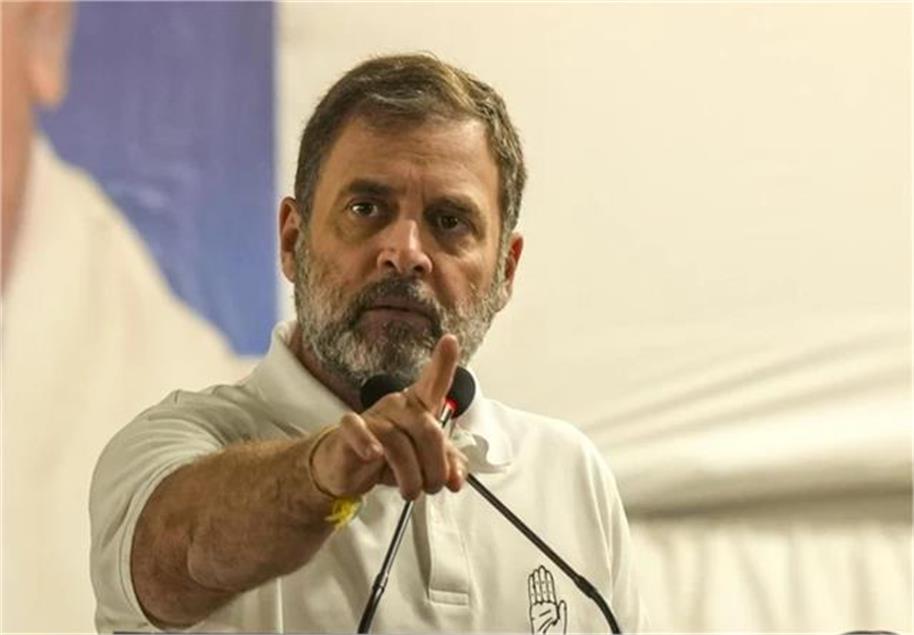
New Delhi During a meeting of the INDIA alliance, the Leader of the Opposition in the Lok Sabha made a major political claim regarding the central National Democratic Alliance government. He said that considering the current political circumstances, he believes the government led by the Prime Minister could fall within the next year. Following his statement, new discussions have begun in political circles.
Targeting Foreign Policy and the US Deal
During this important alliance meeting, the government’s international strategies were criticized. It was alleged that the government’s stance on the ongoing tense situation in the Middle East has been very ambiguous and wavering. Making serious accusations against the center, it was said that in the name of the deal with the United States, the government has ignored the interests of the country’s farmers.
In the meeting with alliance leaders, it was said that the central government is facing challenges on multiple fronts and differences among coalition partners are also visible on several issues. It was claimed that the opposition should unite and strongly raise public issues, as political equations are changing rapidly.
The INDIA alliance meeting also discussed future electoral strategy, the role of the opposition inside and outside Parliament, and political cooperation in various states. Opposition parties considered strategies to pressure the government on issues such as inflation, unemployment, agriculture, social justice, and the federal structure.
Meanwhile, other party leaders dismissed the statement, saying the central government is completely stable and enjoys clear public support. The ruling alliance says such statements by the opposition are merely political speculation and have no connection with ground realities.
Following this comment, political debate has intensified. Discussion of this statement is likely to continue in the coming months amid parliamentary sessions, state elections, and changing equations in national politics.
New Delhi
New Delhi is the capital of India, officially inaugurated in 1931 as the imperial capital of British India, replacing Calcutta. Designed by British architects Edwin Lutyens and Herbert Baker, the city features grand boulevards and iconic buildings like the Rashtrapati Bhavan and India Gate. Today, it stands as a vibrant metropolis blending historic colonial architecture with modern Indian culture and politics.
Lok Sabha
The Lok Sabha is the lower house of India’s bicameral Parliament, established under the Constitution of India in 1950. Its members are directly elected by the people for a five-year term, and it plays a central role in lawmaking and representing the will of the nation. The first session of the Lok Sabha convened in 1952, following India’s first general elections.
Middle East
The Middle East is a historically and culturally rich region spanning parts of Asia and Africa, often considered the cradle of civilization. It was home to ancient Mesopotamia, the birthplace of writing and law, and later became the heartland of the Islamic Golden Age, fostering major advances in science, mathematics, and philosophy. Today, it remains a diverse area with deep religious significance for Judaism, Christianity, and Islam, though it is also marked by complex modern political and social dynamics.
United States
The United States is a federal republic of 50 states, founded on July 4, 1776, with the Declaration of Independence from Great Britain. Its history includes westward expansion, the Civil War over slavery and states’ rights, and its rise as a global economic and military power in the 20th century. Culturally, it is a diverse nation shaped by immigration, innovation, and iconic landmarks like the Statue of Liberty and the Grand Canyon.
<h3 class="text-lg font-semib
New Delhi
New Delhi is the capital of India, designed and built by British architect Edwin Lutyens in the early 20th century to replace Calcutta as the seat of British colonial power. Inaugurated in 1931, the city features grand boulevards and iconic landmarks like India Gate and the Rashtrapati Bhavan, reflecting a blend of British and Indian architectural styles. Today, it serves as the political and cultural heart of modern India, home to the country’s government and a vibrant mix of history and contemporary life.
Lok Sabha
The Lok Sabha, or House of the People, is the lower house of India’s bicameral Parliament, established in 1952 under the Constitution of India. Its members are directly elected by the people of India through universal adult suffrage for a five-year term, and it plays a central role in lawmaking and representing the nation’s diverse population. The first session of the Lok Sabha convened in May 1952, following India’s first general elections, marking a cornerstone of the country’s democratic governance.
Middle East
The Middle East is a historically and culturally rich region spanning parts of Western Asia and North Africa, often considered the cradle of civilization. It was home to ancient empires such as Mesopotamia, Persia, and Egypt, and is the birthplace of major religions including Judaism, Christianity, and Islam. Today, the region is known for its diverse cultures, vast oil reserves, and complex geopolitical dynamics.
United States
The United States is a vast and diverse country in North America, founded in 1776 after the thirteen British colonies declared independence. Its history includes westward expansion, industrialization, and pivotal events like the Civil War and the Civil Rights Movement. Today, it is known for its cultural influence, economic power, and landmarks such as the Statue of Liberty and the Grand Canyon.