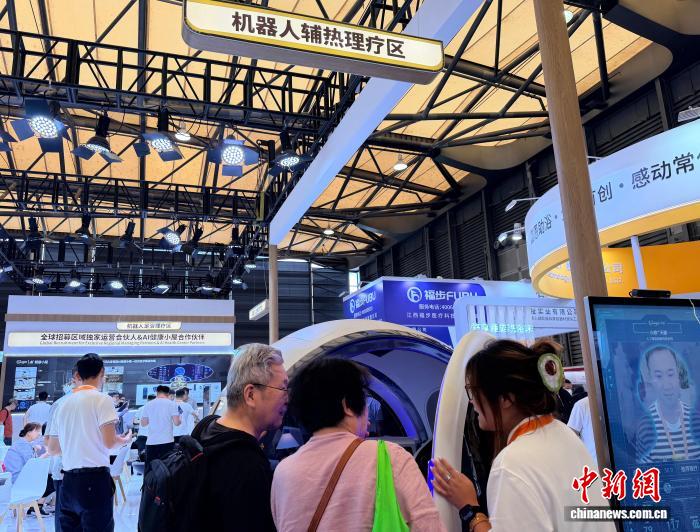
The 2026 Shanghai International Senior Care, Rehabilitation, and Medical Expo concluded in Shanghai on June 6. Preliminary statistics show that this year’s expo attracted approximately 103,000 visitors.
This year’s expo brought together around 680 exhibitors from 22 countries and regions, showcasing innovative products in the senior care industry.
As artificial intelligence continues to advance rapidly, this year’s expo also witnessed the acceleration of “silver technology” into home settings.
Robotic mobility aids such as smart walking assistants and intelligent scooters offer seniors with limited mobility a new “easy mode”; the emergence of emotional companion robots provides more options for elderly companionship. During the expo, many younger family members brought their elders to experience the latest senior care technologies, including exoskeleton robots.
By the end of 2025, Shanghai’s registered population reached 15.557 million, with 5.8438 million people aged 60 and above, accounting for about 37.6% of the total population. Shanghai is actively promoting the application of technological products in more senior care services.
In December 2025, the city’s first silver economy store opened in Putuo District, transforming expo exhibits into everyday products for regular display and sale.
“This year, more products with suitable features and affordable prices have appeared. After the expo, we will select appropriate products to enter the silver economy store and keep it regularly updated,” said the general manager of Shanghai Silver Economy Development Co., Ltd.
Although the 2026 expo has concluded, its showcased products and innovations remain accessible.
Shanghai
Shanghai is a major global financial hub and one of China’s most populous cities, located on the eastern coast at the mouth of the Yangtze River. Its history as a trading port dates back to the 19th century, when it was opened to foreign trade after the First Opium War, leading to the establishment of international concessions and rapid modernization. Today, Shanghai is known for its iconic skyline, blending historic landmarks like the Bund with futuristic skyscrapers in Pudong, symbolizing China’s economic rise.
Putuo District
Putuo District is a central district in Shanghai, China, known for its significant transformation from a historic industrial hub into a modern residential and commercial area. Its name derives from Putuo Mountain, a sacred Buddhist site, and the district was historically home to numerous factories and textile mills along the Suzhou Creek during the early 20th century. Today, it features a mix of cultural landmarks, such as the Jade Buddha Temple, and revitalized urban spaces that reflect its industrial heritage.
Shanghai
Shanghai is a major global financial hub and one of China’s largest cities, located on the eastern coast at the mouth of the Yangtze River. Its history as a prominent port and trading center began in the 19th century, particularly after the Treaty of Nanjing in 1842, which opened it to foreign settlement and led to the development of the iconic Bund and international concessions. Today, Shanghai is known for its blend of modern skyscrapers, like the Oriental Pearl Tower, and historic neighborhoods, reflecting its rapid growth and cultural diversity.
Putuo District
Putuo District is a central urban district of Shanghai, China, located on the western bank of the Suzhou Creek. Historically, it developed rapidly in the early 20th century as an industrial and residential area, home to many textile mills and factories. Today, Putuo is known for its revitalized waterfront, cultural sites like the Jade Buddha Temple, and the famous Changfeng Park.
the Bund
The Bund is a famous waterfront promenade in Shanghai, China, lined with historic buildings that showcase a mix of architectural styles, including Gothic, Baroque, and Art Deco. Originally a British settlement in the 19th century, it served as a major financial and trading hub, housing banks and consulates from various countries. Today, it remains a popular tourist destination, offering stunning views of the Huangpu River and the modern Pudong skyline across the water.
Pudong
Pudong is a major district of Shanghai, China, located on the eastern side of the Huangpu River. Historically a largely rural and agricultural area, it underwent rapid development starting in the 1990s, transforming into a global financial and commercial hub. Today, it is famous for its iconic skyline, including landmarks like the Oriental Pearl Tower and the Shanghai Tower, symbolizing China’s economic modernization.
Putuo Mountain
Putuo Mountain, located off the coast of Zhejiang Province in eastern China, is one of the four sacred Buddhist mountains in China and is dedicated to Guanyin, the Bodhisattva of compassion. Its history as a religious site dates back over a thousand years, with major temples like Puji Temple and Fayu Temple built during the Tang and Ming dynasties. Today, it remains a popular pilgrimage destination, known for its serene coastal scenery, ancient temples, and spiritual atmosphere.
Jade Buddha Temple
The Jade Buddha Temple in Shanghai, China, is a renowned Buddhist monastery founded in 1882. It was built to house two exquisite jade Buddha statues brought from Burma by a Chinese monk, one depicting the Buddha in a seated meditation posture and the other in a reclining position. The temple remains an active place of worship and a major tourist attraction, showcasing traditional Chinese Buddhist architecture and art.
Suzhou Creek
Suzhou Creek is a 125-kilometer-long waterway in Shanghai, China, that historically served as a vital transportation and trade route connecting the city to the Yangtze River and Suzhou. During the late 19th and early 20th centuries, its banks became a hub for industrial development, with numerous warehouses, mills, and factories, followed by a period of decline. In recent decades, extensive cleanup and urban renewal projects have transformed the creek into a scenic cultural corridor, featuring restored historic buildings, parks, and promenades.
Yangtze River
The Yangtze River is the longest river in Asia and the third longest in the world, flowing over 6,300 kilometers through China. It has been a cradle of Chinese civilization for thousands of years, supporting agriculture, trade, and cultural development along its banks. Historically, it served as a natural boundary between northern and southern China and played a key role in major events such as the Three Kingdoms period and the development of the Three Gorges Dam.