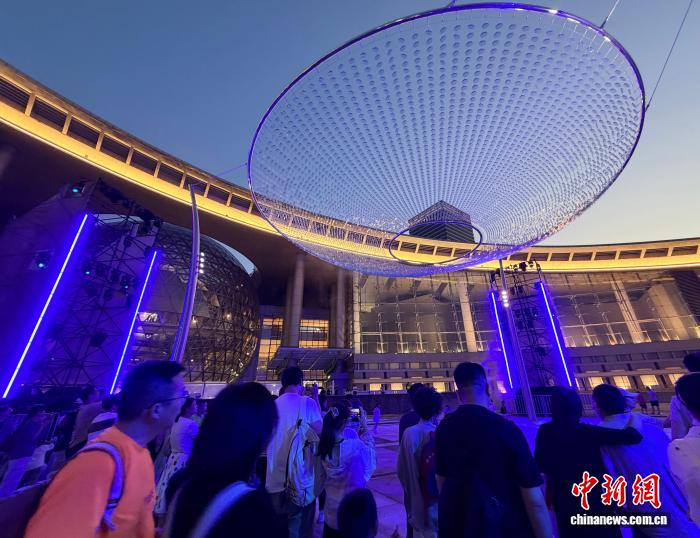
Shanghai Science and Technology Museum’s “Keqi Starlight Carnival” officially kicked off on June 6. That evening, visitors experienced a unique nighttime science education feast through dazzling light displays and interactive technology.
The carnival features the museum’s mascot “Keqi” as its core IP. The venue includes a “Starlight” themed light show, cultural and creative stalls, specialty food trucks, and a robot soccer interactive experience zone.
After approximately three years of renovation and upgrades, the Shanghai Science and Technology Museum reopened to the public this year, continuing to attract visitors from all over. The museum has ten permanent exhibition areas covering cutting-edge and popular fields such as artificial intelligence, quantum technology, and aerospace. It presents 405 sets of science exhibits, with an interaction rate of 80 percent, guiding visitors to explore frontier hotspots and envision the future of technology.
By activating the sunken plaza and the B1 level public space, the museum is expanding beyond its daytime science education functions to actively develop the night economy. It is exploring a new “science education plus general entertainment” track, thereby boosting the city’s cultural and tourism consumption.
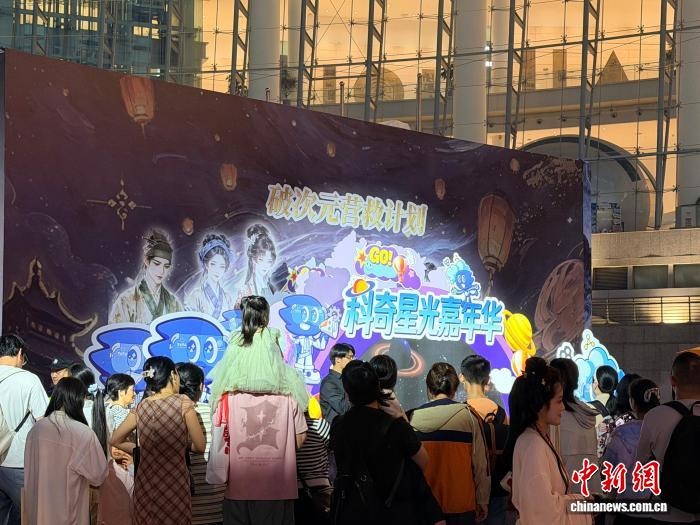
The Shanghai Science and Technology Museum’s “Keqi Starlight Carnival” will remain open through the summer vacation.