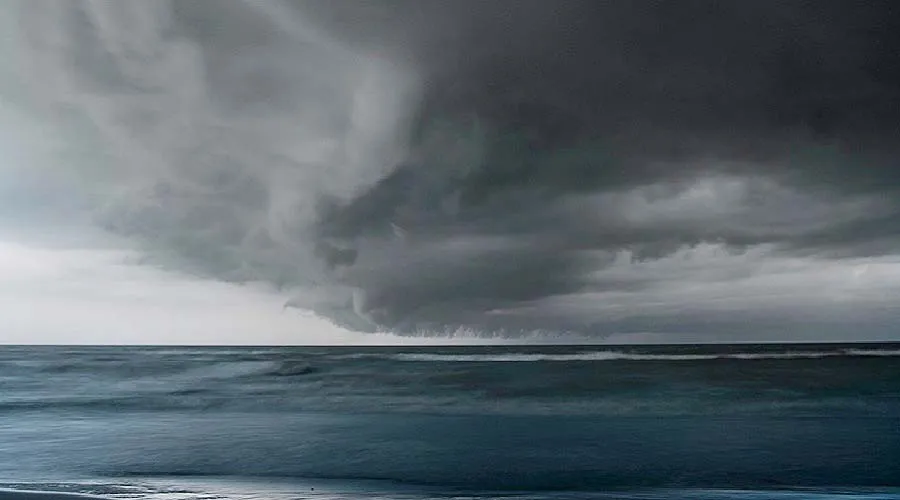
New Delhi, June 6. The southwest monsoon has picked up pace and is expected to reach Karnataka, Maharashtra, Andhra Pradesh, Goa, and parts of the Bay of Bengal within the next two to three days.
According to the weather department, favorable conditions are causing the monsoon to advance rapidly, indicating increased rainfall activity in many parts of the country.
The most significant impact of this monsoon activity is currently being seen in Kerala, where rainfall is likely to intensify over the next two days.
The India Meteorological Department (IMD) has forecast heavy to very heavy rainfall of 7 to 20 centimeters in various parts of the state over the next seven days. Several locations have already recorded 12 to 20 centimeters of rain.
The weather department has also issued a heavy rainfall forecast for several districts of Kerala on June 6 and 7. Due to continuous rain, there is an increased risk of waterlogging in low-lying areas, local flooding, rising river levels, and landslides in hilly regions.
People living in particularly sensitive and landslide-prone areas have been advised to remain vigilant. The administration and disaster management agencies are monitoring the situation and issuing warnings and advisories as needed.
Authorities have urged citizens to pay attention to weather updates and follow safety instructions.
New Delhi
New Delhi, the capital of India, was designed by British architects Edwin Lutyens and Herbert Baker and officially inaugurated in 1931, replacing Calcutta as the seat of the British Raj. The city is known for its wide boulevards, grand government buildings, and landmarks like India Gate and the Rashtrapati Bhavan, blending colonial architecture with modern Indian identity. It stands as a symbol of India’s transition from colonial rule to independence, hosting the nation’s political institutions and rich cultural heritage.
Karnataka
Karnataka, located in southwestern India, is a state rich in history, culture, and natural beauty. It was home to powerful dynasties like the Vijayanagara Empire, which left behind the magnificent ruins of Hampi, a UNESCO World Heritage site. Today, Karnataka is known for its vibrant cities like Bengaluru, a major tech hub, as well as its classical music, dance, and diverse landscapes ranging from coastal beaches to lush forests.
Maharashtra
Maharashtra is a state in western India known for its rich cultural heritage and historical significance, including the Maratha Empire led by Chhatrapati Shivaji Maharaj. It is home to the bustling city of Mumbai, the financial and entertainment capital of India, as well as ancient cave temples like Ajanta and Ellora, which are UNESCO World Heritage Sites. The state’s history spans from early Buddhist and Hindu kingdoms to colonial rule under the Portuguese and British, shaping its diverse traditions, language, and cuisine.
Andhra Pradesh
Andhra Pradesh is a state in southeastern India known for its rich cultural heritage, including classical dance forms like Kuchipudi and ancient Buddhist sites such as Amaravati. Historically, it was a major center for the Satavahana dynasty and later the Vijayanagara Empire, with the region also playing a key role in India’s independence movement. Today, it is celebrated for its diverse cuisine, the Tirupati temple, and the modern capital of Amaravati being developed as a planned city.
Goa
Goa, located on India’s western coast, is renowned for its stunning beaches and Portuguese colonial heritage. It was ruled by the Portuguese for over 450 years, from 1510 until its annexation by India in 1961, which left a lasting influence on its architecture, cuisine, and culture. Today, Goa is a popular tourist destination, famous for its historic churches, vibrant festivals, and unique blend of Indian and Portuguese traditions.
Bay of Bengal
The Bay of Bengal is a vast northeastern extension of the Indian Ocean, bordered by India, Bangladesh, Myanmar, and several other countries. Historically, it served as a crucial maritime highway for ancient trade routes, connecting the Indian subcontinent with Southeast Asia and beyond. Its coastal regions have been home to powerful empires and port cities, such as the Chola dynasty and the modern port of Chittagong, shaping centuries of cultural and economic exchange.
Kerala
Kerala, located on the tropical Malabar Coast of southwestern India, is renowned for its unique culture and history as a major hub for the spice trade since ancient times, attracting traders from Rome, China, and the Middle East. It was formed as a state in 1956, unifying Malayalam-speaking regions, and is distinguished by its high literacy rate, backwater ecosystems, and classical art forms like Kathakali. The region’s history includes significant periods under the Chera dynasty, Portuguese, Dutch, and British influence, with its progressive social development often attributed to the efforts of early rulers and reformers.